

158
P. Liu
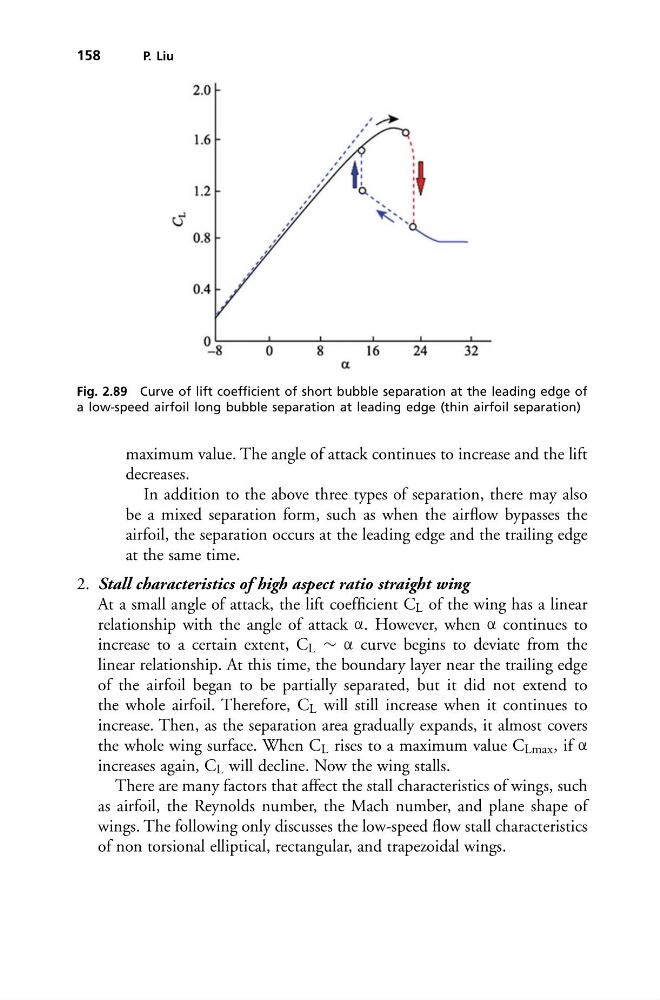
Fig. 2.89 Curve of lift coefficient of short bubble separation at the leading edge of
a low-speed airfoil long bubble separation at leading edge (thin airfoil separation)
maximum value. The angle of attack continues to increase and the lift
decreases.
In addition to the above three types of separation, there may also
be a mixed separation form, such as when the airflow bypasses the
airfoil, the separation occurs at the leading edge and the trailing edge
at the same time.
2. Stall characteristics of high aspect ratio straight wing
At a small angle of attack, the lift coefficient C L of the wing has a linear
relationship with the angle of attack α. However, when α continues to
increase to a certain extent, C L ∼ α curve begins to deviate from the
linear relationship. At this time, the boundary layer near the trailing edge
of the airfoil began to be partially separated, but it did not extend to
the whole airfoil. Therefore, C L will still increase when it continues to
increase. Then, as the separation area gradually expands, it almost covers
the whole wing surface. When C L rises to a maximum value C Lmax , if α
increases again, C L will decline. Now the wing stalls.
There are many factors that affect the stall characteristics of wings, such
as airfoil, the Reynolds number, the Mach number, and plane shape of
wings. The following only discusses the low-speed flow stall characteristics
of non torsional elliptical, rectangular, and trapezoidal wings.
P. Liu
Fig. 2.89 Curve of lift coefficient of short bubble separation at the leading edge of
a low-speed airfoil long bubble separation at leading edge (thin airfoil separation)
maximum value. The angle of attack continues to increase and the lift
decreases.
In addition to the above three types of separation, there may also
be a mixed separation form, such as when the airflow bypasses the
airfoil, the separation occurs at the leading edge and the trailing edge
at the same time.
2. Stall characteristics of high aspect ratio straight wing
At a small angle of attack, the lift coefficient C L of the wing has a linear
relationship with the angle of attack α. However, when α continues to
increase to a certain extent, C L ∼ α curve begins to deviate from the
linear relationship. At this time, the boundary layer near the trailing edge
of the airfoil began to be partially separated, but it did not extend to
the whole airfoil. Therefore, C L will still increase when it continues to
increase. Then, as the separation area gradually expands, it almost covers
the whole wing surface. When C L rises to a maximum value C Lmax , if α
increases again, C L will decline. Now the wing stalls.
There are many factors that affect the stall characteristics of wings, such
as airfoil, the Reynolds number, the Mach number, and plane shape of
wings. The following only discusses the low-speed flow stall characteristics
of non torsional elliptical, rectangular, and trapezoidal wings.