

69
catalyst to oil ratio, higher regeneration temperature, heat balance, and continuous
operation are a few of the many features of this plant.
Post the successful start-up of PCLA [14], there was rapid development in FCC
unit designs. The new designs differed in reactor–regenerator configurations, number and placement of cyclones, number and placement of feed nozzles, parallel
operation, recycle, catalyst coolers, etc.
The primitive catalytic cracking processes utilized activated clay-based catalysts. This was followed by the use of synthetic amorphous silica–alumina- or silica–magnesia-based combinations during the 1940s. These catalysts showed better
selectivity toward gasoline compared to coke and gas [27]. The next major milestone during the 1960s was the development of synthetic crystalline microporous
aluminosilicates called zeolites (roughly translates to boiling stone) at Union
Carbide and Mobil Oil Co. The zeolite relevant to the FCC process was synthetic
faujasite or zeolite Y developed by Breck [24] at Union Carbide. Zeolite Y has high
Feed line to Reactor
Steam
Steam
Feed
Reactor
Regenerators
(Kilns)
Air for
Combustion
Compressed Air
Blower
Elevator Vessel
Recycle
Elutriator
Product to
Separation
Flue Gas
Pneumatic Lift
Surge Separator
Air
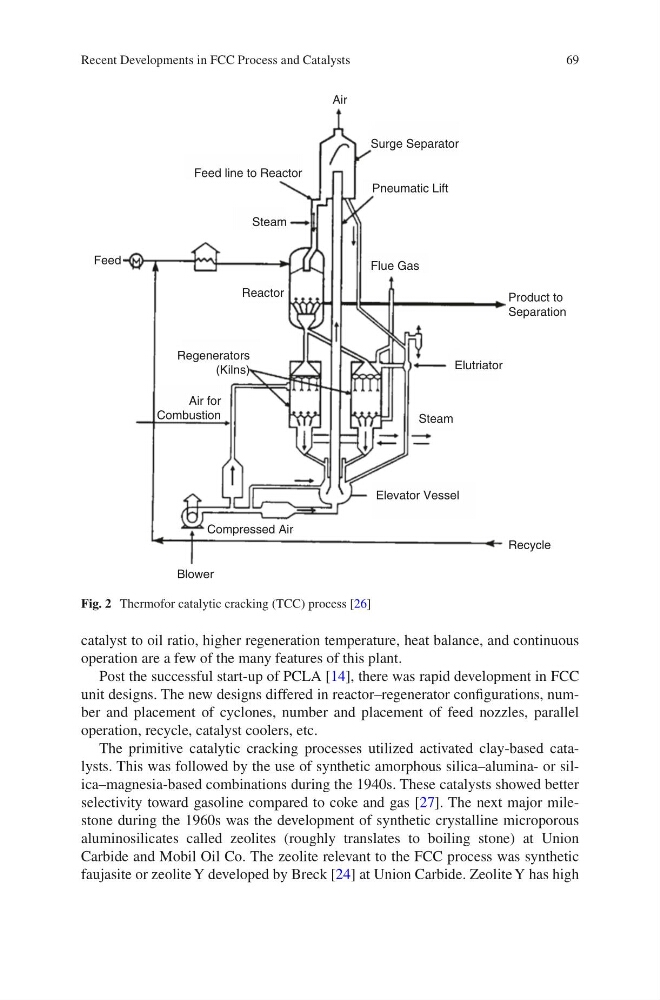
Fig. 2 Thermofor catalytic cracking (TCC) process [26]
Recent Developments in FCC Process and Catalysts
catalyst to oil ratio, higher regeneration temperature, heat balance, and continuous
operation are a few of the many features of this plant.
Post the successful start-up of PCLA [14], there was rapid development in FCC
unit designs. The new designs differed in reactor–regenerator configurations, number and placement of cyclones, number and placement of feed nozzles, parallel
operation, recycle, catalyst coolers, etc.
The primitive catalytic cracking processes utilized activated clay-based catalysts. This was followed by the use of synthetic amorphous silica–alumina- or silica–magnesia-based combinations during the 1940s. These catalysts showed better
selectivity toward gasoline compared to coke and gas [27]. The next major milestone during the 1960s was the development of synthetic crystalline microporous
aluminosilicates called zeolites (roughly translates to boiling stone) at Union
Carbide and Mobil Oil Co. The zeolite relevant to the FCC process was synthetic
faujasite or zeolite Y developed by Breck [24] at Union Carbide. Zeolite Y has high
Feed line to Reactor
Steam
Steam
Feed
Reactor
Regenerators
(Kilns)
Air for
Combustion
Compressed Air
Blower
Elevator Vessel
Recycle
Elutriator
Product to
Separation
Flue Gas
Pneumatic Lift
Surge Separator
Air
Fig. 2 Thermofor catalytic cracking (TCC) process [26]
Recent Developments in FCC Process and Catalysts