

68
high-quality aviation fuel during the Second World War. Since the process utilized
a fixed bed reactor, the catalyst gradually deactivated and the gasoline yields would
continuously drop before regeneration of catalyst would be carried out.
This meant the process operated in a semicontinuous cyclic operation. A step
toward a truly continuous process was replacing the old valve switching mechanism
that alternated feed and combustion air for regeneration with a bucket lift mechanism to move the catalyst itself from the reaction to regeneration zones (Fig. 2). As
the catalyst’s particle size was further reduced by the development of synthetic
beads, the bucket system was soon replaced by an air-lift system. This process was
called the thermofor catalytic cracking (TCC) process [20].
This process was replaced by the FCC process because of the higher catalyst to
oil ratio and higher achievable regenerator temperatures. Due to licensing disputes
with Houdry, Standard Oil (Jersey) formed a consortium of eight companies dubbed
the Catalytic Research Associates (CRA: Jersey), M.W. Kellogg Co., Royal Dutch
Shell, the Standard Oil Co. of Indiana, Anglo-Iranian Oil Co. (now known as BP),
Universal Oil Products Co. (now known as UOP), the Texas Corp. (which became
Texaco), and IG Farben, which would develop a process that would design a process
different from Houdry’s patent. Work in fluidization and pneumatic transfer of solids in Massachusetts Institute of Technology (MIT) coupled with CRA’s efforts led
to commissioning of a pilot plant PECLA-1 (Powdered Experimental catalyst
Louisiana). A year later in 1942, the system (now called PCLA1, Fig. 3) was scaled
up to commercial scale and started up [21, 22]. It was an up-flow reactor–regenerator setup, which used a clay-based catalyst. It was based on the principle that a
dense bed of particles can be suspended at a low gas velocity in a manner to lift it
up to behave similar to a liquid [23]. Better diffusion characteristics, the higher
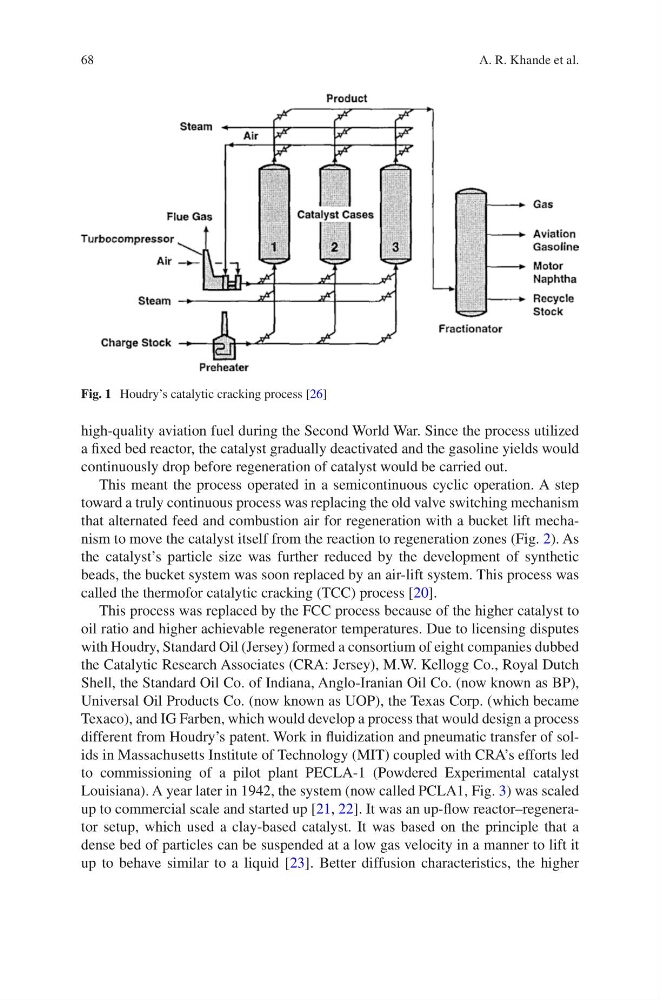
Fig. 1 Houdry’s catalytic cracking process [26]
A. R. Khande et al.
high-quality aviation fuel during the Second World War. Since the process utilized
a fixed bed reactor, the catalyst gradually deactivated and the gasoline yields would
continuously drop before regeneration of catalyst would be carried out.
This meant the process operated in a semicontinuous cyclic operation. A step
toward a truly continuous process was replacing the old valve switching mechanism
that alternated feed and combustion air for regeneration with a bucket lift mechanism to move the catalyst itself from the reaction to regeneration zones (Fig. 2). As
the catalyst’s particle size was further reduced by the development of synthetic
beads, the bucket system was soon replaced by an air-lift system. This process was
called the thermofor catalytic cracking (TCC) process [20].
This process was replaced by the FCC process because of the higher catalyst to
oil ratio and higher achievable regenerator temperatures. Due to licensing disputes
with Houdry, Standard Oil (Jersey) formed a consortium of eight companies dubbed
the Catalytic Research Associates (CRA: Jersey), M.W. Kellogg Co., Royal Dutch
Shell, the Standard Oil Co. of Indiana, Anglo-Iranian Oil Co. (now known as BP),
Universal Oil Products Co. (now known as UOP), the Texas Corp. (which became
Texaco), and IG Farben, which would develop a process that would design a process
different from Houdry’s patent. Work in fluidization and pneumatic transfer of solids in Massachusetts Institute of Technology (MIT) coupled with CRA’s efforts led
to commissioning of a pilot plant PECLA-1 (Powdered Experimental catalyst
Louisiana). A year later in 1942, the system (now called PCLA1, Fig. 3) was scaled
up to commercial scale and started up [21, 22]. It was an up-flow reactor–regenerator setup, which used a clay-based catalyst. It was based on the principle that a
dense bed of particles can be suspended at a low gas velocity in a manner to lift it
up to behave similar to a liquid [23]. Better diffusion characteristics, the higher
Fig. 1 Houdry’s catalytic cracking process [26]
A. R. Khande et al.