

544
desirable catalyst material with identical properties and helps to develop new catalytic materials. Catalyst characterisation can also provide insight into the mechanism of reactions taking place at the catalyst surface [75, 76].
Catalysis is a surface phenomenon. The surface area of a catalyst influences the
catalyst activity as there are more exposed active sites for the catalytic reaction to
occur. Surface area of catalyst is characterized typically by N 2 physiosorption using
the BET method. The surface species present on the surface of a catalyst influence
metal support interactions for supported catalysts and the interaction occurring on
the catalyst active sites with reactant molecules. These interactions can affect the
activity, selectivity and stability of the catalyst [77]. Available surface species are
typically characterised using X-ray photoelectron spectroscopy (XPS). For metal
supported catalyst, the fraction of metal atoms on the catalyst surface to the total
metal loaded on the catalyst is the metal dispersion. The exposed metal atoms are
important for catalysis as catalysis occurs on the surface atoms. The metal dispersion is usually obtained by chemisorption methods such as H 2 chemisorption.
Well-controlled pore sizes provide the confinement effect which can stabilize
catalyst against sintering [78, 79] and hence affect catalyst stability. Also, pore size
distribution in catalysts has been shown to influence selectivity by the shape selectivity effect [80, 81] and metal dispersion [82]. Pore size distribution is typically
characterized by N 2 physisorption using the BJH method. Temperature-programmed
reduction (TPR) of supported metal catalyst is used to characterize the reduction
properties of catalyst which is indicative of the strength of the metal support
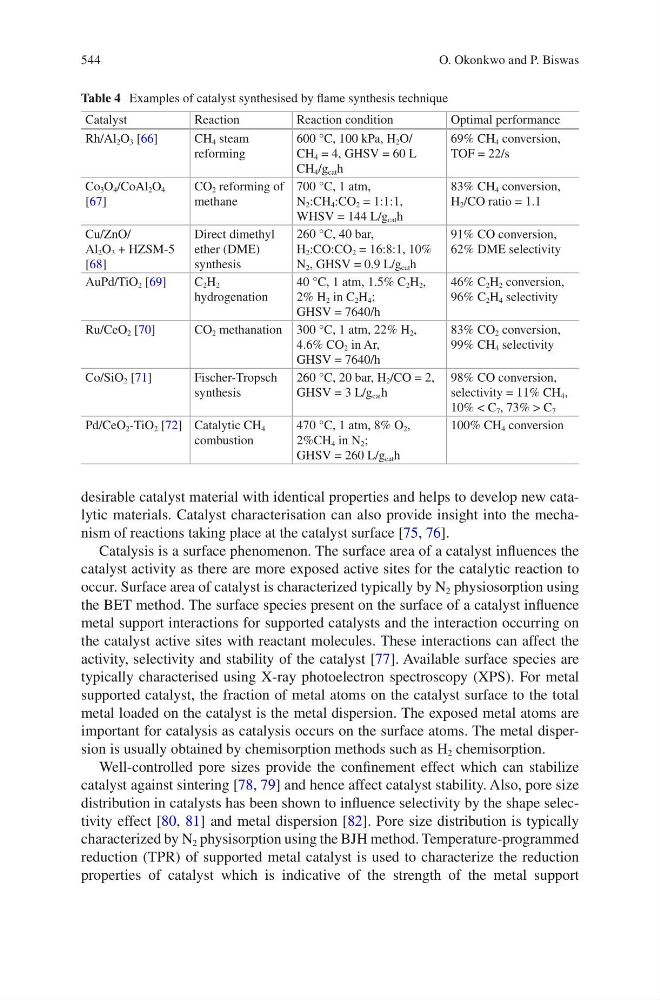
Table 4 Examples of catalyst synthesised by flame synthesis technique
Catalyst
Reaction
Reaction condition
Optimal performance
Rh/Al 2 O 3 [66]
CH 4 steam
reforming
600 °C, 100 kPa, H 2 O/
CH 4 = 4, GHSV = 60 L
CH 4 /g cat h
69% CH 4 conversion,
TOF = 22/s
Co 3 O 4 /CoAl 2 O 4
[67]
CO 2 reforming of
methane
700 °C, 1 atm,
N 2 :CH 4 :CO 2 = 1:1:1,
WHSV = 144 L/g cat h
83% CH 4 conversion,
H 2 /CO ratio = 1.1
Cu/ZnO/
Al 2 O 3 + HZSM-5
[68]
Direct dimethyl
ether (DME)
synthesis
260 °C, 40 bar,
H 2 :CO:CO 2 = 16:8:1, 10%
N 2 , GHSV = 0.9 L/g cat h
91% CO conversion,
62% DME selectivity
AuPd/TiO 2 [69]
C 2 H 2
hydrogenation
40 °C, 1 atm, 1.5% C 2 H 2 ,
2% H 2 in C 2 H 4 ;
GHSV = 7640/h
46% C 2 H 2 conversion,
96% C 2 H 4 selectivity
Ru/CeO 2 [70]
CO 2 methanation 300 °C, 1 atm, 22% H 2 ,
4.6% CO 2 in Ar,
GHSV = 7640/h
83% CO 2 conversion,
99% CH 4 selectivity
Co/SiO 2 [71]
Fischer-Tropsch
synthesis
260 °C, 20 bar, H 2 /CO = 2,
GHSV = 3 L/g cat h
98% CO conversion,
selectivity = 11% CH 4 ,
10% < C 7 , 73% > C 7
Pd/CeO 2 -TiO 2 [72] Catalytic CH 4
combustion
470 °C, 1 atm, 8% O 2 ,
2%CH 4 in N 2 ;
GHSV = 260 L/g cat h
100% CH 4 conversion
O. Okonkwo and P. Biswas
desirable catalyst material with identical properties and helps to develop new catalytic materials. Catalyst characterisation can also provide insight into the mechanism of reactions taking place at the catalyst surface [75, 76].
Catalysis is a surface phenomenon. The surface area of a catalyst influences the
catalyst activity as there are more exposed active sites for the catalytic reaction to
occur. Surface area of catalyst is characterized typically by N 2 physiosorption using
the BET method. The surface species present on the surface of a catalyst influence
metal support interactions for supported catalysts and the interaction occurring on
the catalyst active sites with reactant molecules. These interactions can affect the
activity, selectivity and stability of the catalyst [77]. Available surface species are
typically characterised using X-ray photoelectron spectroscopy (XPS). For metal
supported catalyst, the fraction of metal atoms on the catalyst surface to the total
metal loaded on the catalyst is the metal dispersion. The exposed metal atoms are
important for catalysis as catalysis occurs on the surface atoms. The metal dispersion is usually obtained by chemisorption methods such as H 2 chemisorption.
Well-controlled pore sizes provide the confinement effect which can stabilize
catalyst against sintering [78, 79] and hence affect catalyst stability. Also, pore size
distribution in catalysts has been shown to influence selectivity by the shape selectivity effect [80, 81] and metal dispersion [82]. Pore size distribution is typically
characterized by N 2 physisorption using the BJH method. Temperature-programmed
reduction (TPR) of supported metal catalyst is used to characterize the reduction
properties of catalyst which is indicative of the strength of the metal support
Table 4 Examples of catalyst synthesised by flame synthesis technique
Catalyst
Reaction
Reaction condition
Optimal performance
Rh/Al 2 O 3 [66]
CH 4 steam
reforming
600 °C, 100 kPa, H 2 O/
CH 4 = 4, GHSV = 60 L
CH 4 /g cat h
69% CH 4 conversion,
TOF = 22/s
Co 3 O 4 /CoAl 2 O 4
[67]
CO 2 reforming of
methane
700 °C, 1 atm,
N 2 :CH 4 :CO 2 = 1:1:1,
WHSV = 144 L/g cat h
83% CH 4 conversion,
H 2 /CO ratio = 1.1
Cu/ZnO/
Al 2 O 3 + HZSM-5
[68]
Direct dimethyl
ether (DME)
synthesis
260 °C, 40 bar,
H 2 :CO:CO 2 = 16:8:1, 10%
N 2 , GHSV = 0.9 L/g cat h
91% CO conversion,
62% DME selectivity
AuPd/TiO 2 [69]
C 2 H 2
hydrogenation
40 °C, 1 atm, 1.5% C 2 H 2 ,
2% H 2 in C 2 H 4 ;
GHSV = 7640/h
46% C 2 H 2 conversion,
96% C 2 H 4 selectivity
Ru/CeO 2 [70]
CO 2 methanation 300 °C, 1 atm, 22% H 2 ,
4.6% CO 2 in Ar,
GHSV = 7640/h
83% CO 2 conversion,
99% CH 4 selectivity
Co/SiO 2 [71]
Fischer-Tropsch
synthesis
260 °C, 20 bar, H 2 /CO = 2,
GHSV = 3 L/g cat h
98% CO conversion,
selectivity = 11% CH 4 ,
10% < C 7 , 73% > C 7
Pd/CeO 2 -TiO 2 [72] Catalytic CH 4
combustion
470 °C, 1 atm, 8% O 2 ,
2%CH 4 in N 2 ;
GHSV = 260 L/g cat h
100% CH 4 conversion
O. Okonkwo and P. Biswas