

543
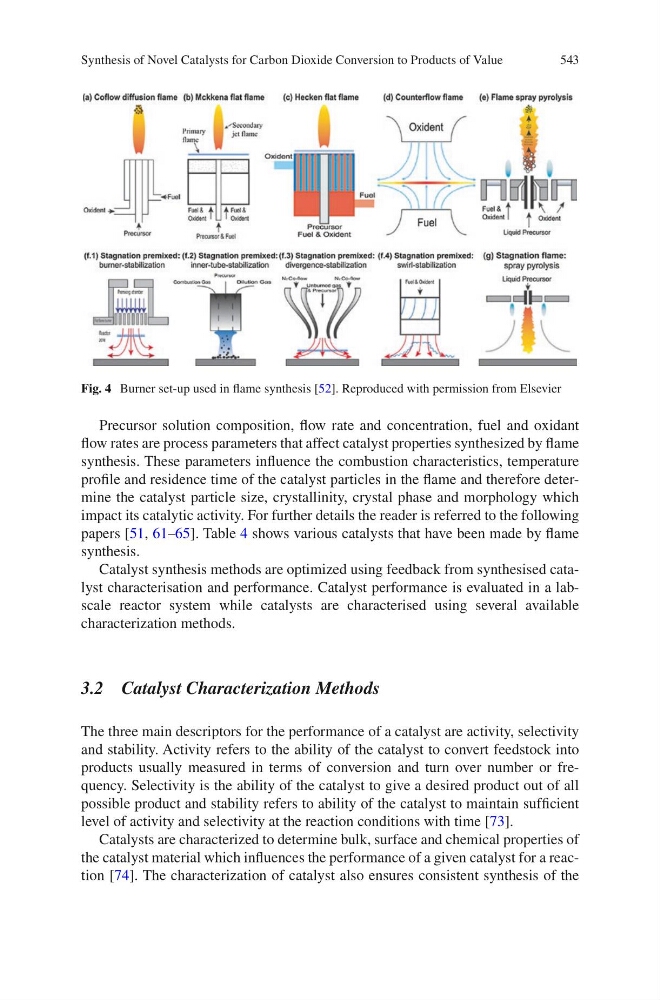
Precursor solution composition, flow rate and concentration, fuel and oxidant
flow rates are process parameters that affect catalyst properties synthesized by flame
synthesis. These parameters influence the combustion characteristics, temperature
profile and residence time of the catalyst particles in the flame and therefore determine the catalyst particle size, crystallinity, crystal phase and morphology which
impact its catalytic activity. For further details the reader is referred to the following
papers [51, 61–65]. Table 4 shows various catalysts that have been made by flame
synthesis.
Catalyst synthesis methods are optimized using feedback from synthesised catalyst characterisation and performance. Catalyst performance is evaluated in a labscale reactor system while catalysts are characterised using several available
characterization methods.
3.2 Catalyst Characterization Methods
The three main descriptors for the performance of a catalyst are activity, selectivity
and stability. Activity refers to the ability of the catalyst to convert feedstock into
products usually measured in terms of conversion and turn over number or frequency. Selectivity is the ability of the catalyst to give a desired product out of all
possible product and stability refers to ability of the catalyst to maintain sufficient
level of activity and selectivity at the reaction conditions with time [73].
Catalysts are characterized to determine bulk, surface and chemical properties of
the catalyst material which influences the performance of a given catalyst for a reaction [74]. The characterization of catalyst also ensures consistent synthesis of the
Fig. 4 Burner set-up used in flame synthesis [52]. Reproduced with permission from Elsevier
Synthesis of Novel Catalysts for Carbon Dioxide Conversion to Products of Value
Precursor solution composition, flow rate and concentration, fuel and oxidant
flow rates are process parameters that affect catalyst properties synthesized by flame
synthesis. These parameters influence the combustion characteristics, temperature
profile and residence time of the catalyst particles in the flame and therefore determine the catalyst particle size, crystallinity, crystal phase and morphology which
impact its catalytic activity. For further details the reader is referred to the following
papers [51, 61–65]. Table 4 shows various catalysts that have been made by flame
synthesis.
Catalyst synthesis methods are optimized using feedback from synthesised catalyst characterisation and performance. Catalyst performance is evaluated in a labscale reactor system while catalysts are characterised using several available
characterization methods.
3.2 Catalyst Characterization Methods
The three main descriptors for the performance of a catalyst are activity, selectivity
and stability. Activity refers to the ability of the catalyst to convert feedstock into
products usually measured in terms of conversion and turn over number or frequency. Selectivity is the ability of the catalyst to give a desired product out of all
possible product and stability refers to ability of the catalyst to maintain sufficient
level of activity and selectivity at the reaction conditions with time [73].
Catalysts are characterized to determine bulk, surface and chemical properties of
the catalyst material which influences the performance of a given catalyst for a reaction [74]. The characterization of catalyst also ensures consistent synthesis of the
Fig. 4 Burner set-up used in flame synthesis [52]. Reproduced with permission from Elsevier
Synthesis of Novel Catalysts for Carbon Dioxide Conversion to Products of Value