

297
Some of the noteworthy results of microwave-assisted Rh-catalysed C–H activation also reported for the Heck-type and [4 + 1] annulation coupling reaction [273]
and synthesis of pyrazolo[1,5-a]pyrimidines derivatives [274] and presented the
significant yield of products. Compilation of transition metal catalysis and microwave radiation led to the significant advancements in the organic synthesis in the
greener way. Taking into account the advantages offered by the microwave irradiation technology, different potential medicinal and bioactive molecules could be produced in very short reaction time and in high yield.
8 Electrochemical C–H Functionalization
C–H bond functionalization has arisen as an innovative tool in organic synthesis for
the synthesis of C–C bonds. Recently, oxidative C–H activation has largely
employed stoichiometric amount of costly and harmful metal oxidants, bargaining
the general economical nature of C–H activation science. On the other hand, electrochemical C–H actuation is distinguished as a progressively effective system that
uses storable electrical power. In this presentation, the significance of electrocatalytic C–H activation highlighting the recent developments will be discussed. Various
review articles summarized the electrocatalytic C–H activations [275–277] in past
decades and it was observed that this tool has gained significant achievements in
C–H activation area. This section of the chapter will present an overview about the
current progresses occurred in the electrocatalytic C–H activation.
Li et al. in 2015 demonstrated the first example of Friedel−Crafts alkylation via
aryl C–H bond activation of N-vinylamides by electrochemical in situ generation of
tris(p-bromophenyl)aminium (TBPA) radical cation [278]. The heterocyclic
RhCp*Cl2 2
Cu(OAc)2
MeOH (0.5 M),
MW, 150
o
C, 10 min
NH 4 OAc
R 3 -CHO
n-C 3 H 7
n-C 3 H 7
R 1
O
R 2
N
R 1
R 2
R 3
n-C 3 H 7
n-C 3 H 7
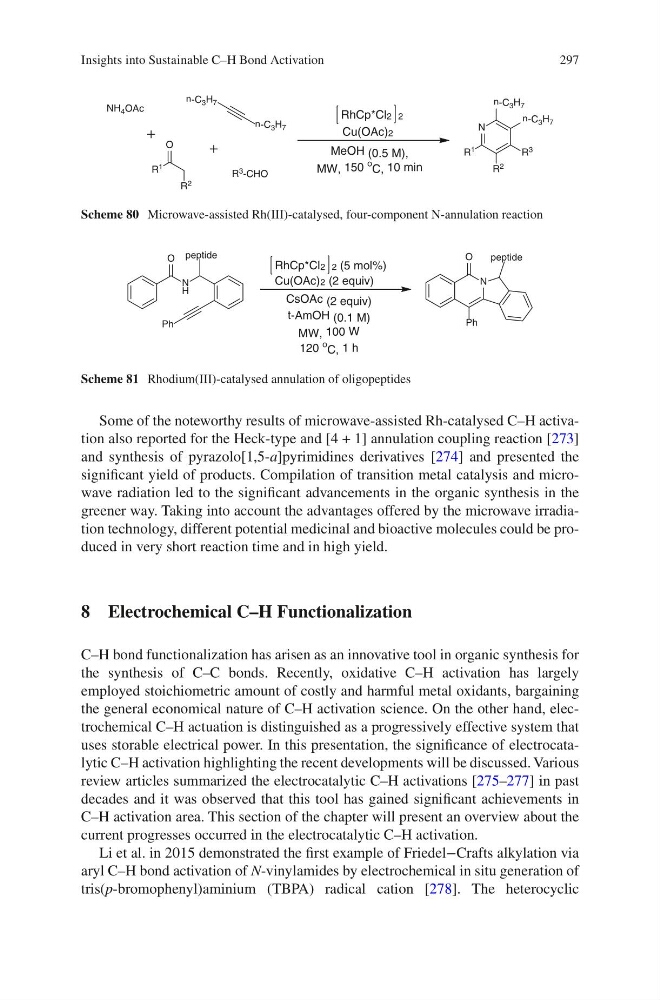
Scheme 80 Microwave-assisted Rh(III)-catalysed, four-component N-annulation reaction
O
RhCp*Cl2 2 (5 mol%)
Cu(OAc)2 (2 equiv)
CsOAc (2 equiv)
t-AmOH (0.1 M)
MW, 100 W
120
o C, 1 h
N
H
Ph
peptide
O
N
Ph
peptide
Scheme 81 Rhodium(III)-catalysed annulation of oligopeptides
Insights into Sustainable C–H Bond Activation
Some of the noteworthy results of microwave-assisted Rh-catalysed C–H activation also reported for the Heck-type and [4 + 1] annulation coupling reaction [273]
and synthesis of pyrazolo[1,5-a]pyrimidines derivatives [274] and presented the
significant yield of products. Compilation of transition metal catalysis and microwave radiation led to the significant advancements in the organic synthesis in the
greener way. Taking into account the advantages offered by the microwave irradiation technology, different potential medicinal and bioactive molecules could be produced in very short reaction time and in high yield.
8 Electrochemical C–H Functionalization
C–H bond functionalization has arisen as an innovative tool in organic synthesis for
the synthesis of C–C bonds. Recently, oxidative C–H activation has largely
employed stoichiometric amount of costly and harmful metal oxidants, bargaining
the general economical nature of C–H activation science. On the other hand, electrochemical C–H actuation is distinguished as a progressively effective system that
uses storable electrical power. In this presentation, the significance of electrocatalytic C–H activation highlighting the recent developments will be discussed. Various
review articles summarized the electrocatalytic C–H activations [275–277] in past
decades and it was observed that this tool has gained significant achievements in
C–H activation area. This section of the chapter will present an overview about the
current progresses occurred in the electrocatalytic C–H activation.
Li et al. in 2015 demonstrated the first example of Friedel−Crafts alkylation via
aryl C–H bond activation of N-vinylamides by electrochemical in situ generation of
tris(p-bromophenyl)aminium (TBPA) radical cation [278]. The heterocyclic
RhCp*Cl2 2
Cu(OAc)2
MeOH (0.5 M),
MW, 150
o
C, 10 min
NH 4 OAc
R 3 -CHO
n-C 3 H 7
n-C 3 H 7
R 1
O
R 2
N
R 1
R 2
R 3
n-C 3 H 7
n-C 3 H 7
Scheme 80 Microwave-assisted Rh(III)-catalysed, four-component N-annulation reaction
O
RhCp*Cl2 2 (5 mol%)
Cu(OAc)2 (2 equiv)
CsOAc (2 equiv)
t-AmOH (0.1 M)
MW, 100 W
120
o C, 1 h
N
H
Ph
peptide
O
N
Ph
peptide
Scheme 81 Rhodium(III)-catalysed annulation of oligopeptides
Insights into Sustainable C–H Bond Activation