

40
J. W. Owsi´ nski et al.
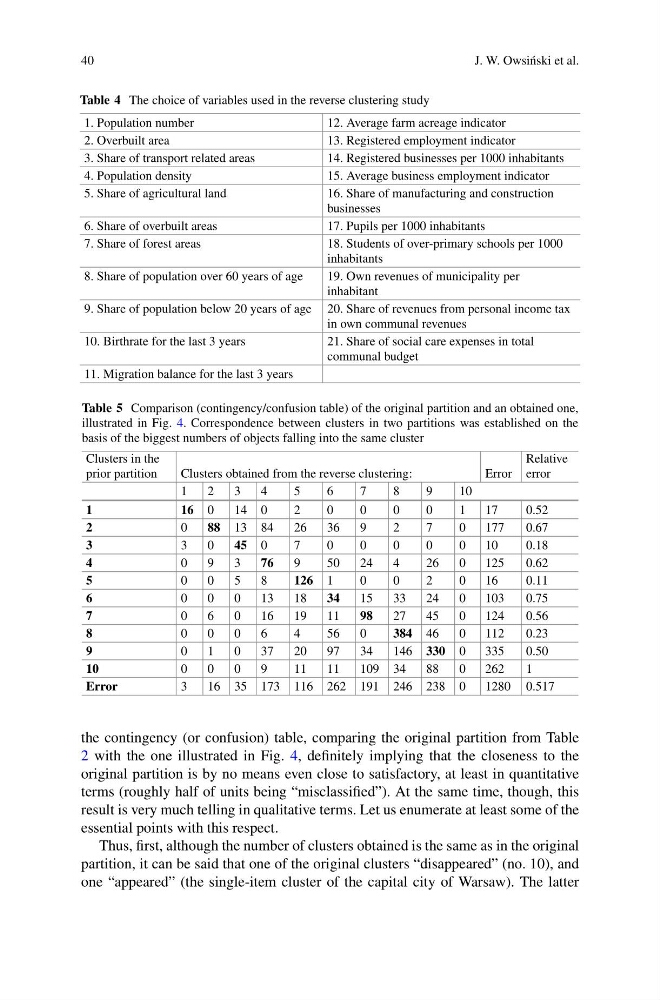
Table 4 The choice of variables used in the reverse clustering study
1. Population number
12. Average farm acreage indicator
2. Overbuilt area
13. Registered employment indicator
3. Share of transport related areas
14. Registered businesses per 1000 inhabitants
4. Population density
15. Average business employment indicator
5. Share of agricultural land
16. Share of manufacturing and construction
businesses
6. Share of overbuilt areas
17. Pupils per 1000 inhabitants
7. Share of forest areas
18. Students of over-primary schools per 1000
inhabitants
8. Share of population over 60 years of age
19. Own revenues of municipality per
inhabitant
9. Share of population below 20 years of age 20. Share of revenues from personal income tax
in own communal revenues
10. Birthrate for the last 3 years
21. Share of social care expenses in total
communal budget
11. Migration balance for the last 3 years
Table 5 Comparison (contingency/confusion table) of the original partition and an obtained one,
illustrated in Fig. 4. Correspondence between clusters in two partitions was established on the
basis of the biggest numbers of objects falling into the same cluster
Clusters in the
prior partition
Clusters obtained from the reverse clustering:
Error
Relative
error
1
2
3
4
5
6
7
8
9
10
1
16 0
14 0
2
0
0
0
0
1
17
0.52
2
0
88 13 84
26
36
9
2
7
0
177
0.67
3
3
0
45 0
7
0
0
0
0
0
10
0.18
4
0
9
3
76
9
50
24
4
26
0
125
0.62
5
0
0
5
8
126 1
0
0
2
0
16
0.11
6
0
0
0
13
18
34
15
33
24
0
103
0.75
7
0
6
0
16
19
11
98
27
45
0
124
0.56
8
0
0
0
6
4
56
0
384 46
0
112
0.23
9
0
1
0
37
20
97
34
146 330 0
335
0.50
10
0
0
0
9
11
11
109 34
88
0
262
1
Error
3
16 35 173 116 262 191 246 238 0
1280 0.517
the contingency (or confusion) table, comparing the original partition from Table
2 with the one illustrated in Fig. 4, definitely implying that the closeness to the
original partition is by no means even close to satisfactory, at least in quantitative
terms (roughly half of units being “misclassified”). At the same time, though, this
result is very much telling in qualitative terms. Let us enumerate at least some of the
essential points with this respect.
Thus, first, although the number of clusters obtained is the same as in the original
partition, it can be said that one of the original clusters “disappeared” (no. 10), and
one “appeared” (the single-item cluster of the capital city of Warsaw). The latter
J. W. Owsi´ nski et al.
Table 4 The choice of variables used in the reverse clustering study
1. Population number
12. Average farm acreage indicator
2. Overbuilt area
13. Registered employment indicator
3. Share of transport related areas
14. Registered businesses per 1000 inhabitants
4. Population density
15. Average business employment indicator
5. Share of agricultural land
16. Share of manufacturing and construction
businesses
6. Share of overbuilt areas
17. Pupils per 1000 inhabitants
7. Share of forest areas
18. Students of over-primary schools per 1000
inhabitants
8. Share of population over 60 years of age
19. Own revenues of municipality per
inhabitant
9. Share of population below 20 years of age 20. Share of revenues from personal income tax
in own communal revenues
10. Birthrate for the last 3 years
21. Share of social care expenses in total
communal budget
11. Migration balance for the last 3 years
Table 5 Comparison (contingency/confusion table) of the original partition and an obtained one,
illustrated in Fig. 4. Correspondence between clusters in two partitions was established on the
basis of the biggest numbers of objects falling into the same cluster
Clusters in the
prior partition
Clusters obtained from the reverse clustering:
Error
Relative
error
1
2
3
4
5
6
7
8
9
10
1
16 0
14 0
2
0
0
0
0
1
17
0.52
2
0
88 13 84
26
36
9
2
7
0
177
0.67
3
3
0
45 0
7
0
0
0
0
0
10
0.18
4
0
9
3
76
9
50
24
4
26
0
125
0.62
5
0
0
5
8
126 1
0
0
2
0
16
0.11
6
0
0
0
13
18
34
15
33
24
0
103
0.75
7
0
6
0
16
19
11
98
27
45
0
124
0.56
8
0
0
0
6
4
56
0
384 46
0
112
0.23
9
0
1
0
37
20
97
34
146 330 0
335
0.50
10
0
0
0
9
11
11
109 34
88
0
262
1
Error
3
16 35 173 116 262 191 246 238 0
1280 0.517
the contingency (or confusion) table, comparing the original partition from Table
2 with the one illustrated in Fig. 4, definitely implying that the closeness to the
original partition is by no means even close to satisfactory, at least in quantitative
terms (roughly half of units being “misclassified”). At the same time, though, this
result is very much telling in qualitative terms. Let us enumerate at least some of the
essential points with this respect.
Thus, first, although the number of clusters obtained is the same as in the original
partition, it can be said that one of the original clusters “disappeared” (no. 10), and
one “appeared” (the single-item cluster of the capital city of Warsaw). The latter