

158
L. Carlsen
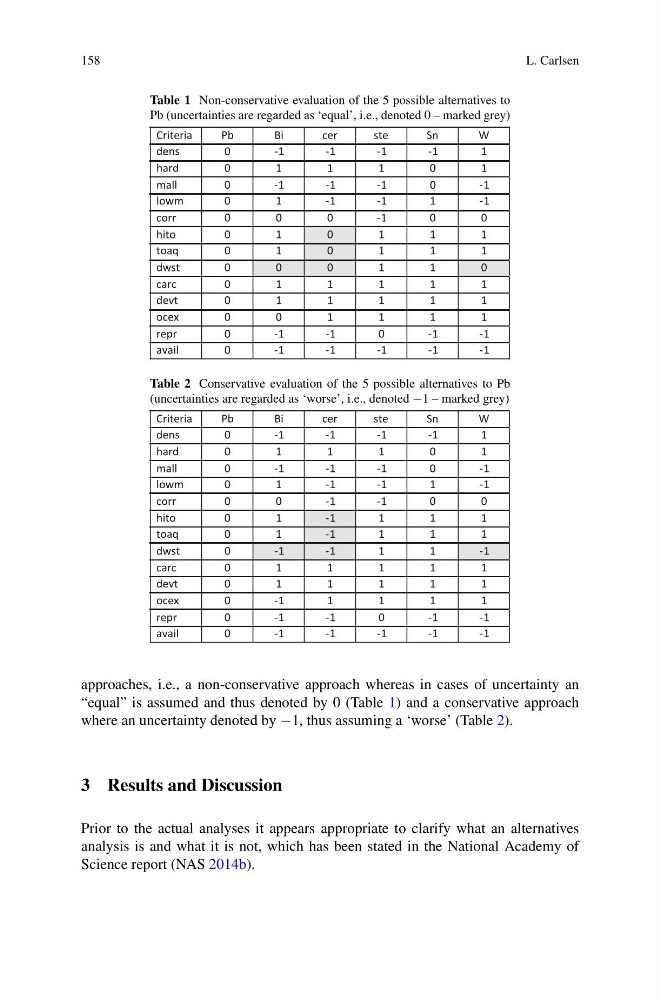
Table 1 Non-conservative evaluation of the 5 possible alternatives to
Pb (uncertainties are regarded as ‘equal’, i.e., denoted 0 – marked grey)
Criteria
Pb
Bi
cer
ste
Sn
W
dens
0
-1
-1
-1
-1
1
hard
0
1
1
1
0
1
mall
0
-1
-1
-1
0
-1
lowm
0
1
-1
-1
1
-1
corr
0
0
0
-1
0
0
hito
0
1
0
1
1
1
toaq
0
1
0
1
1
1
dwst
0
0
0
1
1
0
carc
0
1
1
1
1
1
devt
0
1
1
1
1
1
ocex
0
0
1
1
1
1
repr
0
-1
-1
0
-1
-1
avail
0
-1
-1
-1
-1
-1
Table 2 Conservative evaluation of the 5 possible alternatives to Pb
(uncertainties are regarded as ‘worse’, i.e., denoted −1 – marked grey)
Criteria
Pb
Bi
cer
ste
Sn
W
dens
0
-1
-1
-1
-1
1
hard
0
1
1
1
0
1
mall
0
-1
-1
-1
0
-1
lowm
0
1
-1
-1
1
-1
corr
0
0
-1
-1
0
0
hito
0
1
-1
1
1
1
toaq
0
1
-1
1
1
1
dwst
0
-1
-1
1
1
-1
carc
0
1
1
1
1
1
devt
0
1
1
1
1
1
ocex
0
-1
1
1
1
1
repr
0
-1
-1
0
-1
-1
avail
0
-1
-1
-1
-1
-1
approaches, i.e., a non-conservative approach whereas in cases of uncertainty an
“equal” is assumed and thus denoted by 0 (Table 1) and a conservative approach
where an uncertainty denoted by −1, thus assuming a ‘worse’ (Table 2).
3 Results and Discussion
Prior to the actual analyses it appears appropriate to clarify what an alternatives
analysis is and what it is not, which has been stated in the National Academy of
Science report (NAS 2014b).
L. Carlsen
Table 1 Non-conservative evaluation of the 5 possible alternatives to
Pb (uncertainties are regarded as ‘equal’, i.e., denoted 0 – marked grey)
Criteria
Pb
Bi
cer
ste
Sn
W
dens
0
-1
-1
-1
-1
1
hard
0
1
1
1
0
1
mall
0
-1
-1
-1
0
-1
lowm
0
1
-1
-1
1
-1
corr
0
0
0
-1
0
0
hito
0
1
0
1
1
1
toaq
0
1
0
1
1
1
dwst
0
0
0
1
1
0
carc
0
1
1
1
1
1
devt
0
1
1
1
1
1
ocex
0
0
1
1
1
1
repr
0
-1
-1
0
-1
-1
avail
0
-1
-1
-1
-1
-1
Table 2 Conservative evaluation of the 5 possible alternatives to Pb
(uncertainties are regarded as ‘worse’, i.e., denoted −1 – marked grey)
Criteria
Pb
Bi
cer
ste
Sn
W
dens
0
-1
-1
-1
-1
1
hard
0
1
1
1
0
1
mall
0
-1
-1
-1
0
-1
lowm
0
1
-1
-1
1
-1
corr
0
0
-1
-1
0
0
hito
0
1
-1
1
1
1
toaq
0
1
-1
1
1
1
dwst
0
-1
-1
1
1
-1
carc
0
1
1
1
1
1
devt
0
1
1
1
1
1
ocex
0
-1
1
1
1
1
repr
0
-1
-1
0
-1
-1
avail
0
-1
-1
-1
-1
-1
approaches, i.e., a non-conservative approach whereas in cases of uncertainty an
“equal” is assumed and thus denoted by 0 (Table 1) and a conservative approach
where an uncertainty denoted by −1, thus assuming a ‘worse’ (Table 2).
3 Results and Discussion
Prior to the actual analyses it appears appropriate to clarify what an alternatives
analysis is and what it is not, which has been stated in the National Academy of
Science report (NAS 2014b).