

appliedt on ew concrete before it has reached full strength (approximately
twenty eightd ays).
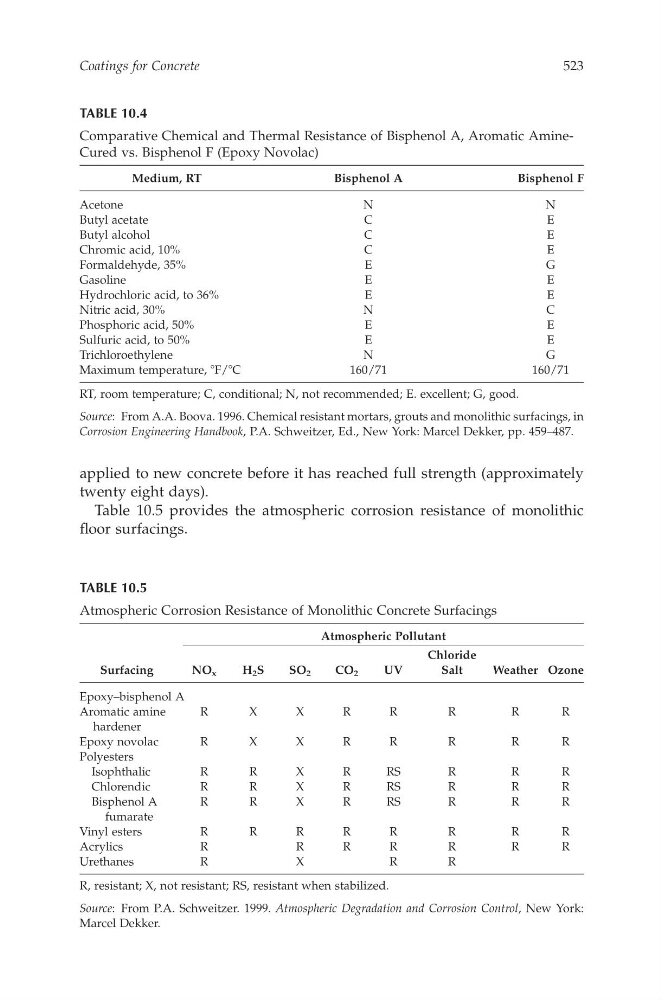
Table 10.5 provides the atmospheric corrosionr esistance of monolithic
floor surfacings.
TABLE 10.4
Comparative Chemical and Thermal Resistance of Bisphenol A, Aromatic AmineCured vs. Bisphenol F( Epoxy Novolac)
Medium,R TB isphenol AB isphenol F
Acetone
NN
Butyl acetate
CE
Butyl alcohol
CE
Chromic acid, 10%
CE
Formaldehyde, 35%
EG
Gasoline
EE
Hydrochloric acid, to 36%
EE
Nitric acid, 30%
NC
Phosphoric acid, 50%
EE
Sulfuric acid, to 50%
EE
Trichloroethylene
NG
Maximum temperature, 8 F/8 C1 60/71
160/71
RT,room temperature; C, conditional; N, not recommended; E. excellent; G, good.
Source:F rom A.A. Boova. 1996. Chemical resistant mortars, grouts and monolithic surfacings, in
Corrosion Engineering Handbook,P .A. Schweitzer,Ed., New York: Marcel Dekker,pp. 459–487.
TABLE 10.5
Atmospheric Corrosion Resistance of Monolithic Concrete Surfacings
Atmospheric Pollutant
Surfacing
NO x
H 2 SS O 2
CO 2
UV
Chloride
Salt
Weather Ozone
Epoxy–bisphenol A
Aromatic amine
hardener
RXXRR
RR
R
Epoxy novolac
RXXRR
RR
R
Polyesters
IsophthalicR
RXRR SR
RR
Chlorendic
RRXRRS
RR
R
Bisphenol A
fumarate
RRXRRS
RR
R
Vinyl esters
RRRRR
RR
R
Acrylics
RR
RR
RR
R
Urethanes
RXRR
R, resistant; X, not resistant; RS, resistant when stabilized.
Source:F rom P. A. Schweitzer.1 999. Atmospheric Degradationa nd Corrosion Control,N ew York:
Marcel Dekker.
Coatings for Concrete
523
CAT8247—CHAPTER 10—6/10/2006—12:52—SRIDHAR—XML MODEL B–pp. 515–532
twenty eightd ays).
Table 10.5 provides the atmospheric corrosionr esistance of monolithic
floor surfacings.
TABLE 10.4
Comparative Chemical and Thermal Resistance of Bisphenol A, Aromatic AmineCured vs. Bisphenol F( Epoxy Novolac)
Medium,R TB isphenol AB isphenol F
Acetone
NN
Butyl acetate
CE
Butyl alcohol
CE
Chromic acid, 10%
CE
Formaldehyde, 35%
EG
Gasoline
EE
Hydrochloric acid, to 36%
EE
Nitric acid, 30%
NC
Phosphoric acid, 50%
EE
Sulfuric acid, to 50%
EE
Trichloroethylene
NG
Maximum temperature, 8 F/8 C1 60/71
160/71
RT,room temperature; C, conditional; N, not recommended; E. excellent; G, good.
Source:F rom A.A. Boova. 1996. Chemical resistant mortars, grouts and monolithic surfacings, in
Corrosion Engineering Handbook,P .A. Schweitzer,Ed., New York: Marcel Dekker,pp. 459–487.
TABLE 10.5
Atmospheric Corrosion Resistance of Monolithic Concrete Surfacings
Atmospheric Pollutant
Surfacing
NO x
H 2 SS O 2
CO 2
UV
Chloride
Salt
Weather Ozone
Epoxy–bisphenol A
Aromatic amine
hardener
RXXRR
RR
R
Epoxy novolac
RXXRR
RR
R
Polyesters
IsophthalicR
RXRR SR
RR
Chlorendic
RRXRRS
RR
R
Bisphenol A
fumarate
RRXRRS
RR
R
Vinyl esters
RRRRR
RR
R
Acrylics
RR
RR
RR
R
Urethanes
RXRR
R, resistant; X, not resistant; RS, resistant when stabilized.
Source:F rom P. A. Schweitzer.1 999. Atmospheric Degradationa nd Corrosion Control,N ew York:
Marcel Dekker.
Coatings for Concrete
523
CAT8247—CHAPTER 10—6/10/2006—12:52—SRIDHAR—XML MODEL B–pp. 515–532