

7
ton-moles are used in engineering calculations. For example, carbon monoxide has
a molecular weight of 28; hence, 1 mol of CO contains 28 g, 1 lb-mole of CO contains 28 lbm, 1 ton-mole of CO contains 28 tons.
When a chemical is released into the environment, it becomes distributed among
the four major environmental compartments: (1) air, (2) water, (3) soil, and (4) flora
and fauna, that is, living organisms. Figure 1.3 shows a waste dump and stack from
which emissions occur. The distribution of chemicals in the environment is governed by physical processes such as (1) sedimentation, (2) adsorption, and (3) volatilization, and the chemicals can then be degraded by chemical and/or biological
processes.
Stoichiometric equations are often used by environmental professionals for calculating the amount of emissions. One of the classic examples where the “mole” is
used is while calculating the quantity of pollutants emitted from combustion.
S O
SO
+
→
2
2
One mole of Sulfur one mole of Oxygen One mole of Sulfur Diox
+
→
i ide
16
16
32
g of Sulfur
g of Oxygen
gof Sulfur Dioxide
+
→
In other words, 1 g of S reacts with 1 g of O 2 to produce 2 g of SO 2 .
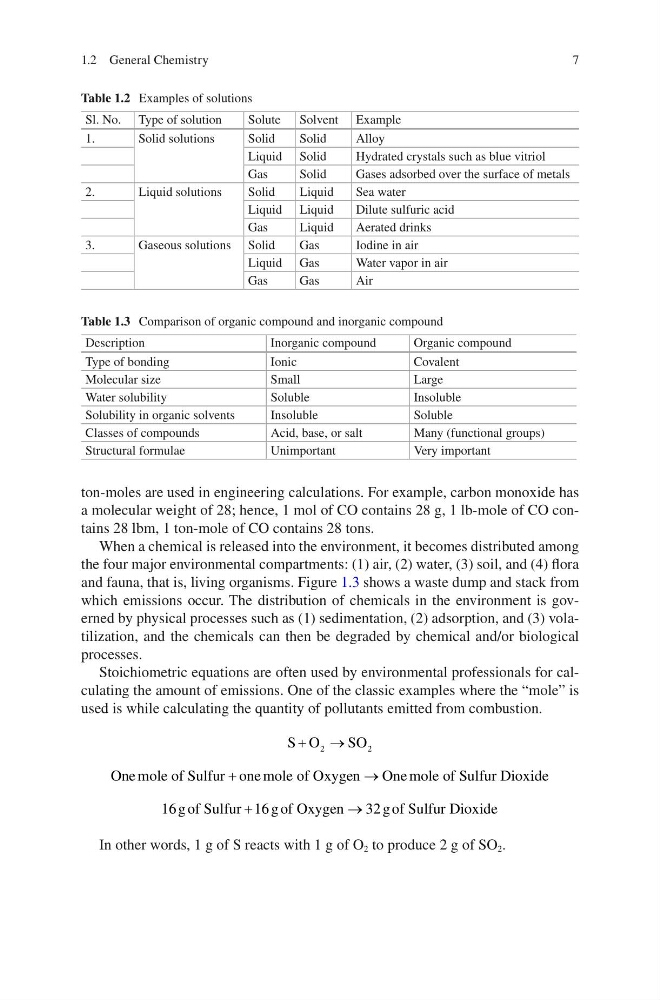
Table 1.2 Examples of solutions
Sl. No. Type of solution
Solute Solvent Example
1.
Solid solutions
Solid
Solid
Alloy
Liquid Solid
Hydrated crystals such as blue vitriol
Gas
Solid
Gases adsorbed over the surface of metals
2.
Liquid solutions
Solid
Liquid
Sea water
Liquid Liquid
Dilute sulfuric acid
Gas
Liquid
Aerated drinks
3.
Gaseous solutions Solid
Gas
Iodine in air
Liquid Gas
Water vapor in air
Gas
Gas
Air
Table 1.3 Comparison of organic compound and inorganic compound
Description
Inorganic compound
Organic compound
Type of bonding
Ionic
Covalent
Molecular size
Small
Large
Water solubility
Soluble
Insoluble
Solubility in organic solvents
Insoluble
Soluble
Classes of compounds
Acid, base, or salt
Many (functional groups)
Structural formulae
Unimportant
Very important
1.2 General Chemistry
ton-moles are used in engineering calculations. For example, carbon monoxide has
a molecular weight of 28; hence, 1 mol of CO contains 28 g, 1 lb-mole of CO contains 28 lbm, 1 ton-mole of CO contains 28 tons.
When a chemical is released into the environment, it becomes distributed among
the four major environmental compartments: (1) air, (2) water, (3) soil, and (4) flora
and fauna, that is, living organisms. Figure 1.3 shows a waste dump and stack from
which emissions occur. The distribution of chemicals in the environment is governed by physical processes such as (1) sedimentation, (2) adsorption, and (3) volatilization, and the chemicals can then be degraded by chemical and/or biological
processes.
Stoichiometric equations are often used by environmental professionals for calculating the amount of emissions. One of the classic examples where the “mole” is
used is while calculating the quantity of pollutants emitted from combustion.
S O
SO
+
→
2
2
One mole of Sulfur one mole of Oxygen One mole of Sulfur Diox
+
→
i ide
16
16
32
g of Sulfur
g of Oxygen
gof Sulfur Dioxide
+
→
In other words, 1 g of S reacts with 1 g of O 2 to produce 2 g of SO 2 .
Table 1.2 Examples of solutions
Sl. No. Type of solution
Solute Solvent Example
1.
Solid solutions
Solid
Solid
Alloy
Liquid Solid
Hydrated crystals such as blue vitriol
Gas
Solid
Gases adsorbed over the surface of metals
2.
Liquid solutions
Solid
Liquid
Sea water
Liquid Liquid
Dilute sulfuric acid
Gas
Liquid
Aerated drinks
3.
Gaseous solutions Solid
Gas
Iodine in air
Liquid Gas
Water vapor in air
Gas
Gas
Air
Table 1.3 Comparison of organic compound and inorganic compound
Description
Inorganic compound
Organic compound
Type of bonding
Ionic
Covalent
Molecular size
Small
Large
Water solubility
Soluble
Insoluble
Solubility in organic solvents
Insoluble
Soluble
Classes of compounds
Acid, base, or salt
Many (functional groups)
Structural formulae
Unimportant
Very important
1.2 General Chemistry