

207
and changing climate can damage crops thereby making it non-available for consumption. Biomagnifications of poisonous substance, food poisoning due to use of
agrochemicals, and pathogen contamination may not provide benefits of nutrition.
Poor nutrition can lead to increased susceptibility to disease, reduced immunity,
impaired physical/mental development, as well as reduced productivity.
As per various literature, balanced diet for adults shall include the following:
• At least 400 g of fruits and vegetables a day (WHO 2003).
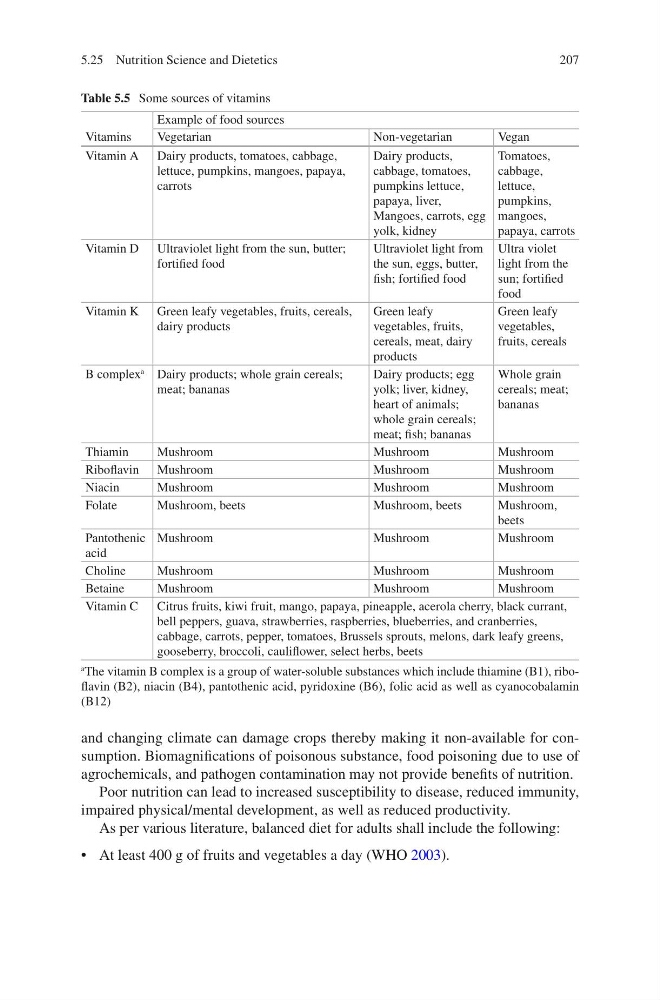
Table 5.5 Some sources of vitamins
Vitamins
Example of food sources
Vegetarian
Non-vegetarian
Vegan
Vitamin A Dairy products, tomatoes, cabbage,
lettuce, pumpkins, mangoes, papaya,
carrots
Dairy products,
cabbage, tomatoes,
pumpkins lettuce,
papaya, liver,
Mangoes, carrots, egg
yolk, kidney
Tomatoes,
cabbage,
lettuce,
pumpkins,
mangoes,
papaya, carrots
Vitamin D Ultraviolet light from the sun, butter;
fortified food
Ultraviolet light from
the sun, eggs, butter,
fish; fortified food
Ultra violet
light from the
sun; fortified
food
Vitamin K Green leafy vegetables, fruits, cereals,
dairy products
Green leafy
vegetables, fruits,
cereals, meat, dairy
products
Green leafy
vegetables,
fruits, cereals
B complex
a
Dairy products; whole grain cereals;
meat; bananas
Dairy products; egg
yolk; liver, kidney,
heart of animals;
whole grain cereals;
meat; fish; bananas
Whole grain
cereals; meat;
bananas
Thiamin
Mushroom
Mushroom
Mushroom
Riboflavin Mushroom
Mushroom
Mushroom
Niacin
Mushroom
Mushroom
Mushroom
Folate
Mushroom, beets
Mushroom, beets
Mushroom,
beets
Pantothenic
acid
Mushroom
Mushroom
Mushroom
Choline
Mushroom
Mushroom
Mushroom
Betaine
Mushroom
Mushroom
Mushroom
Vitamin C Citrus fruits, kiwi fruit, mango, papaya, pineapple, acerola cherry, black currant,
bell peppers, guava, strawberries, raspberries, blueberries, and cranberries,
cabbage, carrots, pepper, tomatoes, Brussels sprouts, melons, dark leafy greens,
gooseberry, broccoli, cauliflower, select herbs, beets
a The vitamin B complex is a group of water-soluble substances which include thiamine (B1), riboflavin (B2), niacin (B4), pantothenic acid, pyridoxine (B6), folic acid as well as cyanocobalamin
(B12)
5.25 Nutrition Science and Dietetics
and changing climate can damage crops thereby making it non-available for consumption. Biomagnifications of poisonous substance, food poisoning due to use of
agrochemicals, and pathogen contamination may not provide benefits of nutrition.
Poor nutrition can lead to increased susceptibility to disease, reduced immunity,
impaired physical/mental development, as well as reduced productivity.
As per various literature, balanced diet for adults shall include the following:
• At least 400 g of fruits and vegetables a day (WHO 2003).
Table 5.5 Some sources of vitamins
Vitamins
Example of food sources
Vegetarian
Non-vegetarian
Vegan
Vitamin A Dairy products, tomatoes, cabbage,
lettuce, pumpkins, mangoes, papaya,
carrots
Dairy products,
cabbage, tomatoes,
pumpkins lettuce,
papaya, liver,
Mangoes, carrots, egg
yolk, kidney
Tomatoes,
cabbage,
lettuce,
pumpkins,
mangoes,
papaya, carrots
Vitamin D Ultraviolet light from the sun, butter;
fortified food
Ultraviolet light from
the sun, eggs, butter,
fish; fortified food
Ultra violet
light from the
sun; fortified
food
Vitamin K Green leafy vegetables, fruits, cereals,
dairy products
Green leafy
vegetables, fruits,
cereals, meat, dairy
products
Green leafy
vegetables,
fruits, cereals
B complex
a
Dairy products; whole grain cereals;
meat; bananas
Dairy products; egg
yolk; liver, kidney,
heart of animals;
whole grain cereals;
meat; fish; bananas
Whole grain
cereals; meat;
bananas
Thiamin
Mushroom
Mushroom
Mushroom
Riboflavin Mushroom
Mushroom
Mushroom
Niacin
Mushroom
Mushroom
Mushroom
Folate
Mushroom, beets
Mushroom, beets
Mushroom,
beets
Pantothenic
acid
Mushroom
Mushroom
Mushroom
Choline
Mushroom
Mushroom
Mushroom
Betaine
Mushroom
Mushroom
Mushroom
Vitamin C Citrus fruits, kiwi fruit, mango, papaya, pineapple, acerola cherry, black currant,
bell peppers, guava, strawberries, raspberries, blueberries, and cranberries,
cabbage, carrots, pepper, tomatoes, Brussels sprouts, melons, dark leafy greens,
gooseberry, broccoli, cauliflower, select herbs, beets
a The vitamin B complex is a group of water-soluble substances which include thiamine (B1), riboflavin (B2), niacin (B4), pantothenic acid, pyridoxine (B6), folic acid as well as cyanocobalamin
(B12)
5.25 Nutrition Science and Dietetics