

208
• Below 10% of total energy ingestion from free sugars (WHO 2003, 2015), but
preferably less than 5% of total energy intake for additional health benefits
(WHO 2015).
• Below 30% of total energy intake from fats (Hooper et al. 2012; WHO 2003.
Unsaturated fats are preferable to saturated fats.
• Below 5 g of salt per day and use iodized salt.
• Fruits, vegetables, legumes, nuts as well as whole grains.
Poor nutrition or unbalanced diet leads to health disorders. Micronutrient deficiency is deficiency of one or more of the micronutrients due to poor intake or
exacerbation during illnesses due to rapid loss of nutrients through feces/vomit.
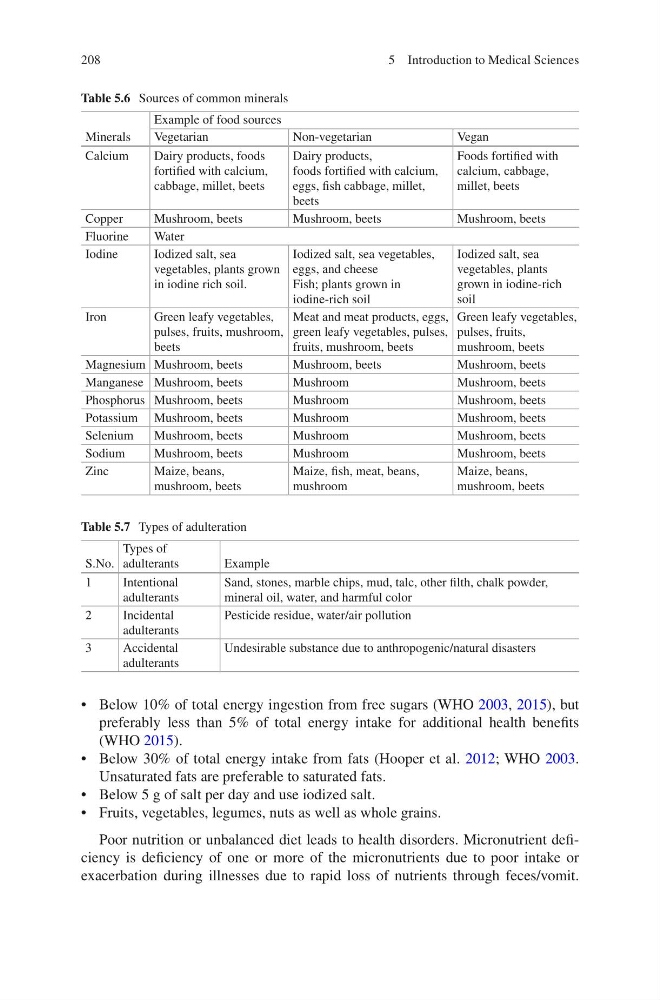
Table 5.6 Sources of common minerals
Minerals
Example of food sources
Vegetarian
Non-vegetarian
Vegan
Calcium
Dairy products, foods
fortified with calcium,
cabbage, millet, beets
Dairy products,
foods fortified with calcium,
eggs, fish cabbage, millet,
beets
Foods fortified with
calcium, cabbage,
millet, beets
Copper
Mushroom, beets
Mushroom, beets
Mushroom, beets
Fluorine
Water
Iodine
Iodized salt, sea
vegetables, plants grown
in iodine rich soil.
Iodized salt, sea vegetables,
eggs, and cheese
Fish; plants grown in
iodine-rich soil
Iodized salt, sea
vegetables, plants
grown in iodine-rich
soil
Iron
Green leafy vegetables,
pulses, fruits, mushroom,
beets
Meat and meat products, eggs,
green leafy vegetables, pulses,
fruits, mushroom, beets
Green leafy vegetables,
pulses, fruits,
mushroom, beets
Magnesium Mushroom, beets
Mushroom, beets
Mushroom, beets
Manganese Mushroom, beets
Mushroom
Mushroom, beets
Phosphorus Mushroom, beets
Mushroom
Mushroom, beets
Potassium Mushroom, beets
Mushroom
Mushroom, beets
Selenium
Mushroom, beets
Mushroom
Mushroom, beets
Sodium
Mushroom, beets
Mushroom
Mushroom, beets
Zinc
Maize, beans,
mushroom, beets
Maize, fish, meat, beans,
mushroom
Maize, beans,
mushroom, beets
Table 5.7 Types of adulteration
S.No.
Types of
adulterants
Example
1
Intentional
adulterants
Sand, stones, marble chips, mud, talc, other filth, chalk powder,
mineral oil, water, and harmful color
2
Incidental
adulterants
Pesticide residue, water/air pollution
3
Accidental
adulterants
Undesirable substance due to anthropogenic/natural disasters
5 Introduction to Medical Sciences
• Below 10% of total energy ingestion from free sugars (WHO 2003, 2015), but
preferably less than 5% of total energy intake for additional health benefits
(WHO 2015).
• Below 30% of total energy intake from fats (Hooper et al. 2012; WHO 2003.
Unsaturated fats are preferable to saturated fats.
• Below 5 g of salt per day and use iodized salt.
• Fruits, vegetables, legumes, nuts as well as whole grains.
Poor nutrition or unbalanced diet leads to health disorders. Micronutrient deficiency is deficiency of one or more of the micronutrients due to poor intake or
exacerbation during illnesses due to rapid loss of nutrients through feces/vomit.
Table 5.6 Sources of common minerals
Minerals
Example of food sources
Vegetarian
Non-vegetarian
Vegan
Calcium
Dairy products, foods
fortified with calcium,
cabbage, millet, beets
Dairy products,
foods fortified with calcium,
eggs, fish cabbage, millet,
beets
Foods fortified with
calcium, cabbage,
millet, beets
Copper
Mushroom, beets
Mushroom, beets
Mushroom, beets
Fluorine
Water
Iodine
Iodized salt, sea
vegetables, plants grown
in iodine rich soil.
Iodized salt, sea vegetables,
eggs, and cheese
Fish; plants grown in
iodine-rich soil
Iodized salt, sea
vegetables, plants
grown in iodine-rich
soil
Iron
Green leafy vegetables,
pulses, fruits, mushroom,
beets
Meat and meat products, eggs,
green leafy vegetables, pulses,
fruits, mushroom, beets
Green leafy vegetables,
pulses, fruits,
mushroom, beets
Magnesium Mushroom, beets
Mushroom, beets
Mushroom, beets
Manganese Mushroom, beets
Mushroom
Mushroom, beets
Phosphorus Mushroom, beets
Mushroom
Mushroom, beets
Potassium Mushroom, beets
Mushroom
Mushroom, beets
Selenium
Mushroom, beets
Mushroom
Mushroom, beets
Sodium
Mushroom, beets
Mushroom
Mushroom, beets
Zinc
Maize, beans,
mushroom, beets
Maize, fish, meat, beans,
mushroom
Maize, beans,
mushroom, beets
Table 5.7 Types of adulteration
S.No.
Types of
adulterants
Example
1
Intentional
adulterants
Sand, stones, marble chips, mud, talc, other filth, chalk powder,
mineral oil, water, and harmful color
2
Incidental
adulterants
Pesticide residue, water/air pollution
3
Accidental
adulterants
Undesirable substance due to anthropogenic/natural disasters
5 Introduction to Medical Sciences