

206
There are seven major classes of nutrients that human body needs—proteins,
fiber carbohydrates, fats, minerals, vitamins, as well as water. Human body needs
both macronutrients and micronutrients. Macronutrients are nutrients that people
need to eat regularly in a fairly large amount. Micronutrients are required in diets in
small quantities, which include minerals and vitamins.
Eating a balanced diet is very important for health as well as well-being. Quality
of food depends on environment. Pollutants can result in food poisoning and change
in environment can alter nutritional value of the food (Fig. 5.19).
Even though many nutritional requirements can be fulfilled by eating animal
products either by killing them or otherwise not everyone is willing to do so.
Veganism is the practice of abstaining from the use of animal products, particularly
in diet, whereas many vegetarians do eat animal products such as honey and milk
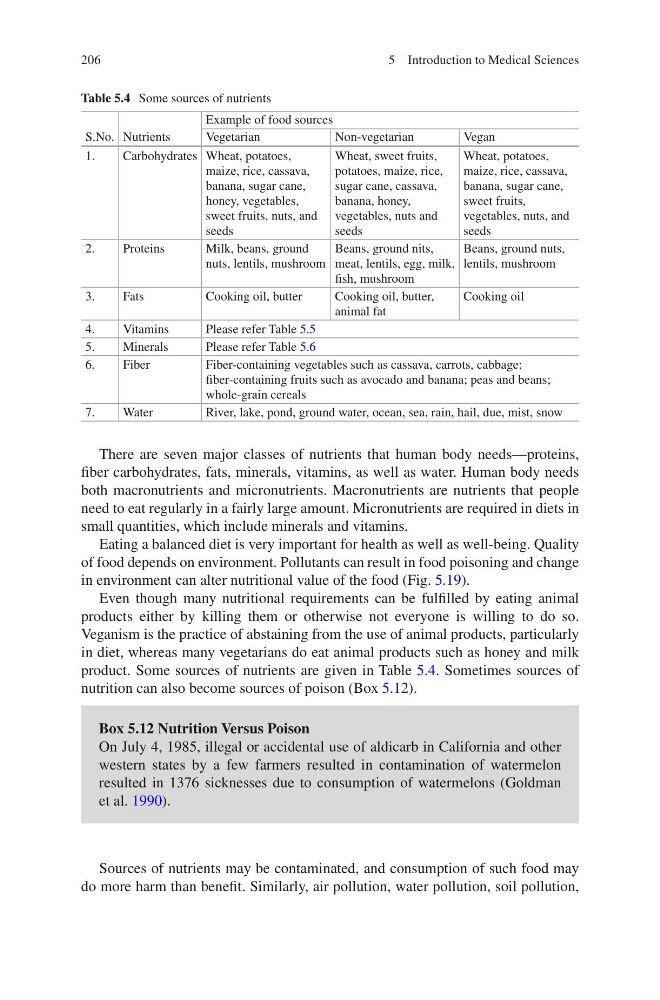
product. Some sources of nutrients are given in Table 5.4. Sometimes sources of
nutrition can also become sources of poison (Box 5.12).
Sources of nutrients may be contaminated, and consumption of such food may
do more harm than benefit. Similarly, air pollution, water pollution, soil pollution,
Table 5.4 Some sources of nutrients
S.No. Nutrients
Example of food sources
Vegetarian
Non-vegetarian
Vegan
1.
Carbohydrates Wheat, potatoes,
maize, rice, cassava,
banana, sugar cane,
honey, vegetables,
sweet fruits, nuts, and
seeds
Wheat, sweet fruits,
potatoes, maize, rice,
sugar cane, cassava,
banana, honey,
vegetables, nuts and
seeds
Wheat, potatoes,
maize, rice, cassava,
banana, sugar cane,
sweet fruits,
vegetables, nuts, and
seeds
2.
Proteins
Milk, beans, ground
nuts, lentils, mushroom
Beans, ground nits,
meat, lentils, egg, milk,
fish, mushroom
Beans, ground nuts,
lentils, mushroom
3.
Fats
Cooking oil, butter
Cooking oil, butter,
animal fat
Cooking oil
4.
Vitamins
Please refer Table 5.5
5.
Minerals
Please refer Table 5.6
6.
Fiber
Fiber-containing vegetables such as cassava, carrots, cabbage;
fiber-containing fruits such as avocado and banana; peas and beans;
whole-grain cereals
7.
Water
River, lake, pond, ground water, ocean, sea, rain, hail, due, mist, snow
Box 5.12 Nutrition Versus Poison
On July 4, 1985, illegal or accidental use of aldicarb in California and other
western states by a few farmers resulted in contamination of watermelon
resulted in 1376 sicknesses due to consumption of watermelons (Goldman
et al. 1990).
5 Introduction to Medical Sciences
There are seven major classes of nutrients that human body needs—proteins,
fiber carbohydrates, fats, minerals, vitamins, as well as water. Human body needs
both macronutrients and micronutrients. Macronutrients are nutrients that people
need to eat regularly in a fairly large amount. Micronutrients are required in diets in
small quantities, which include minerals and vitamins.
Eating a balanced diet is very important for health as well as well-being. Quality
of food depends on environment. Pollutants can result in food poisoning and change
in environment can alter nutritional value of the food (Fig. 5.19).
Even though many nutritional requirements can be fulfilled by eating animal
products either by killing them or otherwise not everyone is willing to do so.
Veganism is the practice of abstaining from the use of animal products, particularly
in diet, whereas many vegetarians do eat animal products such as honey and milk
product. Some sources of nutrients are given in Table 5.4. Sometimes sources of
nutrition can also become sources of poison (Box 5.12).
Sources of nutrients may be contaminated, and consumption of such food may
do more harm than benefit. Similarly, air pollution, water pollution, soil pollution,
Table 5.4 Some sources of nutrients
S.No. Nutrients
Example of food sources
Vegetarian
Non-vegetarian
Vegan
1.
Carbohydrates Wheat, potatoes,
maize, rice, cassava,
banana, sugar cane,
honey, vegetables,
sweet fruits, nuts, and
seeds
Wheat, sweet fruits,
potatoes, maize, rice,
sugar cane, cassava,
banana, honey,
vegetables, nuts and
seeds
Wheat, potatoes,
maize, rice, cassava,
banana, sugar cane,
sweet fruits,
vegetables, nuts, and
seeds
2.
Proteins
Milk, beans, ground
nuts, lentils, mushroom
Beans, ground nits,
meat, lentils, egg, milk,
fish, mushroom
Beans, ground nuts,
lentils, mushroom
3.
Fats
Cooking oil, butter
Cooking oil, butter,
animal fat
Cooking oil
4.
Vitamins
Please refer Table 5.5
5.
Minerals
Please refer Table 5.6
6.
Fiber
Fiber-containing vegetables such as cassava, carrots, cabbage;
fiber-containing fruits such as avocado and banana; peas and beans;
whole-grain cereals
7.
Water
River, lake, pond, ground water, ocean, sea, rain, hail, due, mist, snow
Box 5.12 Nutrition Versus Poison
On July 4, 1985, illegal or accidental use of aldicarb in California and other
western states by a few farmers resulted in contamination of watermelon
resulted in 1376 sicknesses due to consumption of watermelons (Goldman
et al. 1990).
5 Introduction to Medical Sciences