

120
with human and domestic animals (Wolfe et al. 2005). As per Taylor et al. (2001),
33% of zoonotic pathogens that have spilled over are transmissible between humans.
Infectious diseases are linked to land use changes, habitat fragmentation, and
biodiversity loss (Allan et al. 2003; Cleaveland et al. 2007; Gillespie et al. 2005;
Gottdenker et al. 2014; Keesing et al. 2006; Maganga et al. 2014; Salzer et al. 2007;
Cottontail et al. 2009; Young et al. 2014). Construction and broadening of truck
roads in forests increased access of bushmeat hunters to wildlife in Cameroon,
which is the origin of several emerging virus/diseases that includes Ebola, HIV/
AIDS, monkey pox, and Marburg viruses (Wolfe et al. 2005).
Pathogen spillover from bushmeat (meat from wild animals for human consumption) may happen through consumption. But risks are associated with exposure to
feces and body fluids during butchering and handling (Kilonzo et al. 2014; Paige
et al. 2014). Ebola virus disease (EVD) epidemic that emerged in West Africa in
2014 and resulted in more than 28,600 cases and 11,300 deaths in Sierra Leone,
Guinea, and Liberia (Johnson et al. 1977; Mari Saez et al. 2015; Baize et al. 2014;
WHO 2016), transmitted to humans by contact with body fluids of infected wildlife
(Leroy 2004; Judson et al. 2016).
With the increase in human population, densities, and connections, diseases have
spread more easily resulting in devastating outcomes across the world causing hundreds of thousands of deaths annually with some outbreaks becoming pandemics.
3.4.2 Vector-Borne Diseases
The word vector in medicine is an organism that does not cause sickness itself but
transmits infection by spreading pathogens from one host to another.
Vectors can transmit infectious diseases from animals to humans or between
humans. Vectors include mosquitoes, ticks, flies, sandflies, triatomine bugs, fleas, as
well as some freshwater aquatic snails.
Key facts of vector-borne diseases as per the WHO (2017) are as follows:
• Over 17% of all infectious ailments are vector-borne ailments, resulting in over
700,000 deaths per year.
• Over 3.9 billion people in more than 128 nations are at risk of contracting dengue, with estimated 96 million cases annually.
• Malaria causes over 400,000 deaths annually worldwide.
Wild life
Domestic animal
Humans
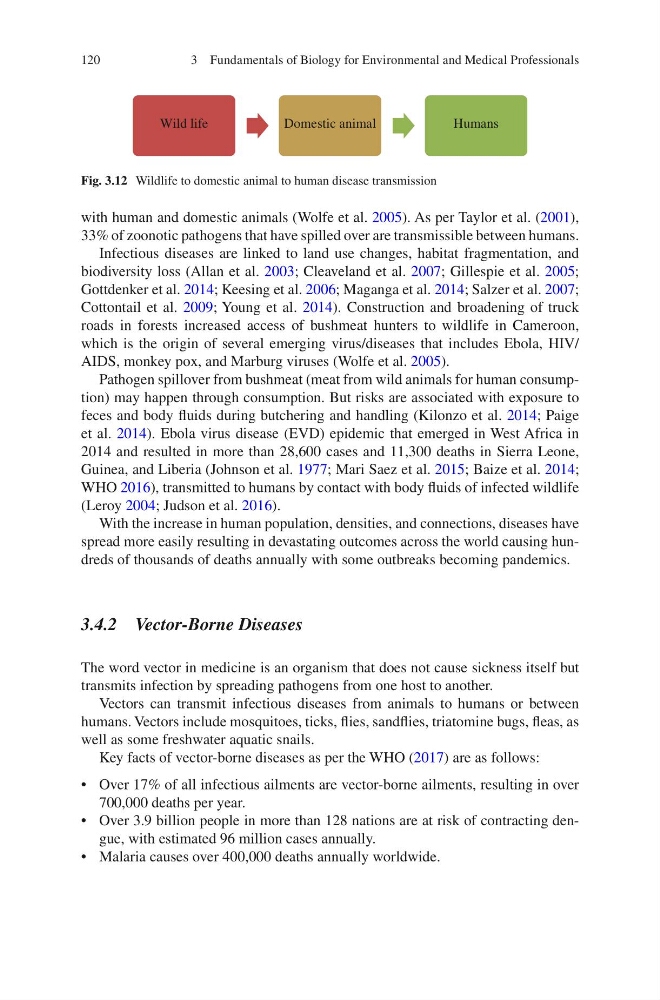
Fig. 3.12 Wildlife to domestic animal to human disease transmission
3 Fundamentals of Biology for Environmental and Medical Professionals
with human and domestic animals (Wolfe et al. 2005). As per Taylor et al. (2001),
33% of zoonotic pathogens that have spilled over are transmissible between humans.
Infectious diseases are linked to land use changes, habitat fragmentation, and
biodiversity loss (Allan et al. 2003; Cleaveland et al. 2007; Gillespie et al. 2005;
Gottdenker et al. 2014; Keesing et al. 2006; Maganga et al. 2014; Salzer et al. 2007;
Cottontail et al. 2009; Young et al. 2014). Construction and broadening of truck
roads in forests increased access of bushmeat hunters to wildlife in Cameroon,
which is the origin of several emerging virus/diseases that includes Ebola, HIV/
AIDS, monkey pox, and Marburg viruses (Wolfe et al. 2005).
Pathogen spillover from bushmeat (meat from wild animals for human consumption) may happen through consumption. But risks are associated with exposure to
feces and body fluids during butchering and handling (Kilonzo et al. 2014; Paige
et al. 2014). Ebola virus disease (EVD) epidemic that emerged in West Africa in
2014 and resulted in more than 28,600 cases and 11,300 deaths in Sierra Leone,
Guinea, and Liberia (Johnson et al. 1977; Mari Saez et al. 2015; Baize et al. 2014;
WHO 2016), transmitted to humans by contact with body fluids of infected wildlife
(Leroy 2004; Judson et al. 2016).
With the increase in human population, densities, and connections, diseases have
spread more easily resulting in devastating outcomes across the world causing hundreds of thousands of deaths annually with some outbreaks becoming pandemics.
3.4.2 Vector-Borne Diseases
The word vector in medicine is an organism that does not cause sickness itself but
transmits infection by spreading pathogens from one host to another.
Vectors can transmit infectious diseases from animals to humans or between
humans. Vectors include mosquitoes, ticks, flies, sandflies, triatomine bugs, fleas, as
well as some freshwater aquatic snails.
Key facts of vector-borne diseases as per the WHO (2017) are as follows:
• Over 17% of all infectious ailments are vector-borne ailments, resulting in over
700,000 deaths per year.
• Over 3.9 billion people in more than 128 nations are at risk of contracting dengue, with estimated 96 million cases annually.
• Malaria causes over 400,000 deaths annually worldwide.
Wild life
Domestic animal
Humans
Fig. 3.12 Wildlife to domestic animal to human disease transmission
3 Fundamentals of Biology for Environmental and Medical Professionals