

103
Food-borne infections or intoxication are caused by pathogenic microorganisms
that include bacteria, viruses, fungi that may not cause food spoilage.
The major factors that contribute to food-borne diseases are as follows:
1. Allowing long time gap between preparation and consumption of food
2. Contaminated cooking utensils or cooking place
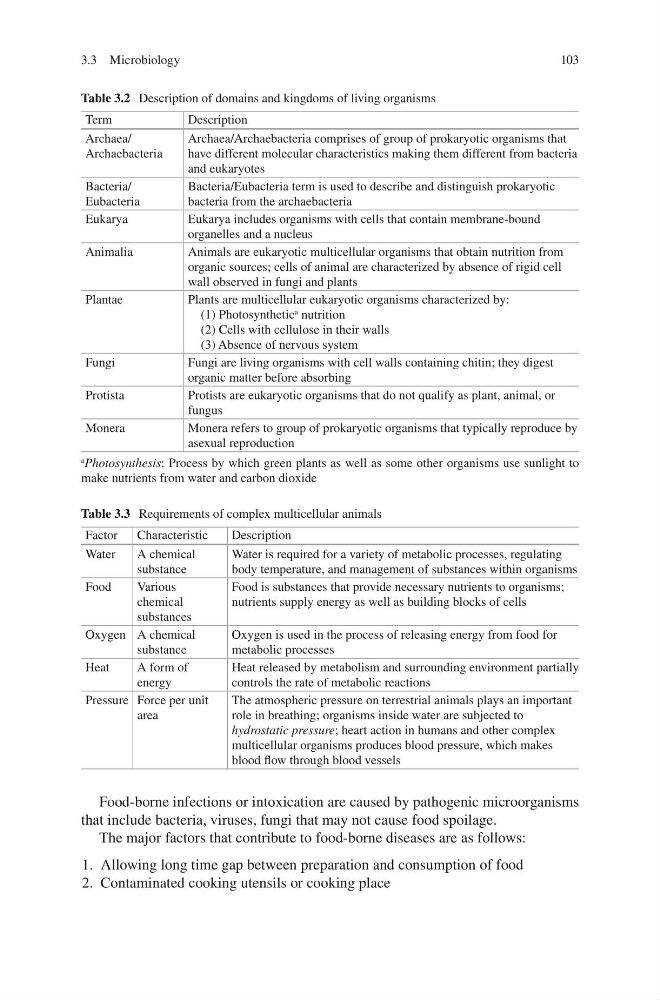
Table 3.2 Description of domains and kingdoms of living organisms
Term
Description
Archaea/
Archaebacteria
Archaea/Archaebacteria comprises of group of prokaryotic organisms that
have different molecular characteristics making them different from bacteria
and eukaryotes
Bacteria/
Eubacteria
Bacteria/Eubacteria term is used to describe and distinguish prokaryotic
bacteria from the archaebacteria
Eukarya
Eukarya includes organisms with cells that contain membrane-bound
organelles and a nucleus
Animalia
Animals are eukaryotic multicellular organisms that obtain nutrition from
organic sources; cells of animal are characterized by absence of rigid cell
wall observed in fungi and plants
Plantae
Plants are multicellular eukaryotic organisms characterized by:
(1) Photosynthetic
a nutrition
(2) Cells with cellulose in their walls
(3) Absence of nervous system
Fungi
Fungi are living organisms with cell walls containing chitin; they digest
organic matter before absorbing
Protista
Protists are eukaryotic organisms that do not qualify as plant, animal, or
fungus
Monera
Monera refers to group of prokaryotic organisms that typically reproduce by
asexual reproduction
a Photosynthesis: Process by which green plants as well as some other organisms use sunlight to
make nutrients from water and carbon dioxide
Table 3.3 Requirements of complex multicellular animals
Factor
Characteristic
Description
Water
A chemical
substance
Water is required for a variety of metabolic processes, regulating
body temperature, and management of substances within organisms
Food
Various
chemical
substances
Food is substances that provide necessary nutrients to organisms;
nutrients supply energy as well as building blocks of cells
Oxygen A chemical
substance
Oxygen is used in the process of releasing energy from food for
metabolic processes
Heat
A form of
energy
Heat released by metabolism and surrounding environment partially
controls the rate of metabolic reactions
Pressure Force per unit
area
The atmospheric pressure on terrestrial animals plays an important
role in breathing; organisms inside water are subjected to
hydrostatic pressure; heart action in humans and other complex
multicellular organisms produces blood pressure, which makes
blood flow through blood vessels
3.3 Microbiology
Food-borne infections or intoxication are caused by pathogenic microorganisms
that include bacteria, viruses, fungi that may not cause food spoilage.
The major factors that contribute to food-borne diseases are as follows:
1. Allowing long time gap between preparation and consumption of food
2. Contaminated cooking utensils or cooking place
Table 3.2 Description of domains and kingdoms of living organisms
Term
Description
Archaea/
Archaebacteria
Archaea/Archaebacteria comprises of group of prokaryotic organisms that
have different molecular characteristics making them different from bacteria
and eukaryotes
Bacteria/
Eubacteria
Bacteria/Eubacteria term is used to describe and distinguish prokaryotic
bacteria from the archaebacteria
Eukarya
Eukarya includes organisms with cells that contain membrane-bound
organelles and a nucleus
Animalia
Animals are eukaryotic multicellular organisms that obtain nutrition from
organic sources; cells of animal are characterized by absence of rigid cell
wall observed in fungi and plants
Plantae
Plants are multicellular eukaryotic organisms characterized by:
(1) Photosynthetic
a nutrition
(2) Cells with cellulose in their walls
(3) Absence of nervous system
Fungi
Fungi are living organisms with cell walls containing chitin; they digest
organic matter before absorbing
Protista
Protists are eukaryotic organisms that do not qualify as plant, animal, or
fungus
Monera
Monera refers to group of prokaryotic organisms that typically reproduce by
asexual reproduction
a Photosynthesis: Process by which green plants as well as some other organisms use sunlight to
make nutrients from water and carbon dioxide
Table 3.3 Requirements of complex multicellular animals
Factor
Characteristic
Description
Water
A chemical
substance
Water is required for a variety of metabolic processes, regulating
body temperature, and management of substances within organisms
Food
Various
chemical
substances
Food is substances that provide necessary nutrients to organisms;
nutrients supply energy as well as building blocks of cells
Oxygen A chemical
substance
Oxygen is used in the process of releasing energy from food for
metabolic processes
Heat
A form of
energy
Heat released by metabolism and surrounding environment partially
controls the rate of metabolic reactions
Pressure Force per unit
area
The atmospheric pressure on terrestrial animals plays an important
role in breathing; organisms inside water are subjected to
hydrostatic pressure; heart action in humans and other complex
multicellular organisms produces blood pressure, which makes
blood flow through blood vessels
3.3 Microbiology