

102
were able to relate diseases with microorganisms and invent new effective treatment
procedures and knowledge to cure diseases by killing the disease-causing microorganisms. However, microorganisms are not always associated with diseases. They
live within human body and even on surface of human body. They are essential for
the making of foods such as bread, beer, wine, cheese, yogurt, and other fermented
foods. Spirulina (biomass of cyanobacteria) can be consumed by humans/animals.
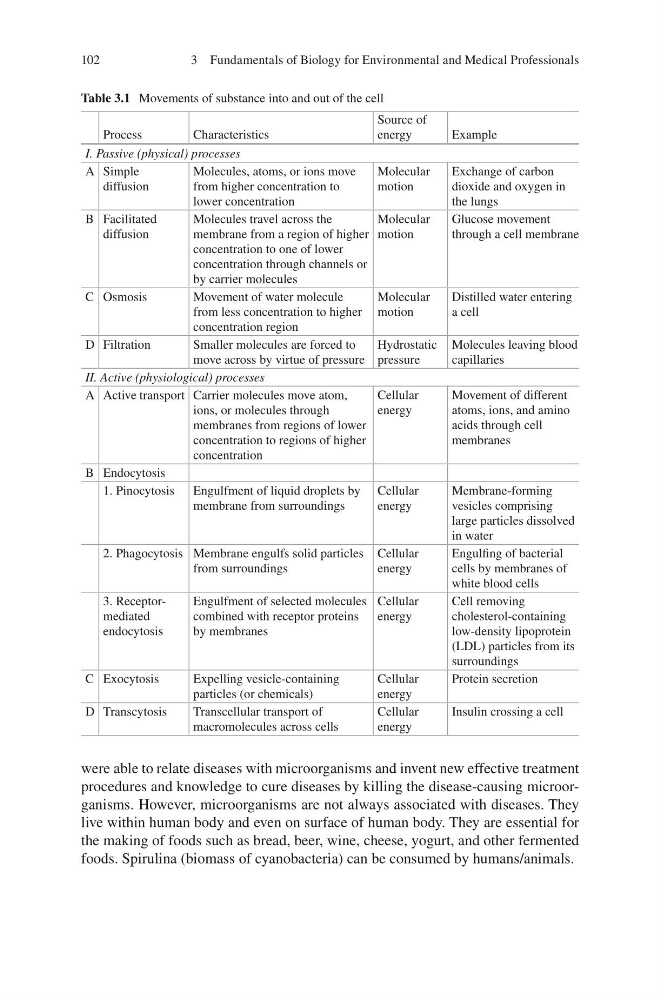
Table 3.1 Movements of substance into and out of the cell
Process
Characteristics
Source of
energy
Example
I. Passive (physical) processes
A Simple
diffusion
Molecules, atoms, or ions move
from higher concentration to
lower concentration
Molecular
motion
Exchange of carbon
dioxide and oxygen in
the lungs
B Facilitated
diffusion
Molecules travel across the
membrane from a region of higher
concentration to one of lower
concentration through channels or
by carrier molecules
Molecular
motion
Glucose movement
through a cell membrane
C Osmosis
Movement of water molecule
from less concentration to higher
concentration region
Molecular
motion
Distilled water entering
a cell
D Filtration
Smaller molecules are forced to
move across by virtue of pressure
Hydrostatic
pressure
Molecules leaving blood
capillaries
II. Active (physiological) processes
A Active transport Carrier molecules move atom,
ions, or molecules through
membranes from regions of lower
concentration to regions of higher
concentration
Cellular
energy
Movement of different
atoms, ions, and amino
acids through cell
membranes
B Endocytosis
1. Pinocytosis Engulfment of liquid droplets by
membrane from surroundings
Cellular
energy
Membrane-forming
vesicles comprising
large particles dissolved
in water
2. Phagocytosis Membrane engulfs solid particles
from surroundings
Cellular
energy
Engulfing of bacterial
cells by membranes of
white blood cells
3. Receptormediated
endocytosis
Engulfment of selected molecules
combined with receptor proteins
by membranes
Cellular
energy
Cell removing
cholesterol-containing
low-density lipoprotein
(LDL) particles from its
surroundings
C Exocytosis
Expelling vesicle-containing
particles (or chemicals)
Cellular
energy
Protein secretion
D Transcytosis
Transcellular transport of
macromolecules across cells
Cellular
energy
Insulin crossing a cell
3 Fundamentals of Biology for Environmental and Medical Professionals
were able to relate diseases with microorganisms and invent new effective treatment
procedures and knowledge to cure diseases by killing the disease-causing microorganisms. However, microorganisms are not always associated with diseases. They
live within human body and even on surface of human body. They are essential for
the making of foods such as bread, beer, wine, cheese, yogurt, and other fermented
foods. Spirulina (biomass of cyanobacteria) can be consumed by humans/animals.
Table 3.1 Movements of substance into and out of the cell
Process
Characteristics
Source of
energy
Example
I. Passive (physical) processes
A Simple
diffusion
Molecules, atoms, or ions move
from higher concentration to
lower concentration
Molecular
motion
Exchange of carbon
dioxide and oxygen in
the lungs
B Facilitated
diffusion
Molecules travel across the
membrane from a region of higher
concentration to one of lower
concentration through channels or
by carrier molecules
Molecular
motion
Glucose movement
through a cell membrane
C Osmosis
Movement of water molecule
from less concentration to higher
concentration region
Molecular
motion
Distilled water entering
a cell
D Filtration
Smaller molecules are forced to
move across by virtue of pressure
Hydrostatic
pressure
Molecules leaving blood
capillaries
II. Active (physiological) processes
A Active transport Carrier molecules move atom,
ions, or molecules through
membranes from regions of lower
concentration to regions of higher
concentration
Cellular
energy
Movement of different
atoms, ions, and amino
acids through cell
membranes
B Endocytosis
1. Pinocytosis Engulfment of liquid droplets by
membrane from surroundings
Cellular
energy
Membrane-forming
vesicles comprising
large particles dissolved
in water
2. Phagocytosis Membrane engulfs solid particles
from surroundings
Cellular
energy
Engulfing of bacterial
cells by membranes of
white blood cells
3. Receptormediated
endocytosis
Engulfment of selected molecules
combined with receptor proteins
by membranes
Cellular
energy
Cell removing
cholesterol-containing
low-density lipoprotein
(LDL) particles from its
surroundings
C Exocytosis
Expelling vesicle-containing
particles (or chemicals)
Cellular
energy
Protein secretion
D Transcytosis
Transcellular transport of
macromolecules across cells
Cellular
energy
Insulin crossing a cell
3 Fundamentals of Biology for Environmental and Medical Professionals