

assumed that the reliability of the visual classification is sufficiently high, and it is
reasonable to classify the entire area of Jakarta into the four types. In this manner, we
established a classification map of Jakarta’s residential area types.
4.4 Residential Landscape and Historical Continuity: The
Case of Kampung in Jakarta
4.4.1 Proportions of Residential Area Types by Administrative
Distinction
Based on the classification results of residential areas in the Jakarta metropolitan
area, this section first describes the characteristics of the residential landscape in
Jakarta. Subsequently, by focusing on two specific types of residential areas, the
urban village and rural types, we consider the historical spatial characteristics of
kampung, which is the significant urban living environment in Indonesian cities.
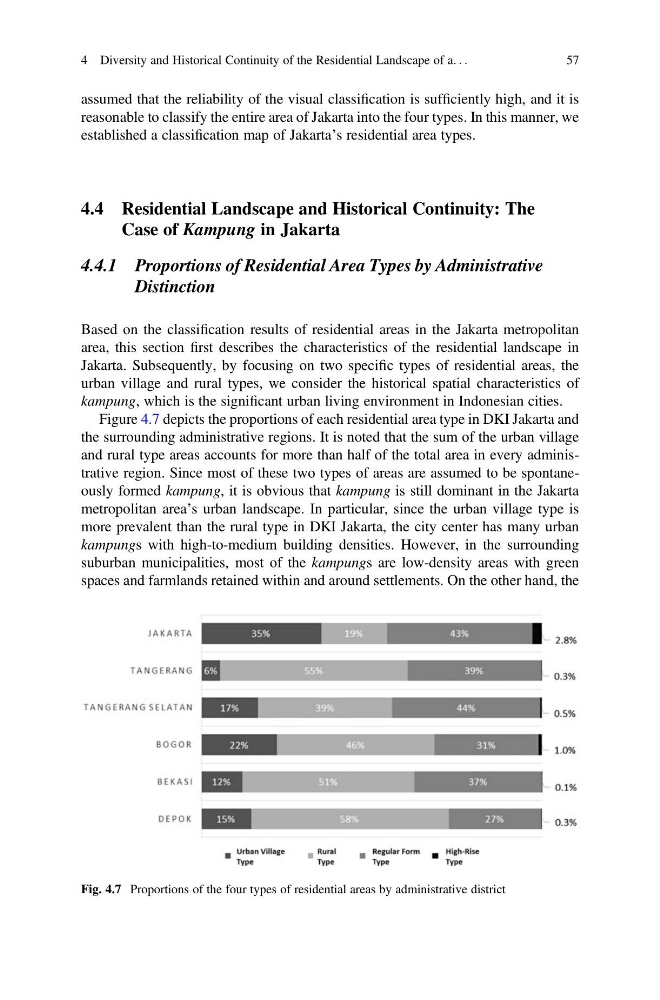
Figure 4.7 depicts the proportions of each residential area type in DKI Jakarta and
the surrounding administrative regions. It is noted that the sum of the urban village
and rural type areas accounts for more than half of the total area in every administrative region. Since most of these two types of areas are assumed to be spontaneously formed kampung, it is obvious that kampung is still dominant in the Jakarta
metropolitan area’s urban landscape. In particular, since the urban village type is
more prevalent than the rural type in DKI Jakarta, the city center has many urban
kampungs with high-to-medium building densities. However, in the surrounding
suburban municipalities, most of the kampungs are low-density areas with green
spaces and farmlands retained within and around settlements. On the other hand, the
Fig. 4.7 Proportions of the four types of residential areas by administrative district
4 Diversity and Historical Continuity of the Residential Landscape of a. . .
57
reasonable to classify the entire area of Jakarta into the four types. In this manner, we
established a classification map of Jakarta’s residential area types.
4.4 Residential Landscape and Historical Continuity: The
Case of Kampung in Jakarta
4.4.1 Proportions of Residential Area Types by Administrative
Distinction
Based on the classification results of residential areas in the Jakarta metropolitan
area, this section first describes the characteristics of the residential landscape in
Jakarta. Subsequently, by focusing on two specific types of residential areas, the
urban village and rural types, we consider the historical spatial characteristics of
kampung, which is the significant urban living environment in Indonesian cities.
Figure 4.7 depicts the proportions of each residential area type in DKI Jakarta and
the surrounding administrative regions. It is noted that the sum of the urban village
and rural type areas accounts for more than half of the total area in every administrative region. Since most of these two types of areas are assumed to be spontaneously formed kampung, it is obvious that kampung is still dominant in the Jakarta
metropolitan area’s urban landscape. In particular, since the urban village type is
more prevalent than the rural type in DKI Jakarta, the city center has many urban
kampungs with high-to-medium building densities. However, in the surrounding
suburban municipalities, most of the kampungs are low-density areas with green
spaces and farmlands retained within and around settlements. On the other hand, the
Fig. 4.7 Proportions of the four types of residential areas by administrative district
4 Diversity and Historical Continuity of the Residential Landscape of a. . .
57