

18
O. Shymanovskyi et al.
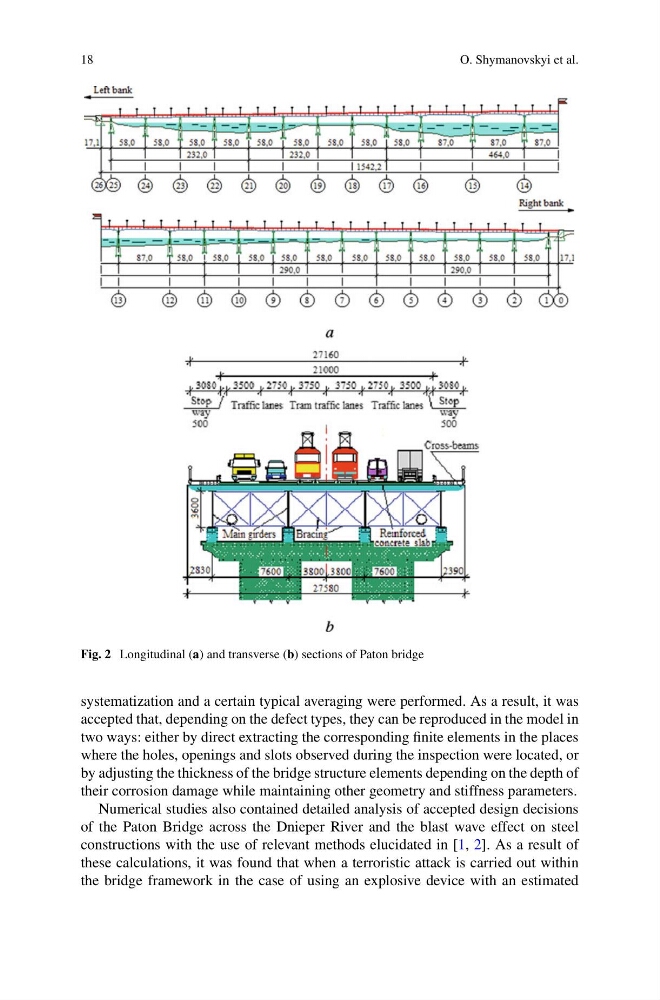
Fig. 2 Longitudinal (a) and transverse (b) sections of Paton bridge
systematization and a certain typical averaging were performed. As a result, it was
accepted that, depending on the defect types, they can be reproduced in the model in
two ways: either by direct extracting the corresponding finite elements in the places
where the holes, openings and slots observed during the inspection were located, or
by adjusting the thickness of the bridge structure elements depending on the depth of
their corrosion damage while maintaining other geometry and stiffness parameters.
Numerical studies also contained detailed analysis of accepted design decisions
of the Paton Bridge across the Dnieper River and the blast wave effect on steel
constructions with the use of relevant methods elucidated in [1, 2]. As a result of
these calculations, it was found that when a terroristic attack is carried out within
the bridge framework in the case of using an explosive device with an estimated
O. Shymanovskyi et al.
Fig. 2 Longitudinal (a) and transverse (b) sections of Paton bridge
systematization and a certain typical averaging were performed. As a result, it was
accepted that, depending on the defect types, they can be reproduced in the model in
two ways: either by direct extracting the corresponding finite elements in the places
where the holes, openings and slots observed during the inspection were located, or
by adjusting the thickness of the bridge structure elements depending on the depth of
their corrosion damage while maintaining other geometry and stiffness parameters.
Numerical studies also contained detailed analysis of accepted design decisions
of the Paton Bridge across the Dnieper River and the blast wave effect on steel
constructions with the use of relevant methods elucidated in [1, 2]. As a result of
these calculations, it was found that when a terroristic attack is carried out within
the bridge framework in the case of using an explosive device with an estimated