

198
D. Przywara and A. Rak
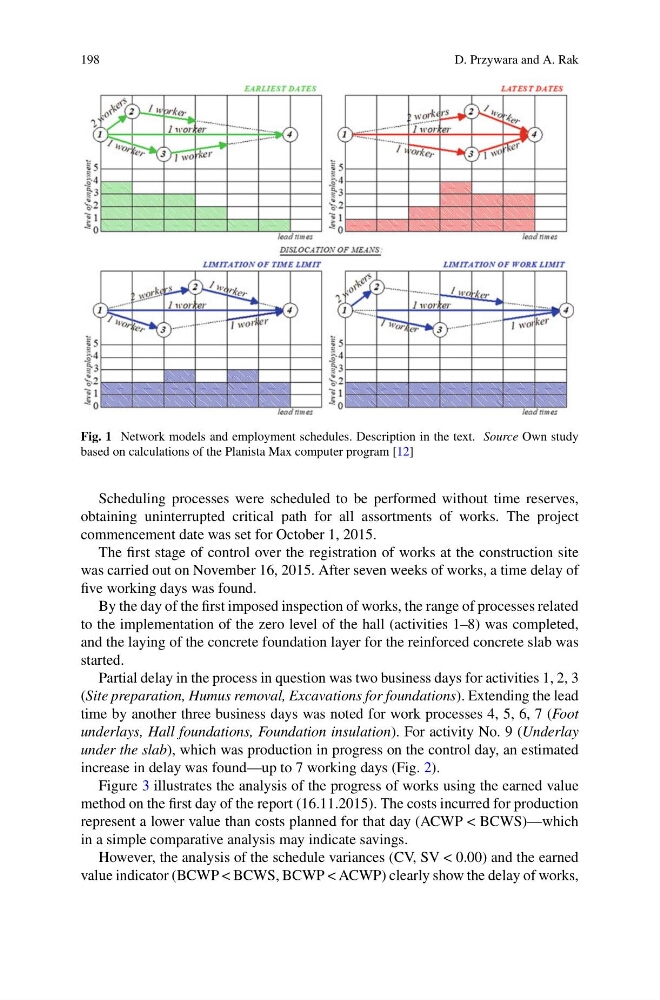
Fig. 1 Network models and employment schedules. Description in the text. Source Own study
based on calculations of the Planista Max computer program [12]
Scheduling processes were scheduled to be performed without time reserves,
obtaining uninterrupted critical path for all assortments of works. The project
commencement date was set for October 1, 2015.
The first stage of control over the registration of works at the construction site
was carried out on November 16, 2015. After seven weeks of works, a time delay of
five working days was found.
By the day of the first imposed inspection of works, the range of processes related
to the implementation of the zero level of the hall (activities 1–8) was completed,
and the laying of the concrete foundation layer for the reinforced concrete slab was
started.
Partial delay in the process in question was two business days for activities 1, 2, 3
(Site preparation, Humus removal, Excavations for foundations). Extending the lead
time by another three business days was noted for work processes 4, 5, 6, 7 (Foot
underlays, Hall foundations, Foundation insulation). For activity No. 9 (Underlay
under the slab), which was production in progress on the control day, an estimated
increase in delay was found—up to 7 working days (Fig. 2).
Figure 3 illustrates the analysis of the progress of works using the earned value
method on the first day of the report (16.11.2015). The costs incurred for production
represent a lower value than costs planned for that day (ACWP < BCWS)—which
in a simple comparative analysis may indicate savings.
However, the analysis of the schedule variances (CV, SV < 0.00) and the earned
value indicator (BCWP < BCWS, BCWP < ACWP) clearly show the delay of works,
D. Przywara and A. Rak
Fig. 1 Network models and employment schedules. Description in the text. Source Own study
based on calculations of the Planista Max computer program [12]
Scheduling processes were scheduled to be performed without time reserves,
obtaining uninterrupted critical path for all assortments of works. The project
commencement date was set for October 1, 2015.
The first stage of control over the registration of works at the construction site
was carried out on November 16, 2015. After seven weeks of works, a time delay of
five working days was found.
By the day of the first imposed inspection of works, the range of processes related
to the implementation of the zero level of the hall (activities 1–8) was completed,
and the laying of the concrete foundation layer for the reinforced concrete slab was
started.
Partial delay in the process in question was two business days for activities 1, 2, 3
(Site preparation, Humus removal, Excavations for foundations). Extending the lead
time by another three business days was noted for work processes 4, 5, 6, 7 (Foot
underlays, Hall foundations, Foundation insulation). For activity No. 9 (Underlay
under the slab), which was production in progress on the control day, an estimated
increase in delay was found—up to 7 working days (Fig. 2).
Figure 3 illustrates the analysis of the progress of works using the earned value
method on the first day of the report (16.11.2015). The costs incurred for production
represent a lower value than costs planned for that day (ACWP < BCWS)—which
in a simple comparative analysis may indicate savings.
However, the analysis of the schedule variances (CV, SV < 0.00) and the earned
value indicator (BCWP < BCWS, BCWP < ACWP) clearly show the delay of works,