

(Kaltschmitt 2012). Biogas generation by anaerobic digestion
(AD), which is later captured, could prevent the release of
greenhouse gases to the atmosphere. The AD involves four
stages: biopolymer hydrolysis, acidogenesis, acetogenesis,
and methanogenesis, as shown in Fig. 6 (Mussoline et al.
2013). Methane, which is obtained from the biomass conversion, is a safe and sustainable energy source, which make
up 14% of the energy consumption worldwide (Demirbaş
2006). Fermentation or gasification of rice straw or spent
wheat straw could be employed for the preparation of liquid
or gaseous fuels (Al-Haj Ibrahim 2018). Wheat straw from
horse stall possesses greater volatile fatty acids proportion
than pure wheat straws. Using solid-state anaerobic digestion,
maximum methane production of 150 L/kg of volatile solids,
which is 56.2% greater than the raw wheat straw, has been
reported. Furthermore, the anaerobic co-digestion of horse
manure has resulted in higher biogas yield (Yang et al. 2020),
as similarly observed in co-digestion of corn stover with oil
sludge which has resulted in increased biogas production
volume (Yang et al. 2020).
Ethanol production based on sugar derived from straw
biomass, utilizing Saccharomyces cerevisiae, has been found
to be the most widely explored method (Selim and El-Ghwas
2018). However, the most recognized yeasts for industrial
production of ethanol are Brettanomyces bruxellensis and
Zymomonas mobilis (Blomqvist et al. 2011). Many types of
yeast could ferment oat straw hydrolysate to ethanol, but
some are not effective on the xyloses or pentoses present in
the hemicellulose. Thus, for higher ethanol yield, the transformation of hemicellulosic sugars to ethanol using different
S. cerevisiae strains has been reported. A commercially
viable ethanol production from wheat straw has been
demonstrated in a pilot-plant scale by Inbicon at 576 kg
ethanol/h capacity (Larsen et al. 2012). Crescentino, in Italy,
has established the world’s first second-generation ethanol
production plant at industrial scale, utilizing around 2,70,000
tons of rice and wheat husks as feedstocks, and producing
40,000 metric tons of ethanol annually (World’s ‘first’
commercial second-generation bioethanol facility ‘shuts
down. 2017). Simultaneous saccharification and fermentation of alkali-pretreated straw, in the presence of an optimized mixture of cellulase and a novel pentose-fermenting
fungus Mucor circinelloide, have achieved 90% conversion
of fermentable sugar within 36 h, producing 30.5 g/L of
ethanol from 100 g/L of treated rice straw (Takano and
Hoshino 2018). The combination of acid pretreatments with
ultrasound for subsequent enzymes treatment could ensure
high conversion of rice straw into fermentable sugars for
higher ethanol yield (Belal 2013). High carbohydratecontent feedstocks such as the barley straw are all potential resources to achieve high bioethanol production
(Paschos and Louloudi 2020).
Biodiesel is the next important biofuel globally, after
bioethanol. Generated from vegetable oils, such as canola
seeds, palm and soy oil, the major concern has been on the
impact on the environment and eco-system as a result of
global warming, land-use/cover changes, and water consumption (Schmidt 2015). For this, agro-industries such as
palm oil plantation has been made to obtain certification to
ensure sustainable production and strict regulations
enforced, to enter a more developed market such as Europe.
Microbial lipids from lignocellulose residues for biodiesel
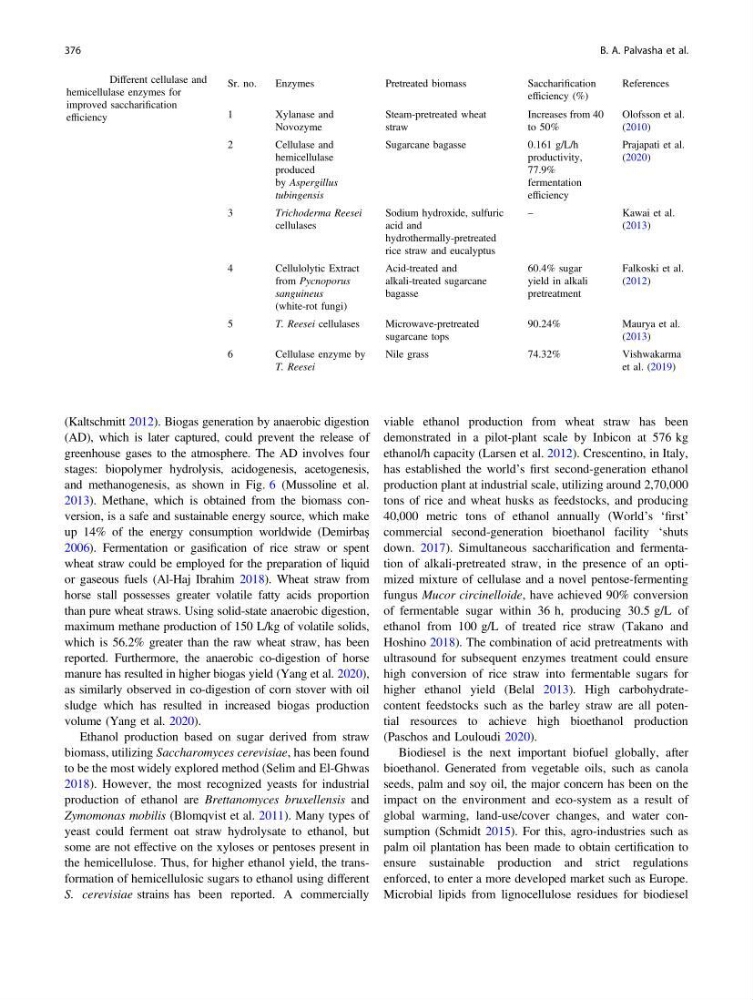
Table 3 Different cellulase and
hemicellulase enzymes for
improved saccharification
efficiency
Sr. no.
Enzymes
Pretreated biomass
Saccharification
efficiency (%)
References
1
Xylanase and
Novozyme
Steam-pretreated wheat
straw
Increases from 40
to 50%
Olofsson et al.
(2010)
2
Cellulase and
hemicellulase
produced
by Aspergillus
tubingensis
Sugarcane bagasse
0.161 g/L/h
productivity,
77.9%
fermentation
efficiency
Prajapati et al.
(2020)
3
Trichoderma Reesei
cellulases
Sodium hydroxide, sulfuric
acid and
hydrothermally-pretreated
rice straw and eucalyptus
–
Kawai et al.
(2013)
4
Cellulolytic Extract
from Pycnoporus
sanguineus
(white-rot fungi)
Acid-treated and
alkali-treated sugarcane
bagasse
60.4% sugar
yield in alkali
pretreatment
Falkoski et al.
(2012)
5
T. Reesei cellulases
Microwave-pretreated
sugarcane tops
90.24%
Maurya et al.
(2013)
6
Cellulase enzyme by
T. Reesei
Nile grass
74.32%
Vishwakarma
et al. (2019)
376
B. A. Palvasha et al.
(AD), which is later captured, could prevent the release of
greenhouse gases to the atmosphere. The AD involves four
stages: biopolymer hydrolysis, acidogenesis, acetogenesis,
and methanogenesis, as shown in Fig. 6 (Mussoline et al.
2013). Methane, which is obtained from the biomass conversion, is a safe and sustainable energy source, which make
up 14% of the energy consumption worldwide (Demirbaş
2006). Fermentation or gasification of rice straw or spent
wheat straw could be employed for the preparation of liquid
or gaseous fuels (Al-Haj Ibrahim 2018). Wheat straw from
horse stall possesses greater volatile fatty acids proportion
than pure wheat straws. Using solid-state anaerobic digestion,
maximum methane production of 150 L/kg of volatile solids,
which is 56.2% greater than the raw wheat straw, has been
reported. Furthermore, the anaerobic co-digestion of horse
manure has resulted in higher biogas yield (Yang et al. 2020),
as similarly observed in co-digestion of corn stover with oil
sludge which has resulted in increased biogas production
volume (Yang et al. 2020).
Ethanol production based on sugar derived from straw
biomass, utilizing Saccharomyces cerevisiae, has been found
to be the most widely explored method (Selim and El-Ghwas
2018). However, the most recognized yeasts for industrial
production of ethanol are Brettanomyces bruxellensis and
Zymomonas mobilis (Blomqvist et al. 2011). Many types of
yeast could ferment oat straw hydrolysate to ethanol, but
some are not effective on the xyloses or pentoses present in
the hemicellulose. Thus, for higher ethanol yield, the transformation of hemicellulosic sugars to ethanol using different
S. cerevisiae strains has been reported. A commercially
viable ethanol production from wheat straw has been
demonstrated in a pilot-plant scale by Inbicon at 576 kg
ethanol/h capacity (Larsen et al. 2012). Crescentino, in Italy,
has established the world’s first second-generation ethanol
production plant at industrial scale, utilizing around 2,70,000
tons of rice and wheat husks as feedstocks, and producing
40,000 metric tons of ethanol annually (World’s ‘first’
commercial second-generation bioethanol facility ‘shuts
down. 2017). Simultaneous saccharification and fermentation of alkali-pretreated straw, in the presence of an optimized mixture of cellulase and a novel pentose-fermenting
fungus Mucor circinelloide, have achieved 90% conversion
of fermentable sugar within 36 h, producing 30.5 g/L of
ethanol from 100 g/L of treated rice straw (Takano and
Hoshino 2018). The combination of acid pretreatments with
ultrasound for subsequent enzymes treatment could ensure
high conversion of rice straw into fermentable sugars for
higher ethanol yield (Belal 2013). High carbohydratecontent feedstocks such as the barley straw are all potential resources to achieve high bioethanol production
(Paschos and Louloudi 2020).
Biodiesel is the next important biofuel globally, after
bioethanol. Generated from vegetable oils, such as canola
seeds, palm and soy oil, the major concern has been on the
impact on the environment and eco-system as a result of
global warming, land-use/cover changes, and water consumption (Schmidt 2015). For this, agro-industries such as
palm oil plantation has been made to obtain certification to
ensure sustainable production and strict regulations
enforced, to enter a more developed market such as Europe.
Microbial lipids from lignocellulose residues for biodiesel
Table 3 Different cellulase and
hemicellulase enzymes for
improved saccharification
efficiency
Sr. no.
Enzymes
Pretreated biomass
Saccharification
efficiency (%)
References
1
Xylanase and
Novozyme
Steam-pretreated wheat
straw
Increases from 40
to 50%
Olofsson et al.
(2010)
2
Cellulase and
hemicellulase
produced
by Aspergillus
tubingensis
Sugarcane bagasse
0.161 g/L/h
productivity,
77.9%
fermentation
efficiency
Prajapati et al.
(2020)
3
Trichoderma Reesei
cellulases
Sodium hydroxide, sulfuric
acid and
hydrothermally-pretreated
rice straw and eucalyptus
–
Kawai et al.
(2013)
4
Cellulolytic Extract
from Pycnoporus
sanguineus
(white-rot fungi)
Acid-treated and
alkali-treated sugarcane
bagasse
60.4% sugar
yield in alkali
pretreatment
Falkoski et al.
(2012)
5
T. Reesei cellulases
Microwave-pretreated
sugarcane tops
90.24%
Maurya et al.
(2013)
6
Cellulase enzyme by
T. Reesei
Nile grass
74.32%
Vishwakarma
et al. (2019)
376
B. A. Palvasha et al.