

ruminants (Pawar 2015; Sheng and Huang 2016). This has led
to the isolation of intestinal microbes and flora for subsequent
pre-treatment of lignocellulosic biomass (Gupta et al. 2012).
4 Bioconversion Processes
Bioconversion is optimally carried out through combined
physical and chemical methods with biological treatments.
The biological treatments address the issues on minimizing
the environmental hazardous effects and concerns associated
with the chemical pretreatments such as high chemical
loadings and high energy consumption with mechanical
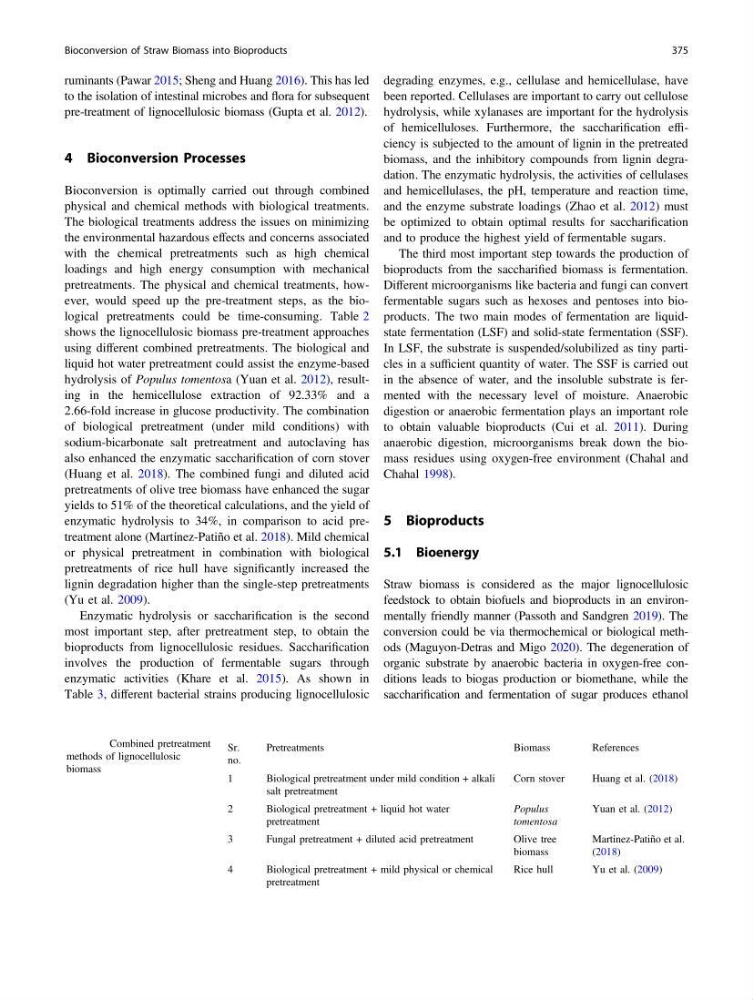
pretreatments. The physical and chemical treatments, however, would speed up the pre-treatment steps, as the biological pretreatments could be time-consuming. Table 2
shows the lignocellulosic biomass pre-treatment approaches
using different combined pretreatments. The biological and
liquid hot water pretreatment could assist the enzyme-based
hydrolysis of Populus tomentosa (Yuan et al. 2012), resulting in the hemicellulose extraction of 92.33% and a
2.66-fold increase in glucose productivity. The combination
of biological pretreatment (under mild conditions) with
sodium-bicarbonate salt pretreatment and autoclaving has
also enhanced the enzymatic saccharification of corn stover
(Huang et al. 2018). The combined fungi and diluted acid
pretreatments of olive tree biomass have enhanced the sugar
yields to 51% of the theoretical calculations, and the yield of
enzymatic hydrolysis to 34%, in comparison to acid pretreatment alone (Martínez-Patiño et al. 2018). Mild chemical
or physical pretreatment in combination with biological
pretreatments of rice hull have significantly increased the
lignin degradation higher than the single-step pretreatments
(Yu et al. 2009).
Enzymatic hydrolysis or saccharification is the second
most important step, after pretreatment step, to obtain the
bioproducts from lignocellulosic residues. Saccharification
involves the production of fermentable sugars through
enzymatic activities (Khare et al. 2015). As shown in
Table 3, different bacterial strains producing lignocellulosic
degrading enzymes, e.g., cellulase and hemicellulase, have
been reported. Cellulases are important to carry out cellulose
hydrolysis, while xylanases are important for the hydrolysis
of hemicelluloses. Furthermore, the saccharification efficiency is subjected to the amount of lignin in the pretreated
biomass, and the inhibitory compounds from lignin degradation. The enzymatic hydrolysis, the activities of cellulases
and hemicellulases, the pH, temperature and reaction time,
and the enzyme substrate loadings (Zhao et al. 2012) must
be optimized to obtain optimal results for saccharification
and to produce the highest yield of fermentable sugars.
The third most important step towards the production of
bioproducts from the saccharified biomass is fermentation.
Different microorganisms like bacteria and fungi can convert
fermentable sugars such as hexoses and pentoses into bioproducts. The two main modes of fermentation are liquidstate fermentation (LSF) and solid-state fermentation (SSF).
In LSF, the substrate is suspended/solubilized as tiny particles in a sufficient quantity of water. The SSF is carried out
in the absence of water, and the insoluble substrate is fermented with the necessary level of moisture. Anaerobic
digestion or anaerobic fermentation plays an important role
to obtain valuable bioproducts (Cui et al. 2011). During
anaerobic digestion, microorganisms break down the biomass residues using oxygen-free environment (Chahal and
Chahal 1998).
5 Bioproducts
5.1 Bioenergy
Straw biomass is considered as the major lignocellulosic
feedstock to obtain biofuels and bioproducts in an environmentally friendly manner (Passoth and Sandgren 2019). The
conversion could be via thermochemical or biological methods (Maguyon-Detras and Migo 2020). The degeneration of
organic substrate by anaerobic bacteria in oxygen-free conditions leads to biogas production or biomethane, while the
saccharification and fermentation of sugar produces ethanol
Table 2 Combined pretreatment
methods of lignocellulosic
biomass
Sr.
no.
Pretreatments
Biomass
References
1
Biological pretreatment under mild condition + alkali
salt pretreatment
Corn stover
Huang et al. (2018)
2
Biological pretreatment + liquid hot water
pretreatment
Populus
tomentosa
Yuan et al. (2012)
3
Fungal pretreatment + diluted acid pretreatment
Olive tree
biomass
Martínez-Patiño et al.
(2018)
4
Biological pretreatment + mild physical or chemical
pretreatment
Rice hull
Yu et al. (2009)
Bioconversion of Straw Biomass into Bioproducts
375
to the isolation of intestinal microbes and flora for subsequent
pre-treatment of lignocellulosic biomass (Gupta et al. 2012).
4 Bioconversion Processes
Bioconversion is optimally carried out through combined
physical and chemical methods with biological treatments.
The biological treatments address the issues on minimizing
the environmental hazardous effects and concerns associated
with the chemical pretreatments such as high chemical
loadings and high energy consumption with mechanical
pretreatments. The physical and chemical treatments, however, would speed up the pre-treatment steps, as the biological pretreatments could be time-consuming. Table 2
shows the lignocellulosic biomass pre-treatment approaches
using different combined pretreatments. The biological and
liquid hot water pretreatment could assist the enzyme-based
hydrolysis of Populus tomentosa (Yuan et al. 2012), resulting in the hemicellulose extraction of 92.33% and a
2.66-fold increase in glucose productivity. The combination
of biological pretreatment (under mild conditions) with
sodium-bicarbonate salt pretreatment and autoclaving has
also enhanced the enzymatic saccharification of corn stover
(Huang et al. 2018). The combined fungi and diluted acid
pretreatments of olive tree biomass have enhanced the sugar
yields to 51% of the theoretical calculations, and the yield of
enzymatic hydrolysis to 34%, in comparison to acid pretreatment alone (Martínez-Patiño et al. 2018). Mild chemical
or physical pretreatment in combination with biological
pretreatments of rice hull have significantly increased the
lignin degradation higher than the single-step pretreatments
(Yu et al. 2009).
Enzymatic hydrolysis or saccharification is the second
most important step, after pretreatment step, to obtain the
bioproducts from lignocellulosic residues. Saccharification
involves the production of fermentable sugars through
enzymatic activities (Khare et al. 2015). As shown in
Table 3, different bacterial strains producing lignocellulosic
degrading enzymes, e.g., cellulase and hemicellulase, have
been reported. Cellulases are important to carry out cellulose
hydrolysis, while xylanases are important for the hydrolysis
of hemicelluloses. Furthermore, the saccharification efficiency is subjected to the amount of lignin in the pretreated
biomass, and the inhibitory compounds from lignin degradation. The enzymatic hydrolysis, the activities of cellulases
and hemicellulases, the pH, temperature and reaction time,
and the enzyme substrate loadings (Zhao et al. 2012) must
be optimized to obtain optimal results for saccharification
and to produce the highest yield of fermentable sugars.
The third most important step towards the production of
bioproducts from the saccharified biomass is fermentation.
Different microorganisms like bacteria and fungi can convert
fermentable sugars such as hexoses and pentoses into bioproducts. The two main modes of fermentation are liquidstate fermentation (LSF) and solid-state fermentation (SSF).
In LSF, the substrate is suspended/solubilized as tiny particles in a sufficient quantity of water. The SSF is carried out
in the absence of water, and the insoluble substrate is fermented with the necessary level of moisture. Anaerobic
digestion or anaerobic fermentation plays an important role
to obtain valuable bioproducts (Cui et al. 2011). During
anaerobic digestion, microorganisms break down the biomass residues using oxygen-free environment (Chahal and
Chahal 1998).
5 Bioproducts
5.1 Bioenergy
Straw biomass is considered as the major lignocellulosic
feedstock to obtain biofuels and bioproducts in an environmentally friendly manner (Passoth and Sandgren 2019). The
conversion could be via thermochemical or biological methods (Maguyon-Detras and Migo 2020). The degeneration of
organic substrate by anaerobic bacteria in oxygen-free conditions leads to biogas production or biomethane, while the
saccharification and fermentation of sugar produces ethanol
Table 2 Combined pretreatment
methods of lignocellulosic
biomass
Sr.
no.
Pretreatments
Biomass
References
1
Biological pretreatment under mild condition + alkali
salt pretreatment
Corn stover
Huang et al. (2018)
2
Biological pretreatment + liquid hot water
pretreatment
Populus
tomentosa
Yuan et al. (2012)
3
Fungal pretreatment + diluted acid pretreatment
Olive tree
biomass
Martínez-Patiño et al.
(2018)
4
Biological pretreatment + mild physical or chemical
pretreatment
Rice hull
Yu et al. (2009)
Bioconversion of Straw Biomass into Bioproducts
375