

3 Pre-treatments of Straw Biomass
Biological pre-treatment is carried out using microbial
hydrolytic enzymes to degrade the lignin structure, to allow
the release of sugars (Chen et al. 2010). This is a low-energy
consumption process when compared to the conventional
chemical pretreatments. Hydrolysis of lignocellulosic biomass without any pretreatment may result in low productivity, with less than 20% of the total sugars (Alizadeh and
Teymouri 2005). It is, therefore, important to select the most
appropriate and effective bacterial strains such as the cellulase enzyme-producing bacteria or cellulolytic bacteria
Cellulomonas fimi and Thermobifida fusca (Sharma et al.
2019). Paenibacillus campinasensis, which can withstand
extreme conditions, has great potential in the pretreatment of
lignocellulosic materials (Maki et al. 2009). Anaerobic
Bacteroides cellulosolvens and Clostridium thermocellum
have exhibited significant cellulase activity but the enzyme
concentration produced is insufficient (Mathews et al. 2015),
while Zymomonas mobilis has produced high yield of
ethanol (Duff and Murray 1996). In addition, bacterial strain
Orseolia oryzae BMP03 has shown good capacity for lignin
degradation while Bacillus sp. BMP01 exhibits good capability for cellulose and hemicellulose degradation (Tsegaye
et al. 2018). Bacterial laccases, peroxidases, and b-etherases
have all been reported effective for lignin degradation
(Brown and Chang 2014; de Gonzalo et al. 2016;
Vasco-Correa et al. 2016).
A highly impermeable and rigid structure of lignin and
the insoluble crystalline property of cellulose makes them
highly resistant to enzymatic hydrolysis. Much work on
lignin degradation has focused on fungi as they are widely
found in nature, which causes decay to the lignocellulosic
residues via the activities of cellulolytic, hemi-cellulolytic,
and ligninolytic enzymes. Ascomycetes including Aspergillus sp., Penicillium sp., and Trichoderma reesei, white-rot
and brown-rot fungi, and some anaerobic species of fungi
have been reported to exhibit the lignocellulosic degradation
activities (Andlar et al. 2018; Dashtban et al. 2009). A cellulase-producing mutant of Trichoderma reesei has been
developed to produce substantial amounts of b-glucosidase
and xylanases (Tangnu et al. 1981). The ligninolytic
enzymes excreted by the white-rot fungi include laccases,
manganese-reliant peroxidases, lignin peroxidases, and peroxidases (Daniel and Roland 2016). The fungal pretreatment
of cotton stalks attains high sugar productivity (20–65%)
and rapid lignin biodegradation (Shi et al. 2009). The pretreatment of cornstalk using lignin-degrading Irpex lacteus
has produced the highest hydrolysis yield of 313.5 mg/g or
82% after 28 days, as compared to the lower 200.1 mg/g
without any fungal pretreatment (Du et al. 2011). A costeffective pretreatment of corn stover has been evaluated
based on the screening of white-rot fungi, and the best sugar
yields have been reported by using Cyathus stercoreus
(394 ± 13 mg/g), Pycnoporus sanguineus (393 ± 17 mg/g),
and Phlebia brevispora (383 ± 13 mg/g) (Saha et al. 2016).
Other biological pre-treatment methods including the
use of insects, snails, slugs, worms, and ruminants have
been evaluated in combination with different methods such
as mechanical and enzyme-based gut flora. These nonmicrobial organisms possess feeding/pulverizing mechanisms to achieve physical breakdown and diverse enzymatic
activities for cellulosic digestion. More than 20 families such
as crickets, termites, wood wasps, beetle, and silverfish
have been identified to degrade cellulosic biomass (Sun
and Zhou 2011). Earthworms which feed in waste along with
the microbial flora and enzymes, within their guts, could
degrade cellulosic material, chitin, starch, and lignin (Rakkini
et al. 2017; Wani and Rao 2013; Cheah and Sankaran 2020).
Others that play important role in the cellulose degradation
include the liquid leachate of vermicomposting, which could
be an alternative to acidic pretreatment (Siti Norfariha and Siti
2013), and the micro-floral consortium of gastropods and
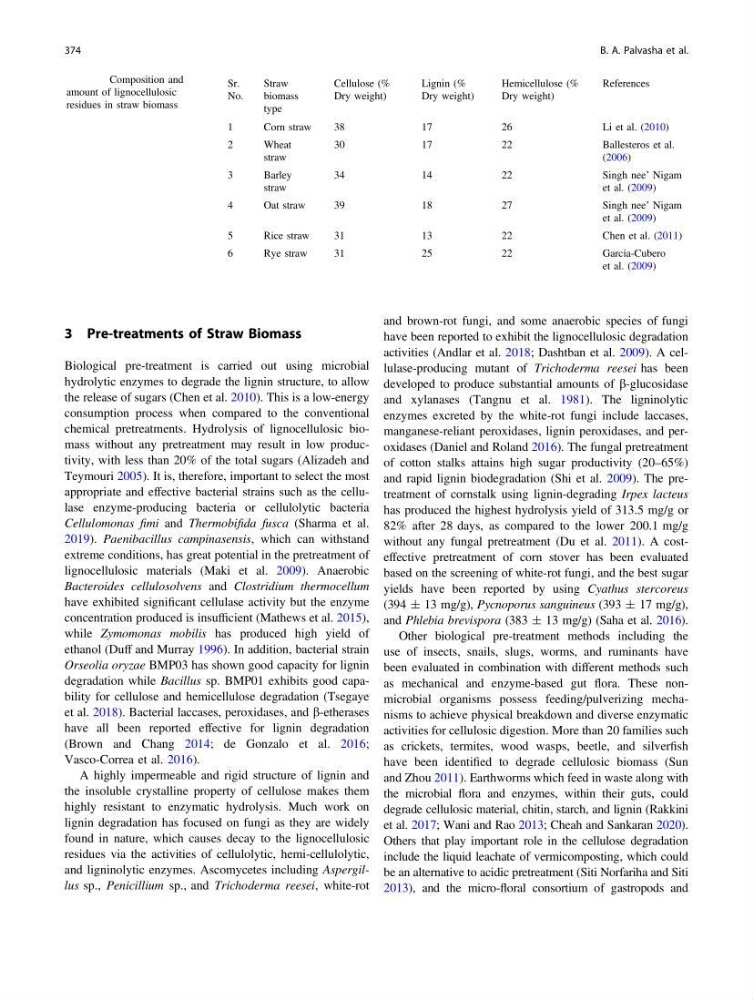
Table 1 Composition and
amount of lignocellulosic
residues in straw biomass
Sr.
No.
Straw
biomass
type
Cellulose (%
Dry weight)
Lignin (%
Dry weight)
Hemicellulose (%
Dry weight)
References
1
Corn straw
38
17
26
Li et al. (2010)
2
Wheat
straw
30
17
22
Ballesteros et al.
(2006)
3
Barley
straw
34
14
22
Singh nee’ Nigam
et al. (2009)
4
Oat straw
39
18
27
Singh nee’ Nigam
et al. (2009)
5
Rice straw
31
13
22
Chen et al. (2011)
6
Rye straw
31
25
22
García-Cubero
et al. (2009)
374
B. A. Palvasha et al.
Biological pre-treatment is carried out using microbial
hydrolytic enzymes to degrade the lignin structure, to allow
the release of sugars (Chen et al. 2010). This is a low-energy
consumption process when compared to the conventional
chemical pretreatments. Hydrolysis of lignocellulosic biomass without any pretreatment may result in low productivity, with less than 20% of the total sugars (Alizadeh and
Teymouri 2005). It is, therefore, important to select the most
appropriate and effective bacterial strains such as the cellulase enzyme-producing bacteria or cellulolytic bacteria
Cellulomonas fimi and Thermobifida fusca (Sharma et al.
2019). Paenibacillus campinasensis, which can withstand
extreme conditions, has great potential in the pretreatment of
lignocellulosic materials (Maki et al. 2009). Anaerobic
Bacteroides cellulosolvens and Clostridium thermocellum
have exhibited significant cellulase activity but the enzyme
concentration produced is insufficient (Mathews et al. 2015),
while Zymomonas mobilis has produced high yield of
ethanol (Duff and Murray 1996). In addition, bacterial strain
Orseolia oryzae BMP03 has shown good capacity for lignin
degradation while Bacillus sp. BMP01 exhibits good capability for cellulose and hemicellulose degradation (Tsegaye
et al. 2018). Bacterial laccases, peroxidases, and b-etherases
have all been reported effective for lignin degradation
(Brown and Chang 2014; de Gonzalo et al. 2016;
Vasco-Correa et al. 2016).
A highly impermeable and rigid structure of lignin and
the insoluble crystalline property of cellulose makes them
highly resistant to enzymatic hydrolysis. Much work on
lignin degradation has focused on fungi as they are widely
found in nature, which causes decay to the lignocellulosic
residues via the activities of cellulolytic, hemi-cellulolytic,
and ligninolytic enzymes. Ascomycetes including Aspergillus sp., Penicillium sp., and Trichoderma reesei, white-rot
and brown-rot fungi, and some anaerobic species of fungi
have been reported to exhibit the lignocellulosic degradation
activities (Andlar et al. 2018; Dashtban et al. 2009). A cellulase-producing mutant of Trichoderma reesei has been
developed to produce substantial amounts of b-glucosidase
and xylanases (Tangnu et al. 1981). The ligninolytic
enzymes excreted by the white-rot fungi include laccases,
manganese-reliant peroxidases, lignin peroxidases, and peroxidases (Daniel and Roland 2016). The fungal pretreatment
of cotton stalks attains high sugar productivity (20–65%)
and rapid lignin biodegradation (Shi et al. 2009). The pretreatment of cornstalk using lignin-degrading Irpex lacteus
has produced the highest hydrolysis yield of 313.5 mg/g or
82% after 28 days, as compared to the lower 200.1 mg/g
without any fungal pretreatment (Du et al. 2011). A costeffective pretreatment of corn stover has been evaluated
based on the screening of white-rot fungi, and the best sugar
yields have been reported by using Cyathus stercoreus
(394 ± 13 mg/g), Pycnoporus sanguineus (393 ± 17 mg/g),
and Phlebia brevispora (383 ± 13 mg/g) (Saha et al. 2016).
Other biological pre-treatment methods including the
use of insects, snails, slugs, worms, and ruminants have
been evaluated in combination with different methods such
as mechanical and enzyme-based gut flora. These nonmicrobial organisms possess feeding/pulverizing mechanisms to achieve physical breakdown and diverse enzymatic
activities for cellulosic digestion. More than 20 families such
as crickets, termites, wood wasps, beetle, and silverfish
have been identified to degrade cellulosic biomass (Sun
and Zhou 2011). Earthworms which feed in waste along with
the microbial flora and enzymes, within their guts, could
degrade cellulosic material, chitin, starch, and lignin (Rakkini
et al. 2017; Wani and Rao 2013; Cheah and Sankaran 2020).
Others that play important role in the cellulose degradation
include the liquid leachate of vermicomposting, which could
be an alternative to acidic pretreatment (Siti Norfariha and Siti
2013), and the micro-floral consortium of gastropods and
Table 1 Composition and
amount of lignocellulosic
residues in straw biomass
Sr.
No.
Straw
biomass
type
Cellulose (%
Dry weight)
Lignin (%
Dry weight)
Hemicellulose (%
Dry weight)
References
1
Corn straw
38
17
26
Li et al. (2010)
2
Wheat
straw
30
17
22
Ballesteros et al.
(2006)
3
Barley
straw
34
14
22
Singh nee’ Nigam
et al. (2009)
4
Oat straw
39
18
27
Singh nee’ Nigam
et al. (2009)
5
Rice straw
31
13
22
Chen et al. (2011)
6
Rye straw
31
25
22
García-Cubero
et al. (2009)
374
B. A. Palvasha et al.