

from either nature or culture have been tested and developed
as biocatalysts (Dashtban et al. 2009; Yu and Jin 2019;
Alahyaribeik et al. 2020; Patthawaro et al. 2020).
The aim of this chapter is to highlight the bioconversion
of the straw biomass into valuable bioproducts, the use of
pre-treatment methods such as the lignocellulolytic enzymes,
and the challenges for industrial-scale production.
2 Waste Material Feedstocks
Bioconversion may be carried out in the bioreactors or in
complete bio-refineries setup (Kennes 2018; Biernat and
Grzelak 2015). The bioreactor working conditions including
pH, residence time in continuous protocols, and the medium
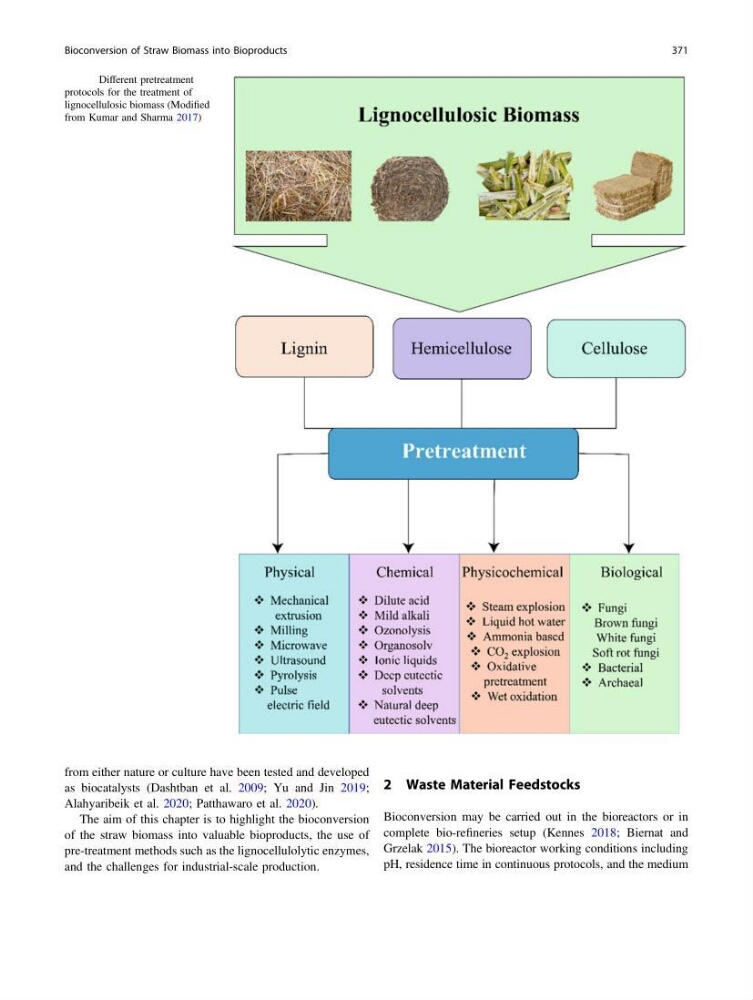
Fig. 3 Different pretreatment
protocols for the treatment of
lignocellulosic biomass (Modified
from Kumar and Sharma 2017)
Bioconversion of Straw Biomass into Bioproducts
371
as biocatalysts (Dashtban et al. 2009; Yu and Jin 2019;
Alahyaribeik et al. 2020; Patthawaro et al. 2020).
The aim of this chapter is to highlight the bioconversion
of the straw biomass into valuable bioproducts, the use of
pre-treatment methods such as the lignocellulolytic enzymes,
and the challenges for industrial-scale production.
2 Waste Material Feedstocks
Bioconversion may be carried out in the bioreactors or in
complete bio-refineries setup (Kennes 2018; Biernat and
Grzelak 2015). The bioreactor working conditions including
pH, residence time in continuous protocols, and the medium
Fig. 3 Different pretreatment
protocols for the treatment of
lignocellulosic biomass (Modified
from Kumar and Sharma 2017)
Bioconversion of Straw Biomass into Bioproducts
371