

expression by ammonia and reduced photochemical efficiency (Kuppam et al. 2015). This process is light dependent. Some of the bacteria usually used are Rhodobacter
sphaeroides, Rhodopseudomonas capsulate, R. palustris,
Rhodospirillum rubrum. Substrates used are commonly
organic acids and alcohols which are chief make-up of
industrial waste and effluent of dark fermentation process
(Sen et al. 2008). The benefit of this approach is that oxygen
does not inhibit the process (Das and Veziroglu 2008).
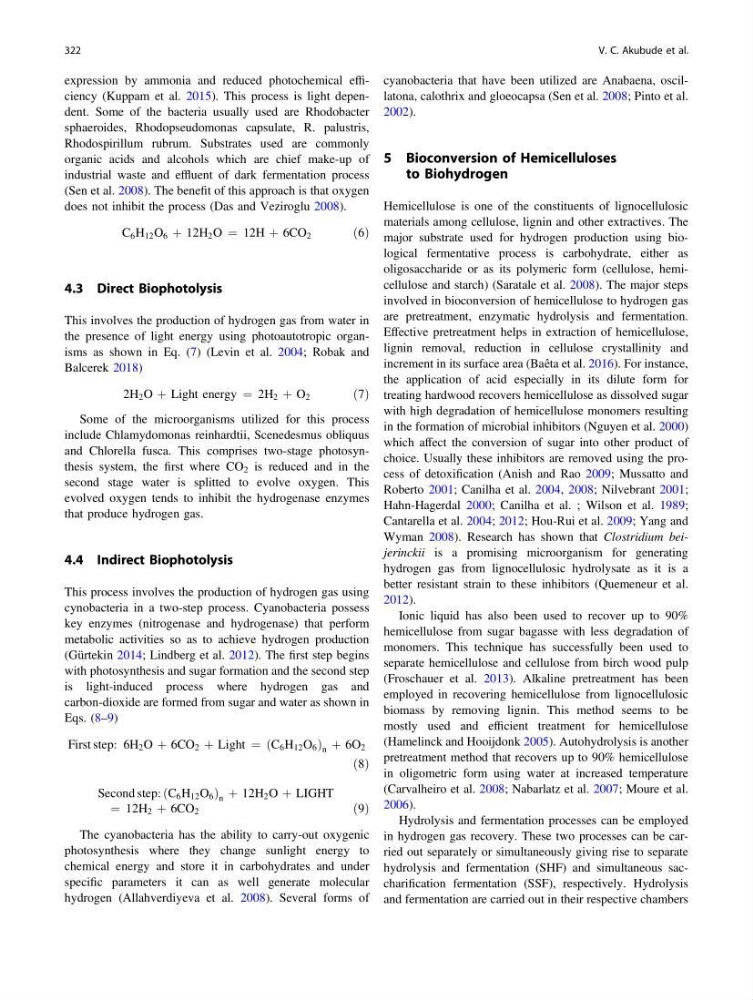
C 6 H 12 O 6 þ 12H 2 O ¼ 12H þ 6CO 2
ð6Þ
4.3 Direct Biophotolysis
This involves the production of hydrogen gas from water in
the presence of light energy using photoautotropic organisms as shown in Eq. (7) (Levin et al. 2004; Robak and
Balcerek 2018)
2H 2 O þ Light energy ¼ 2H 2 þ O 2
ð7Þ
Some of the microorganisms utilized for this process
include Chlamydomonas reinhardtii, Scenedesmus obliquus
and Chlorella fusca. This comprises two-stage photosynthesis system, the first where CO 2 is reduced and in the
second stage water is splitted to evolve oxygen. This
evolved oxygen tends to inhibit the hydrogenase enzymes
that produce hydrogen gas.
4.4 Indirect Biophotolysis
This process involves the production of hydrogen gas using
cynobacteria in a two-step process. Cyanobacteria possess
key enzymes (nitrogenase and hydrogenase) that perform
metabolic activities so as to achieve hydrogen production
(Gürtekin 2014; Lindberg et al. 2012). The first step begins
with photosynthesis and sugar formation and the second step
is light-induced process where hydrogen gas and
carbon-dioxide are formed from sugar and water as shown in
Eqs. (8–9)
First step: 6H 2 O þ 6CO 2 þ Light ¼ C 6 H 12 O 6
ð
Þ n þ 6O 2
ð8Þ
Second step: ðC 6 H 12 O 6 Þ n þ 12H 2 O þ LIGHT
¼ 12H 2 þ 6CO 2
ð9Þ
The cyanobacteria has the ability to carry-out oxygenic
photosynthesis where they change sunlight energy to
chemical energy and store it in carbohydrates and under
specific parameters it can as well generate molecular
hydrogen (Allahverdiyeva et al. 2008). Several forms of
cyanobacteria that have been utilized are Anabaena, oscillatona, calothrix and gloeocapsa (Sen et al. 2008; Pinto et al.
2002).
5 Bioconversion of Hemicelluloses
to Biohydrogen
Hemicellulose is one of the constituents of lignocellulosic
materials among cellulose, lignin and other extractives. The
major substrate used for hydrogen production using biological fermentative process is carbohydrate, either as
oligosaccharide or as its polymeric form (cellulose, hemicellulose and starch) (Saratale et al. 2008). The major steps
involved in bioconversion of hemicellulose to hydrogen gas
are pretreatment, enzymatic hydrolysis and fermentation.
Effective pretreatment helps in extraction of hemicellulose,
lignin removal, reduction in cellulose crystallinity and
increment in its surface area (Baêta et al. 2016). For instance,
the application of acid especially in its dilute form for
treating hardwood recovers hemicellulose as dissolved sugar
with high degradation of hemicellulose monomers resulting
in the formation of microbial inhibitors (Nguyen et al. 2000)
which affect the conversion of sugar into other product of
choice. Usually these inhibitors are removed using the process of detoxification (Anish and Rao 2009; Mussatto and
Roberto 2001; Canilha et al. 2004, 2008; Nilvebrant 2001;
Hahn-Hagerdal 2000; Canilha et al. ; Wilson et al. 1989;
Cantarella et al. 2004; 2012; Hou-Rui et al. 2009; Yang and
Wyman 2008). Research has shown that Clostridium beijerinckii is a promising microorganism for generating
hydrogen gas from lignocellulosic hydrolysate as it is a
better resistant strain to these inhibitors (Quemeneur et al.
2012).
Ionic liquid has also been used to recover up to 90%
hemicellulose from sugar bagasse with less degradation of
monomers. This technique has successfully been used to
separate hemicellulose and cellulose from birch wood pulp
(Froschauer et al. 2013). Alkaline pretreatment has been
employed in recovering hemicellulose from lignocellulosic
biomass by removing lignin. This method seems to be
mostly used and efficient treatment for hemicellulose
(Hamelinck and Hooijdonk 2005). Autohydrolysis is another
pretreatment method that recovers up to 90% hemicellulose
in oligometric form using water at increased temperature
(Carvalheiro et al. 2008; Nabarlatz et al. 2007; Moure et al.
2006).
Hydrolysis and fermentation processes can be employed
in hydrogen gas recovery. These two processes can be carried out separately or simultaneously giving rise to separate
hydrolysis and fermentation (SHF) and simultaneous saccharification fermentation (SSF), respectively. Hydrolysis
and fermentation are carried out in their respective chambers
322
V. C. Akubude et al.
sphaeroides, Rhodopseudomonas capsulate, R. palustris,
Rhodospirillum rubrum. Substrates used are commonly
organic acids and alcohols which are chief make-up of
industrial waste and effluent of dark fermentation process
(Sen et al. 2008). The benefit of this approach is that oxygen
does not inhibit the process (Das and Veziroglu 2008).
C 6 H 12 O 6 þ 12H 2 O ¼ 12H þ 6CO 2
ð6Þ
4.3 Direct Biophotolysis
This involves the production of hydrogen gas from water in
the presence of light energy using photoautotropic organisms as shown in Eq. (7) (Levin et al. 2004; Robak and
Balcerek 2018)
2H 2 O þ Light energy ¼ 2H 2 þ O 2
ð7Þ
Some of the microorganisms utilized for this process
include Chlamydomonas reinhardtii, Scenedesmus obliquus
and Chlorella fusca. This comprises two-stage photosynthesis system, the first where CO 2 is reduced and in the
second stage water is splitted to evolve oxygen. This
evolved oxygen tends to inhibit the hydrogenase enzymes
that produce hydrogen gas.
4.4 Indirect Biophotolysis
This process involves the production of hydrogen gas using
cynobacteria in a two-step process. Cyanobacteria possess
key enzymes (nitrogenase and hydrogenase) that perform
metabolic activities so as to achieve hydrogen production
(Gürtekin 2014; Lindberg et al. 2012). The first step begins
with photosynthesis and sugar formation and the second step
is light-induced process where hydrogen gas and
carbon-dioxide are formed from sugar and water as shown in
Eqs. (8–9)
First step: 6H 2 O þ 6CO 2 þ Light ¼ C 6 H 12 O 6
ð
Þ n þ 6O 2
ð8Þ
Second step: ðC 6 H 12 O 6 Þ n þ 12H 2 O þ LIGHT
¼ 12H 2 þ 6CO 2
ð9Þ
The cyanobacteria has the ability to carry-out oxygenic
photosynthesis where they change sunlight energy to
chemical energy and store it in carbohydrates and under
specific parameters it can as well generate molecular
hydrogen (Allahverdiyeva et al. 2008). Several forms of
cyanobacteria that have been utilized are Anabaena, oscillatona, calothrix and gloeocapsa (Sen et al. 2008; Pinto et al.
2002).
5 Bioconversion of Hemicelluloses
to Biohydrogen
Hemicellulose is one of the constituents of lignocellulosic
materials among cellulose, lignin and other extractives. The
major substrate used for hydrogen production using biological fermentative process is carbohydrate, either as
oligosaccharide or as its polymeric form (cellulose, hemicellulose and starch) (Saratale et al. 2008). The major steps
involved in bioconversion of hemicellulose to hydrogen gas
are pretreatment, enzymatic hydrolysis and fermentation.
Effective pretreatment helps in extraction of hemicellulose,
lignin removal, reduction in cellulose crystallinity and
increment in its surface area (Baêta et al. 2016). For instance,
the application of acid especially in its dilute form for
treating hardwood recovers hemicellulose as dissolved sugar
with high degradation of hemicellulose monomers resulting
in the formation of microbial inhibitors (Nguyen et al. 2000)
which affect the conversion of sugar into other product of
choice. Usually these inhibitors are removed using the process of detoxification (Anish and Rao 2009; Mussatto and
Roberto 2001; Canilha et al. 2004, 2008; Nilvebrant 2001;
Hahn-Hagerdal 2000; Canilha et al. ; Wilson et al. 1989;
Cantarella et al. 2004; 2012; Hou-Rui et al. 2009; Yang and
Wyman 2008). Research has shown that Clostridium beijerinckii is a promising microorganism for generating
hydrogen gas from lignocellulosic hydrolysate as it is a
better resistant strain to these inhibitors (Quemeneur et al.
2012).
Ionic liquid has also been used to recover up to 90%
hemicellulose from sugar bagasse with less degradation of
monomers. This technique has successfully been used to
separate hemicellulose and cellulose from birch wood pulp
(Froschauer et al. 2013). Alkaline pretreatment has been
employed in recovering hemicellulose from lignocellulosic
biomass by removing lignin. This method seems to be
mostly used and efficient treatment for hemicellulose
(Hamelinck and Hooijdonk 2005). Autohydrolysis is another
pretreatment method that recovers up to 90% hemicellulose
in oligometric form using water at increased temperature
(Carvalheiro et al. 2008; Nabarlatz et al. 2007; Moure et al.
2006).
Hydrolysis and fermentation processes can be employed
in hydrogen gas recovery. These two processes can be carried out separately or simultaneously giving rise to separate
hydrolysis and fermentation (SHF) and simultaneous saccharification fermentation (SSF), respectively. Hydrolysis
and fermentation are carried out in their respective chambers
322
V. C. Akubude et al.