

et al. 2015). Its disadvantage is that of producing inhibitors
that inhibit microbial growth. It can be overcome by using wet
oxidation in combination with other pretreatment processes
like alkaline hydrolysis to prevent the production of these
inhibitors, thereby enhancing the production process of
hydrogen gas. Combining wet oxidation with alkaline
hydrolysis in treating wheat straw prevented the production of
furfural and hydroxymethyl-furfural (Bjerre et al. 1996).
3.5 Enzyme Hydrolysis
This involves the production of monosaccharide from the
polysaccharide. Hemicelluloses are usually reduced to fermentable sugars via this process using enzymes. The amount
of sugar present in the hydrolysate is dependent on the raw
material utilized and the pretreatment route employed before
hydrolysis (Robak and Balcerek 2018; Choudhary et al. 2017).
Usually, when hydrolysis occurs without pretreatment of lignocellulosic material, high doses of the enzyme are used.
4 Biohydrogen Production
Generally, hydrogen can be produced from biomass using
two main routes, namely thermochemical method and biological methods (Hepbasli et al. 2009; Safari et al. 2015).
Hydrogen produced via biological routes through the actions
of microorganisms on biomass in an eco-friendly manner is
known as biohydrogen. Biological methods include fermentation and photolysis. The productivity of each of the
production process is measured by the following parameters
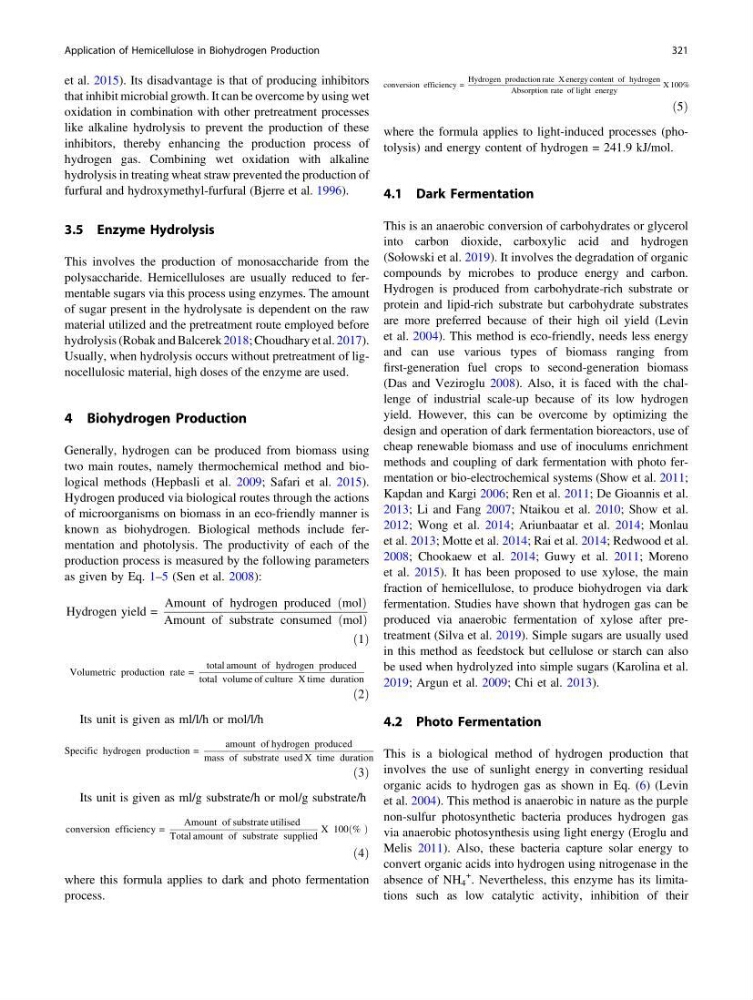
as given by Eq. 1–5 (Sen et al. 2008):
Hydrogen yield =
Amount of hydrogen produced mol
ð
Þ
Amount of substrate consumed mol
ð
Þ
ð1Þ
Volumetric production rate =
total amount of hydrogen produced
total volume of culture X time duration
ð2Þ
Its unit is given as ml/l/h or mol/l/h
Specific hydrogen production =
amount of hydrogen produced
mass of substrate used X time duration
ð3Þ
Its unit is given as ml/g substrate/h or mol/g substrate/h
conversion efficiency =
Amount of substrate utilised
Total amount of substrate supplied
X 100 %
ð Þ
ð4Þ
where this formula applies to dark and photo fermentation
process.
conversion efficiency =
Hydrogen production rate X energy content of hydrogen
Absorption rate of light energy
X 100%
ð5Þ
where the formula applies to light-induced processes (photolysis) and energy content of hydrogen = 241.9 kJ/mol.
4.1 Dark Fermentation
This is an anaerobic conversion of carbohydrates or glycerol
into carbon dioxide, carboxylic acid and hydrogen
(Sołowski et al. 2019). It involves the degradation of organic
compounds by microbes to produce energy and carbon.
Hydrogen is produced from carbohydrate-rich substrate or
protein and lipid-rich substrate but carbohydrate substrates
are more preferred because of their high oil yield (Levin
et al. 2004). This method is eco-friendly, needs less energy
and can use various types of biomass ranging from
first-generation fuel crops to second-generation biomass
(Das and Veziroglu 2008). Also, it is faced with the challenge of industrial scale-up because of its low hydrogen
yield. However, this can be overcome by optimizing the
design and operation of dark fermentation bioreactors, use of
cheap renewable biomass and use of inoculums enrichment
methods and coupling of dark fermentation with photo fermentation or bio-electrochemical systems (Show et al. 2011;
Kapdan and Kargi 2006; Ren et al. 2011; De Gioannis et al.
2013; Li and Fang 2007; Ntaikou et al. 2010; Show et al.
2012; Wong et al. 2014; Ariunbaatar et al. 2014; Monlau
et al. 2013; Motte et al. 2014; Rai et al. 2014; Redwood et al.
2008; Chookaew et al. 2014; Guwy et al. 2011; Moreno
et al. 2015). It has been proposed to use xylose, the main
fraction of hemicellulose, to produce biohydrogen via dark
fermentation. Studies have shown that hydrogen gas can be
produced via anaerobic fermentation of xylose after pretreatment (Silva et al. 2019). Simple sugars are usually used
in this method as feedstock but cellulose or starch can also
be used when hydrolyzed into simple sugars (Karolina et al.
2019; Argun et al. 2009; Chi et al. 2013).
4.2 Photo Fermentation
This is a biological method of hydrogen production that
involves the use of sunlight energy in converting residual
organic acids to hydrogen gas as shown in Eq. (6) (Levin
et al. 2004). This method is anaerobic in nature as the purple
non-sulfur photosynthetic bacteria produces hydrogen gas
via anaerobic photosynthesis using light energy (Eroglu and
Melis 2011). Also, these bacteria capture solar energy to
convert organic acids into hydrogen using nitrogenase in the
absence of NH 4
+
. Nevertheless, this enzyme has its limitations such as low catalytic activity, inhibition of their
Application of Hemicellulose in Biohydrogen Production
321
that inhibit microbial growth. It can be overcome by using wet
oxidation in combination with other pretreatment processes
like alkaline hydrolysis to prevent the production of these
inhibitors, thereby enhancing the production process of
hydrogen gas. Combining wet oxidation with alkaline
hydrolysis in treating wheat straw prevented the production of
furfural and hydroxymethyl-furfural (Bjerre et al. 1996).
3.5 Enzyme Hydrolysis
This involves the production of monosaccharide from the
polysaccharide. Hemicelluloses are usually reduced to fermentable sugars via this process using enzymes. The amount
of sugar present in the hydrolysate is dependent on the raw
material utilized and the pretreatment route employed before
hydrolysis (Robak and Balcerek 2018; Choudhary et al. 2017).
Usually, when hydrolysis occurs without pretreatment of lignocellulosic material, high doses of the enzyme are used.
4 Biohydrogen Production
Generally, hydrogen can be produced from biomass using
two main routes, namely thermochemical method and biological methods (Hepbasli et al. 2009; Safari et al. 2015).
Hydrogen produced via biological routes through the actions
of microorganisms on biomass in an eco-friendly manner is
known as biohydrogen. Biological methods include fermentation and photolysis. The productivity of each of the
production process is measured by the following parameters
as given by Eq. 1–5 (Sen et al. 2008):
Hydrogen yield =
Amount of hydrogen produced mol
ð
Þ
Amount of substrate consumed mol
ð
Þ
ð1Þ
Volumetric production rate =
total amount of hydrogen produced
total volume of culture X time duration
ð2Þ
Its unit is given as ml/l/h or mol/l/h
Specific hydrogen production =
amount of hydrogen produced
mass of substrate used X time duration
ð3Þ
Its unit is given as ml/g substrate/h or mol/g substrate/h
conversion efficiency =
Amount of substrate utilised
Total amount of substrate supplied
X 100 %
ð Þ
ð4Þ
where this formula applies to dark and photo fermentation
process.
conversion efficiency =
Hydrogen production rate X energy content of hydrogen
Absorption rate of light energy
X 100%
ð5Þ
where the formula applies to light-induced processes (photolysis) and energy content of hydrogen = 241.9 kJ/mol.
4.1 Dark Fermentation
This is an anaerobic conversion of carbohydrates or glycerol
into carbon dioxide, carboxylic acid and hydrogen
(Sołowski et al. 2019). It involves the degradation of organic
compounds by microbes to produce energy and carbon.
Hydrogen is produced from carbohydrate-rich substrate or
protein and lipid-rich substrate but carbohydrate substrates
are more preferred because of their high oil yield (Levin
et al. 2004). This method is eco-friendly, needs less energy
and can use various types of biomass ranging from
first-generation fuel crops to second-generation biomass
(Das and Veziroglu 2008). Also, it is faced with the challenge of industrial scale-up because of its low hydrogen
yield. However, this can be overcome by optimizing the
design and operation of dark fermentation bioreactors, use of
cheap renewable biomass and use of inoculums enrichment
methods and coupling of dark fermentation with photo fermentation or bio-electrochemical systems (Show et al. 2011;
Kapdan and Kargi 2006; Ren et al. 2011; De Gioannis et al.
2013; Li and Fang 2007; Ntaikou et al. 2010; Show et al.
2012; Wong et al. 2014; Ariunbaatar et al. 2014; Monlau
et al. 2013; Motte et al. 2014; Rai et al. 2014; Redwood et al.
2008; Chookaew et al. 2014; Guwy et al. 2011; Moreno
et al. 2015). It has been proposed to use xylose, the main
fraction of hemicellulose, to produce biohydrogen via dark
fermentation. Studies have shown that hydrogen gas can be
produced via anaerobic fermentation of xylose after pretreatment (Silva et al. 2019). Simple sugars are usually used
in this method as feedstock but cellulose or starch can also
be used when hydrolyzed into simple sugars (Karolina et al.
2019; Argun et al. 2009; Chi et al. 2013).
4.2 Photo Fermentation
This is a biological method of hydrogen production that
involves the use of sunlight energy in converting residual
organic acids to hydrogen gas as shown in Eq. (6) (Levin
et al. 2004). This method is anaerobic in nature as the purple
non-sulfur photosynthetic bacteria produces hydrogen gas
via anaerobic photosynthesis using light energy (Eroglu and
Melis 2011). Also, these bacteria capture solar energy to
convert organic acids into hydrogen using nitrogenase in the
absence of NH 4
+
. Nevertheless, this enzyme has its limitations such as low catalytic activity, inhibition of their
Application of Hemicellulose in Biohydrogen Production
321