

amylase and amylopectin play an imperative part in the
bioplastic mechanical characteristics; amylase results in
most favorable properties for bioplastics than amylopectin
does because of its linear structure. Moreover, starch comprises of water residue that too collaborates to its mechanical
characteristics and decreases the glass transition temperature
(Khalil et al. 2019). The starch obtained from these sources
is easily degraded by microorganisms, such as decomposing
bacteria, breaking the polymer chain into its monomers
(Dhanapal et al. 2012).
The polymers are in the form of granules from 1 to
100 lm in diameter, and they are primarily composed of
amylose chains, corresponding to linear fractions with a-1,4
glycosidic bonds, and amylopectin, which represents branched glycan with a-1,6 bonds (Zhu et al. 2017) (Fig. 3).
However, there are great morphological and structural
variations and in the amounts of amylose, amylopectin,
protein, and lipids in starch plant species, resulting in different physicochemical properties (Perotti et al. 2014).
Amylose is a low-branched carbohydrate with a molecular weight of 105-106 units of anhydroglucose. Amylopectin is a multiple, highly branched polymer with a high
molecular weight of 107–109 anhydroglucose units. Waxy
starch contains little or no amylose, while high amylose
starch contains more than 50% of the linear polymer (Basiak
et al. 2017).
Bioplastics made from these sources have thinner structures and higher tensile strength values (Nugroho et al. 2013;
Ravindra et al. 2018; Soekamto et al. 2017). Edible
starch-based films exhibit low water resistance that can affect
their physical and/or mechanical properties. This is due to
the low solvency of the ramified amylopectin, which provokes accumulation and high dissolvability at elevated
temperatures and exhibits a feeble obstacle in opposition to
components with little polarity (Podshivalov et al. 2016),
which results in starch biofilms fragility due to the hydrophilic character of amylopectin. In spite of the fact that
polysaccharides present numerous focal points, particularly
the capacity to decrease pollution and contribute to ecofriendly production, they moreover present some disadvantages, for example, sensitivity to moisture and fragile
mechanical properties. These troubles must be overcome to
enhance their properties. Alternatively, polysaccharides can
be added to biopolymers, such as hydrophobic and antimicrobial materials or incorporated into other materials, e.g.,
lipids, nanoclays (Müller et al. 2011), and lignocellulosic
fibers, which can be adopted as a promising strategy.
One usable fiber is that from rice husks, which is rich in
cellulose (Cruz and Crnkovic 2019). Rice husks consist of
approximately 57% cellulose; therefore, they also have the
potential to be used as raw materials in bioplastics manufacturing, thus increasing the bioplastic mechanical resistance (Johar et al. 2012).
2.1.3 Natural Fibers
Bioplastics exhibit properties that hinder their use in other
areas, such as in packaging and plastic bags, because of their
high solubility in aqueous media, leaching tendency, and
low mechanical resistance. Therefore, the use of natural
fibers to reinforce these bioplastics can be investigated to
improve the properties of these polymeric matrices, while
taking into account the physical and chemical processes used
in these fibers to ensure adequate dimensions improve the
fiber ratio matrix (Paixão et al. 2019).
Vegetable fibers are the primary agricultural residues
(Albimante et al. 2013), and they offer several advantages,
such as being easily modified by chemical agents and
resistant to mechanical properties. Brazil is one of the main
agricultural producers (Food and Agriculture Organization
of United Nations (FAO) 2018), thus, the country produces
large amounts of biomass residues that can be used in
polymeric matrix cargoes.
There are many applications for lignocellulosic fibers in
the production of bioplastics (Jamróz et al. 2019), the
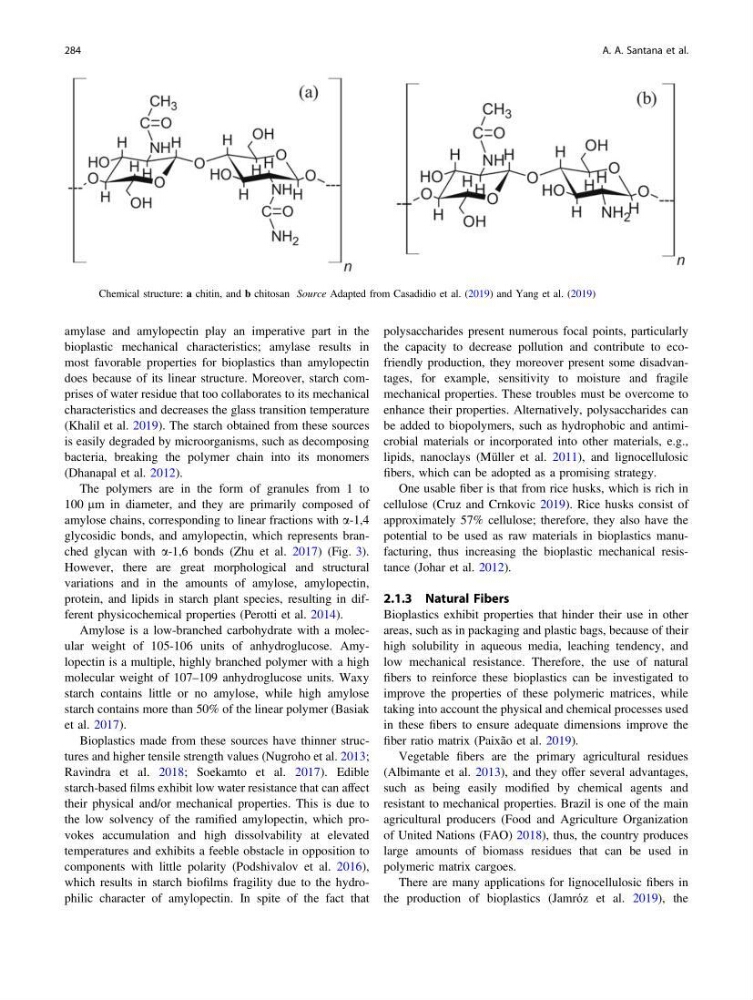
Fig. 2 Chemical structure: a chitin, and b chitosan Source Adapted from Casadidio et al. (2019) and Yang et al. (2019)
284
A. A. Santana et al.
bioplastic mechanical characteristics; amylase results in
most favorable properties for bioplastics than amylopectin
does because of its linear structure. Moreover, starch comprises of water residue that too collaborates to its mechanical
characteristics and decreases the glass transition temperature
(Khalil et al. 2019). The starch obtained from these sources
is easily degraded by microorganisms, such as decomposing
bacteria, breaking the polymer chain into its monomers
(Dhanapal et al. 2012).
The polymers are in the form of granules from 1 to
100 lm in diameter, and they are primarily composed of
amylose chains, corresponding to linear fractions with a-1,4
glycosidic bonds, and amylopectin, which represents branched glycan with a-1,6 bonds (Zhu et al. 2017) (Fig. 3).
However, there are great morphological and structural
variations and in the amounts of amylose, amylopectin,
protein, and lipids in starch plant species, resulting in different physicochemical properties (Perotti et al. 2014).
Amylose is a low-branched carbohydrate with a molecular weight of 105-106 units of anhydroglucose. Amylopectin is a multiple, highly branched polymer with a high
molecular weight of 107–109 anhydroglucose units. Waxy
starch contains little or no amylose, while high amylose
starch contains more than 50% of the linear polymer (Basiak
et al. 2017).
Bioplastics made from these sources have thinner structures and higher tensile strength values (Nugroho et al. 2013;
Ravindra et al. 2018; Soekamto et al. 2017). Edible
starch-based films exhibit low water resistance that can affect
their physical and/or mechanical properties. This is due to
the low solvency of the ramified amylopectin, which provokes accumulation and high dissolvability at elevated
temperatures and exhibits a feeble obstacle in opposition to
components with little polarity (Podshivalov et al. 2016),
which results in starch biofilms fragility due to the hydrophilic character of amylopectin. In spite of the fact that
polysaccharides present numerous focal points, particularly
the capacity to decrease pollution and contribute to ecofriendly production, they moreover present some disadvantages, for example, sensitivity to moisture and fragile
mechanical properties. These troubles must be overcome to
enhance their properties. Alternatively, polysaccharides can
be added to biopolymers, such as hydrophobic and antimicrobial materials or incorporated into other materials, e.g.,
lipids, nanoclays (Müller et al. 2011), and lignocellulosic
fibers, which can be adopted as a promising strategy.
One usable fiber is that from rice husks, which is rich in
cellulose (Cruz and Crnkovic 2019). Rice husks consist of
approximately 57% cellulose; therefore, they also have the
potential to be used as raw materials in bioplastics manufacturing, thus increasing the bioplastic mechanical resistance (Johar et al. 2012).
2.1.3 Natural Fibers
Bioplastics exhibit properties that hinder their use in other
areas, such as in packaging and plastic bags, because of their
high solubility in aqueous media, leaching tendency, and
low mechanical resistance. Therefore, the use of natural
fibers to reinforce these bioplastics can be investigated to
improve the properties of these polymeric matrices, while
taking into account the physical and chemical processes used
in these fibers to ensure adequate dimensions improve the
fiber ratio matrix (Paixão et al. 2019).
Vegetable fibers are the primary agricultural residues
(Albimante et al. 2013), and they offer several advantages,
such as being easily modified by chemical agents and
resistant to mechanical properties. Brazil is one of the main
agricultural producers (Food and Agriculture Organization
of United Nations (FAO) 2018), thus, the country produces
large amounts of biomass residues that can be used in
polymeric matrix cargoes.
There are many applications for lignocellulosic fibers in
the production of bioplastics (Jamróz et al. 2019), the
Fig. 2 Chemical structure: a chitin, and b chitosan Source Adapted from Casadidio et al. (2019) and Yang et al. (2019)
284
A. A. Santana et al.