

5.1.1 Pyrolysis
Pyrolysis is the conversion of biomass or any carbonaceous
feedstocks in anaerobic condition to produce charcoal,
bio-oil, and biogas at a pressure of 0.1–0.5 MPa and a
temperature of 500–900 °C (Ni et al. 2006; Bičáková and
Straka 2012). The major purpose of the pyrolysis is to break
down the polymeric molecules into shorter molecular weight
compounds. Biomass pyrolysis is categorized into conventional (slow), vacuum, fast, and flash pyrolysis. The major
differences between slow and fast pyrolysis are the heating
rates (time) and maximum reaction temperatures (Al 2018).
The differences in time and temperature significantly affect
production of biofuels and other products. Slow pyrolysis
produces primarily gas while fast pyrolysis generates biofuel
(Brown et al. 2011; Demirbas 2016). Therefore, fast pyrolysis is cost, time, and energy efficient in the conversion of
biomass. Pyrolytic decomposition of biomass can be illustrated by the following equation (Eq. 1) (Demirbas 2016):
Biomass þ Energy ! H 2 þ CO þ CO 2 þ HC gases
þ Tar þ Char
ð1Þ
i. Fast pyrolysis
The biomass feedstock is heated rapidly in anoxic condition.
There are three main products of fast pyrolysis: bio-oil, gas,
and char. Tar (47.13%) is the major product of fast pyrolysis
followed by char (28.33%), losses (13.21%), and gases
(11.33%) respectively at 653 K (Al 2018). The major gases
include H 2 , CH 4 , CO, CO 2, and other depending on the
feedstocks used for pyrolysis (Demirbas 2016).
ii. Slow pyrolysis
It is the conventional form of pyrolysis in which the production of charcoal or char is the major by-product. The
plant biomass is heated slowly in an anaerobic condition to a
relatively low temperature (about 400 °C) over an extended
period (Basu 2013). According to Al Arni (2018) char
(37.64%) is the major product of slow pyrolysis followed by
tar (26.11%), gas (25.10%), and losses (11.15%) at 753 K.
iii. Flash pyrolysis
Flash pyrolysis is also called very fast pyrolysis. In this
process biomass is rapidly heated (above 1000 °C/s) in an
anoxic condition. The main product of the flash pyrolysis is
biofuel (about 70–75% of biomass) with 15–25% of biochar
residues (Basu 2013).
5.1.2 Gasification
In comparison to the pyrolysis processes, the gasification
process aims to maximize the conversion of a solid biomass
into usable gases. The gasification process converts organic
biomass into hydrogen and other products without combustion. In this process, biomass is heated at high temperatures (>700 °C) provided with a regulated amount of oxygen
and steam. This process produces carbon monoxide (CO),
hydrogen (H 2 ), and carbon dioxide (CO 2 ) (Eq. 2) (Balat and
Kırtay 2010). Biomass gasification takes place in a complex
chain of chemical reactions. Usually, this process is
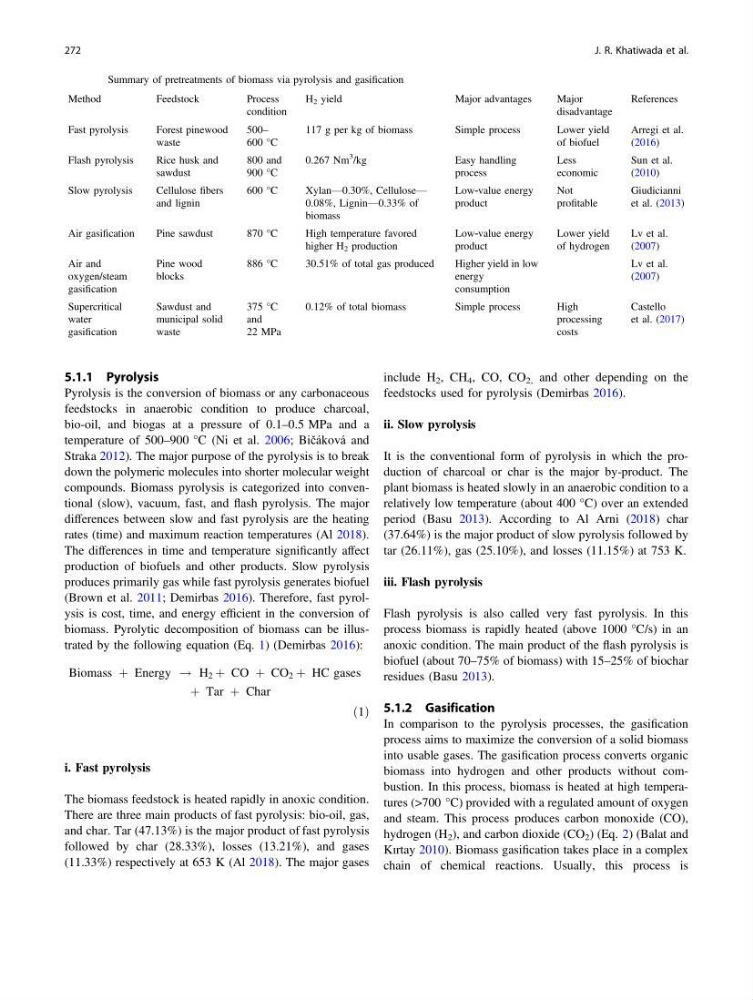
Table 2 Summary of pretreatments of biomass via pyrolysis and gasification
Method
Feedstock
Process
condition
H 2 yield
Major advantages
Major
disadvantage
References
Fast pyrolysis
Forest pinewood
waste
500–
600 °C
117 g per kg of biomass
Simple process
Lower yield
of biofuel
Arregi et al.
(2016)
Flash pyrolysis
Rice husk and
sawdust
800 and
900 °C
0.267 Nm
3
/kg
Easy handling
process
Less
economic
Sun et al.
(2010)
Slow pyrolysis
Cellulose fibers
and lignin
600 °C
Xylan—0.30%, Cellulose—
0.08%, Lignin—0.33% of
biomass
Low‐value energy
product
Not
profitable
Giudicianni
et al. (2013)
Air gasification
Pine sawdust
870 °C
High temperature favored
higher H 2 production
Low‐value energy
product
Lower yield
of hydrogen
Lv et al.
(2007)
Air and
oxygen/steam
gasification
Pine wood
blocks
886 °C
30.51% of total gas produced
Higher yield in low
energy
consumption
Lv et al.
(2007)
Supercritical
water
gasification
Sawdust and
municipal solid
waste
375 °C
and
22 MPa
0.12% of total biomass
Simple process
High
processing
costs
Castello
et al. (2017)
272
J. R. Khatiwada et al.
Pyrolysis is the conversion of biomass or any carbonaceous
feedstocks in anaerobic condition to produce charcoal,
bio-oil, and biogas at a pressure of 0.1–0.5 MPa and a
temperature of 500–900 °C (Ni et al. 2006; Bičáková and
Straka 2012). The major purpose of the pyrolysis is to break
down the polymeric molecules into shorter molecular weight
compounds. Biomass pyrolysis is categorized into conventional (slow), vacuum, fast, and flash pyrolysis. The major
differences between slow and fast pyrolysis are the heating
rates (time) and maximum reaction temperatures (Al 2018).
The differences in time and temperature significantly affect
production of biofuels and other products. Slow pyrolysis
produces primarily gas while fast pyrolysis generates biofuel
(Brown et al. 2011; Demirbas 2016). Therefore, fast pyrolysis is cost, time, and energy efficient in the conversion of
biomass. Pyrolytic decomposition of biomass can be illustrated by the following equation (Eq. 1) (Demirbas 2016):
Biomass þ Energy ! H 2 þ CO þ CO 2 þ HC gases
þ Tar þ Char
ð1Þ
i. Fast pyrolysis
The biomass feedstock is heated rapidly in anoxic condition.
There are three main products of fast pyrolysis: bio-oil, gas,
and char. Tar (47.13%) is the major product of fast pyrolysis
followed by char (28.33%), losses (13.21%), and gases
(11.33%) respectively at 653 K (Al 2018). The major gases
include H 2 , CH 4 , CO, CO 2, and other depending on the
feedstocks used for pyrolysis (Demirbas 2016).
ii. Slow pyrolysis
It is the conventional form of pyrolysis in which the production of charcoal or char is the major by-product. The
plant biomass is heated slowly in an anaerobic condition to a
relatively low temperature (about 400 °C) over an extended
period (Basu 2013). According to Al Arni (2018) char
(37.64%) is the major product of slow pyrolysis followed by
tar (26.11%), gas (25.10%), and losses (11.15%) at 753 K.
iii. Flash pyrolysis
Flash pyrolysis is also called very fast pyrolysis. In this
process biomass is rapidly heated (above 1000 °C/s) in an
anoxic condition. The main product of the flash pyrolysis is
biofuel (about 70–75% of biomass) with 15–25% of biochar
residues (Basu 2013).
5.1.2 Gasification
In comparison to the pyrolysis processes, the gasification
process aims to maximize the conversion of a solid biomass
into usable gases. The gasification process converts organic
biomass into hydrogen and other products without combustion. In this process, biomass is heated at high temperatures (>700 °C) provided with a regulated amount of oxygen
and steam. This process produces carbon monoxide (CO),
hydrogen (H 2 ), and carbon dioxide (CO 2 ) (Eq. 2) (Balat and
Kırtay 2010). Biomass gasification takes place in a complex
chain of chemical reactions. Usually, this process is
Table 2 Summary of pretreatments of biomass via pyrolysis and gasification
Method
Feedstock
Process
condition
H 2 yield
Major advantages
Major
disadvantage
References
Fast pyrolysis
Forest pinewood
waste
500–
600 °C
117 g per kg of biomass
Simple process
Lower yield
of biofuel
Arregi et al.
(2016)
Flash pyrolysis
Rice husk and
sawdust
800 and
900 °C
0.267 Nm
3
/kg
Easy handling
process
Less
economic
Sun et al.
(2010)
Slow pyrolysis
Cellulose fibers
and lignin
600 °C
Xylan—0.30%, Cellulose—
0.08%, Lignin—0.33% of
biomass
Low‐value energy
product
Not
profitable
Giudicianni
et al. (2013)
Air gasification
Pine sawdust
870 °C
High temperature favored
higher H 2 production
Low‐value energy
product
Lower yield
of hydrogen
Lv et al.
(2007)
Air and
oxygen/steam
gasification
Pine wood
blocks
886 °C
30.51% of total gas produced
Higher yield in low
energy
consumption
Lv et al.
(2007)
Supercritical
water
gasification
Sawdust and
municipal solid
waste
375 °C
and
22 MPa
0.12% of total biomass
Simple process
High
processing
costs
Castello
et al. (2017)
272
J. R. Khatiwada et al.