

spectrum of phenolic acids, flavonols, proanthocyanidins,
flavonols, tannins, stilbenes, and anthocyanins still remain
(Averilla et al. 2019). In similar way, other berry press
residues (blueberries, cranberries, bilberries, pomegranate…) are also excellent source of anthocyanins and
other phenolic compounds (Turrini et al. 2020; Klavins et al.
2018). In apple by-products such as pomace or peels
resulting of cider and juice production, bioactive compounds
are more concentrated than in the whole fruit (Barreira et al.
2019). These apple by-products are characterised by the high
content of dietary fibre, pectins as well as phenolic compounds such as hydroxycinnamic acids, catechin, quercetin,
epicatechin, or dihydrochalcones, mainly presenting in peel
(Gorinstein et al. 2001; Barreira et al. 2019). Citrus waste is
a rich source of value-added phytochemicals such as phenolic acids, flavones, limonoids, and flavanones, primarily
naringin, hesperidin and narirutin, and neohesperidin
(Gómez-Mejía et al. 2019). Citrus peel is also a good source
of essential oils which are composed of terpenes such as
limonene but also comprise other volatile compounds as
phenylpropanoids, aldehydes, or alcohols (Mahato et al.
2019). The valuable components of tropical fruits
by-products have also been recently revealed.
Mango peel and kernel (24–40%) are characterised by the
high content of dietary fibre, carotenoids, tocopherols, phenolic compounds as phenolic acids, and flavonoids, among
others, benzophenones and xanthanoids as mangiferin.
Mango seed is also used for the recovery of starch and oil
with excellent qualitative properties (Jahurul et al. 2015;
Asif et al. 2016). Pineapple by-products represent almost
60% including crown, peel, bottom, stem, and trimmings.
Some of these by-products are used for the extraction of
bromelain, a proteolytic enzyme for peptides release
(Mazorra-Manzano et al. 2018). Meanwhile, dietary fibre,
starch, essential amino acids, and polyphenols like prodelphinidins, and procyanidins and catecholamines can be
isolated from banana peel which represents around 35–40%
of the fresh fruit (González-Montelongo et al. 2010; Rebello
et al. 2014).
4.3 Cereals
Cereals (Graminea family), which are the most important
world food crop, possess nine kinds of species that are
available (wheat, rice, oat, rye, barley, millet, corn, sorghum,
and triticale) (Galanakis 2018). During cereals manufacturing, huge amounts of by-products with interesting nutritional
and bioactive potential compounds are obtained. These
include minerals, vitamins, phenolic compounds, fatty acids,
carotenoids, or proteins, among others (Saini et al. 2019)
with high potential to combat several disorders (Fu et al.
2020). For example, the milling industry covers huge
amounts of bran, the brewing industry provides brewer’s
spent grain and the ethanol industry contributes with distiller’s grain (Roth et al. 2019).
In this scenario, Avena sativa, commonly known as oat, is
one of the major cereal grains produced worldwide (annual
production of 22 million tonnes) (Ralla et al. 2018). During
oat processes, a common by-product is oat bran, that is rich
in ß-glucan (10.4%), in addition to considerable amounts of
minerals (magnesium, iron, copper, and potassium) (Butt
et al. 2008). Due to its composition, bran oat has soothing,
moisturising, anti-irritating, anti-ageing effects, and is also a
safe skin protectant against UV damage (Aburjai and Natsheh 2003). Regarding oat germ oil, it represents approximately 7% of the total kernel weight and is rich in
triacylglycerols, phospholipids, and oleosins. It also presents
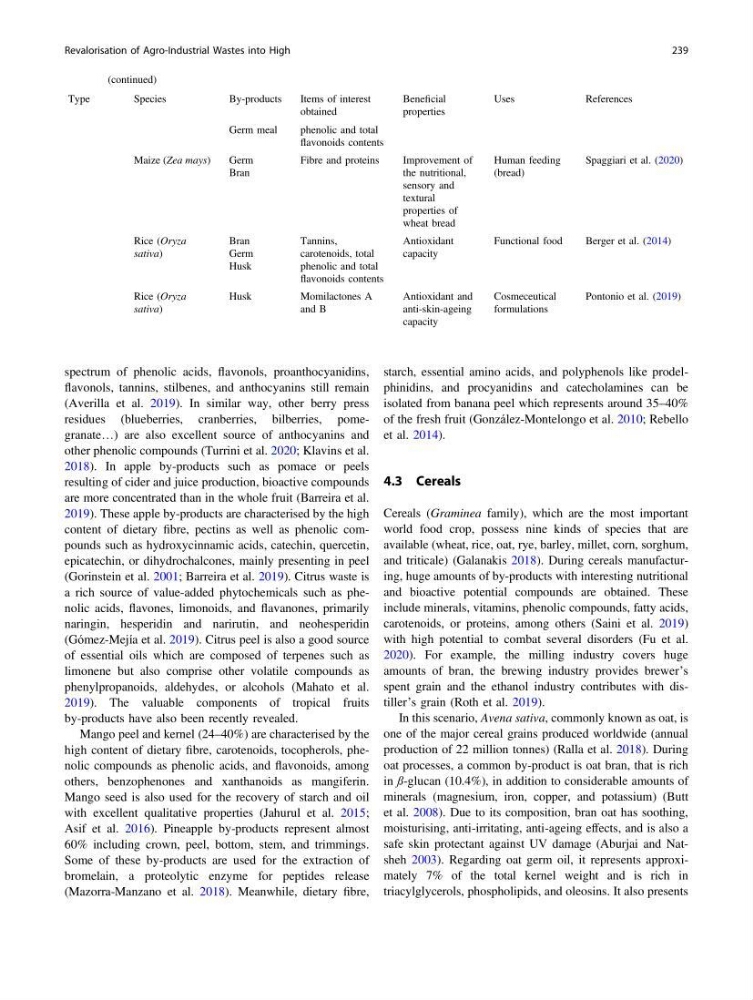
Table 2 (continued)
Type
Species
By-products
Items of interest
obtained
Beneficial
properties
Uses
References
Germ meal
phenolic and total
flavonoids contents
Maize (Zea mays)
Germ
Bran
Fibre and proteins
Improvement of
the nutritional,
sensory and
textural
properties of
wheat bread
Human feeding
(bread)
Spaggiari et al. (2020)
Rice (Oryza
sativa)
Bran
Germ
Husk
Tannins,
carotenoids, total
phenolic and total
flavonoids contents
Antioxidant
capacity
Functional food
Berger et al. (2014)
Rice (Oryza
sativa)
Husk
Momilactones A
and B
Antioxidant and
anti-skin-ageing
capacity
Cosmeceutical
formulations
Pontonio et al. (2019)
Revalorisation of Agro-Industrial Wastes into High
239
flavonols, tannins, stilbenes, and anthocyanins still remain
(Averilla et al. 2019). In similar way, other berry press
residues (blueberries, cranberries, bilberries, pomegranate…) are also excellent source of anthocyanins and
other phenolic compounds (Turrini et al. 2020; Klavins et al.
2018). In apple by-products such as pomace or peels
resulting of cider and juice production, bioactive compounds
are more concentrated than in the whole fruit (Barreira et al.
2019). These apple by-products are characterised by the high
content of dietary fibre, pectins as well as phenolic compounds such as hydroxycinnamic acids, catechin, quercetin,
epicatechin, or dihydrochalcones, mainly presenting in peel
(Gorinstein et al. 2001; Barreira et al. 2019). Citrus waste is
a rich source of value-added phytochemicals such as phenolic acids, flavones, limonoids, and flavanones, primarily
naringin, hesperidin and narirutin, and neohesperidin
(Gómez-Mejía et al. 2019). Citrus peel is also a good source
of essential oils which are composed of terpenes such as
limonene but also comprise other volatile compounds as
phenylpropanoids, aldehydes, or alcohols (Mahato et al.
2019). The valuable components of tropical fruits
by-products have also been recently revealed.
Mango peel and kernel (24–40%) are characterised by the
high content of dietary fibre, carotenoids, tocopherols, phenolic compounds as phenolic acids, and flavonoids, among
others, benzophenones and xanthanoids as mangiferin.
Mango seed is also used for the recovery of starch and oil
with excellent qualitative properties (Jahurul et al. 2015;
Asif et al. 2016). Pineapple by-products represent almost
60% including crown, peel, bottom, stem, and trimmings.
Some of these by-products are used for the extraction of
bromelain, a proteolytic enzyme for peptides release
(Mazorra-Manzano et al. 2018). Meanwhile, dietary fibre,
starch, essential amino acids, and polyphenols like prodelphinidins, and procyanidins and catecholamines can be
isolated from banana peel which represents around 35–40%
of the fresh fruit (González-Montelongo et al. 2010; Rebello
et al. 2014).
4.3 Cereals
Cereals (Graminea family), which are the most important
world food crop, possess nine kinds of species that are
available (wheat, rice, oat, rye, barley, millet, corn, sorghum,
and triticale) (Galanakis 2018). During cereals manufacturing, huge amounts of by-products with interesting nutritional
and bioactive potential compounds are obtained. These
include minerals, vitamins, phenolic compounds, fatty acids,
carotenoids, or proteins, among others (Saini et al. 2019)
with high potential to combat several disorders (Fu et al.
2020). For example, the milling industry covers huge
amounts of bran, the brewing industry provides brewer’s
spent grain and the ethanol industry contributes with distiller’s grain (Roth et al. 2019).
In this scenario, Avena sativa, commonly known as oat, is
one of the major cereal grains produced worldwide (annual
production of 22 million tonnes) (Ralla et al. 2018). During
oat processes, a common by-product is oat bran, that is rich
in ß-glucan (10.4%), in addition to considerable amounts of
minerals (magnesium, iron, copper, and potassium) (Butt
et al. 2008). Due to its composition, bran oat has soothing,
moisturising, anti-irritating, anti-ageing effects, and is also a
safe skin protectant against UV damage (Aburjai and Natsheh 2003). Regarding oat germ oil, it represents approximately 7% of the total kernel weight and is rich in
triacylglycerols, phospholipids, and oleosins. It also presents
Table 2 (continued)
Type
Species
By-products
Items of interest
obtained
Beneficial
properties
Uses
References
Germ meal
phenolic and total
flavonoids contents
Maize (Zea mays)
Germ
Bran
Fibre and proteins
Improvement of
the nutritional,
sensory and
textural
properties of
wheat bread
Human feeding
(bread)
Spaggiari et al. (2020)
Rice (Oryza
sativa)
Bran
Germ
Husk
Tannins,
carotenoids, total
phenolic and total
flavonoids contents
Antioxidant
capacity
Functional food
Berger et al. (2014)
Rice (Oryza
sativa)
Husk
Momilactones A
and B
Antioxidant and
anti-skin-ageing
capacity
Cosmeceutical
formulations
Pontonio et al. (2019)
Revalorisation of Agro-Industrial Wastes into High
239