

addition to that, chitosan is capable to interfere osmotic
balance by changing the bacterial wall permeability and as a
result prevents growth of the bacteria.
Rabbi et al. (2020) proposed cellulose-based biocompatible nanocomposite with antibacterial performance by
incorporation of Ag nanoparticles. In this regard, cellulose
was supplied from jute pulp and Ag nanoparticles were
synthesized in situ using herbal extract as the reducing agent.
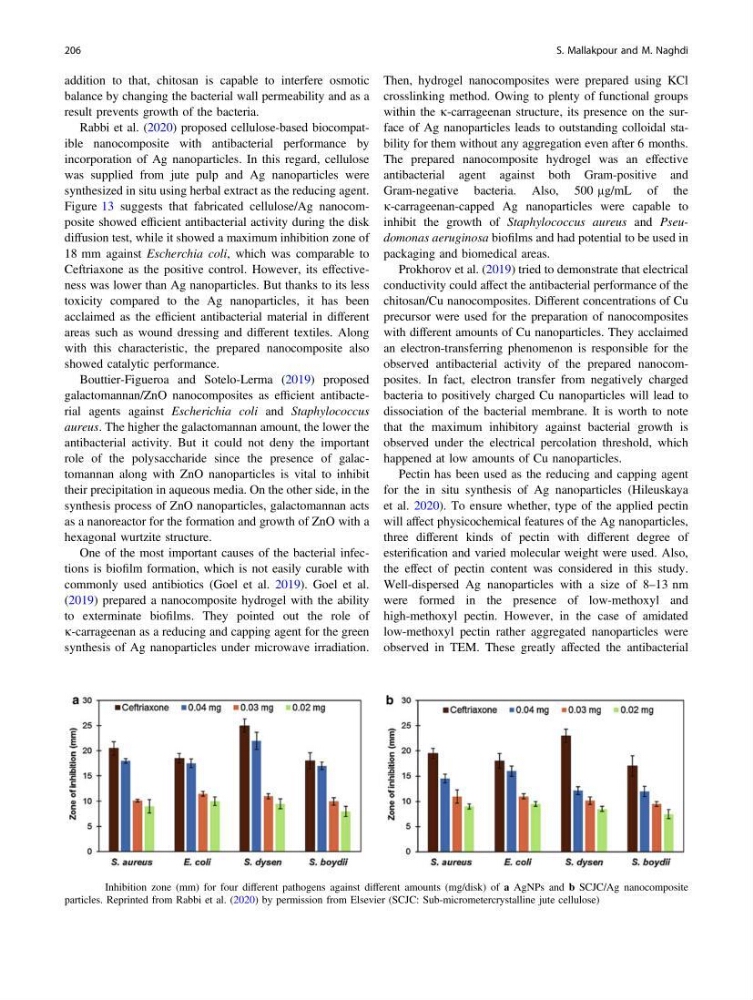
Figure 13 suggests that fabricated cellulose/Ag nanocomposite showed efficient antibacterial activity during the disk
diffusion test, while it showed a maximum inhibition zone of
18 mm against Escherchia coli, which was comparable to
Ceftriaxone as the positive control. However, its effectiveness was lower than Ag nanoparticles. But thanks to its less
toxicity compared to the Ag nanoparticles, it has been
acclaimed as the efficient antibacterial material in different
areas such as wound dressing and different textiles. Along
with this characteristic, the prepared nanocomposite also
showed catalytic performance.
Bouttier-Figueroa and Sotelo-Lerma (2019) proposed
galactomannan/ZnO nanocomposites as efficient antibacterial agents against Escherichia coli and Staphylococcus
aureus. The higher the galactomannan amount, the lower the
antibacterial activity. But it could not deny the important
role of the polysaccharide since the presence of galactomannan along with ZnO nanoparticles is vital to inhibit
their precipitation in aqueous media. On the other side, in the
synthesis process of ZnO nanoparticles, galactomannan acts
as a nanoreactor for the formation and growth of ZnO with a
hexagonal wurtzite structure.
One of the most important causes of the bacterial infections is biofilm formation, which is not easily curable with
commonly used antibiotics (Goel et al. 2019). Goel et al.
(2019) prepared a nanocomposite hydrogel with the ability
to exterminate biofilms. They pointed out the role of
j-carrageenan as a reducing and capping agent for the green
synthesis of Ag nanoparticles under microwave irradiation.
Then, hydrogel nanocomposites were prepared using KCl
crosslinking method. Owing to plenty of functional groups
within the j-carrageenan structure, its presence on the surface of Ag nanoparticles leads to outstanding colloidal stability for them without any aggregation even after 6 months.
The prepared nanocomposite hydrogel was an effective
antibacterial agent against both Gram-positive and
Gram-negative bacteria. Also, 500 µg/mL of the
j-carrageenan-capped Ag nanoparticles were capable to
inhibit the growth of Staphylococcus aureus and Pseudomonas aeruginosa biofilms and had potential to be used in
packaging and biomedical areas.
Prokhorov et al. (2019) tried to demonstrate that electrical
conductivity could affect the antibacterial performance of the
chitosan/Cu nanocomposites. Different concentrations of Cu
precursor were used for the preparation of nanocomposites
with different amounts of Cu nanoparticles. They acclaimed
an electron-transferring phenomenon is responsible for the
observed antibacterial activity of the prepared nanocomposites. In fact, electron transfer from negatively charged
bacteria to positively charged Cu nanoparticles will lead to
dissociation of the bacterial membrane. It is worth to note
that the maximum inhibitory against bacterial growth is
observed under the electrical percolation threshold, which
happened at low amounts of Cu nanoparticles.
Pectin has been used as the reducing and capping agent
for the in situ synthesis of Ag nanoparticles (Hileuskaya
et al. 2020). To ensure whether, type of the applied pectin
will affect physicochemical features of the Ag nanoparticles,
three different kinds of pectin with different degree of
esterification and varied molecular weight were used. Also,
the effect of pectin content was considered in this study.
Well-dispersed Ag nanoparticles with a size of 8–13 nm
were formed in the presence of low-methoxyl and
high-methoxyl pectin. However, in the case of amidated
low-methoxyl pectin rather aggregated nanoparticles were
observed in TEM. These greatly affected the antibacterial
Fig. 13 Inhibition zone (mm) for four different pathogens against different amounts (mg/disk) of a AgNPs and b SCJC/Ag nanocomposite
particles. Reprinted from Rabbi et al. (2020) by permission from Elsevier (SCJC: Sub-micrometercrystalline jute cellulose)
206
S. Mallakpour and M. Naghdi
balance by changing the bacterial wall permeability and as a
result prevents growth of the bacteria.
Rabbi et al. (2020) proposed cellulose-based biocompatible nanocomposite with antibacterial performance by
incorporation of Ag nanoparticles. In this regard, cellulose
was supplied from jute pulp and Ag nanoparticles were
synthesized in situ using herbal extract as the reducing agent.
Figure 13 suggests that fabricated cellulose/Ag nanocomposite showed efficient antibacterial activity during the disk
diffusion test, while it showed a maximum inhibition zone of
18 mm against Escherchia coli, which was comparable to
Ceftriaxone as the positive control. However, its effectiveness was lower than Ag nanoparticles. But thanks to its less
toxicity compared to the Ag nanoparticles, it has been
acclaimed as the efficient antibacterial material in different
areas such as wound dressing and different textiles. Along
with this characteristic, the prepared nanocomposite also
showed catalytic performance.
Bouttier-Figueroa and Sotelo-Lerma (2019) proposed
galactomannan/ZnO nanocomposites as efficient antibacterial agents against Escherichia coli and Staphylococcus
aureus. The higher the galactomannan amount, the lower the
antibacterial activity. But it could not deny the important
role of the polysaccharide since the presence of galactomannan along with ZnO nanoparticles is vital to inhibit
their precipitation in aqueous media. On the other side, in the
synthesis process of ZnO nanoparticles, galactomannan acts
as a nanoreactor for the formation and growth of ZnO with a
hexagonal wurtzite structure.
One of the most important causes of the bacterial infections is biofilm formation, which is not easily curable with
commonly used antibiotics (Goel et al. 2019). Goel et al.
(2019) prepared a nanocomposite hydrogel with the ability
to exterminate biofilms. They pointed out the role of
j-carrageenan as a reducing and capping agent for the green
synthesis of Ag nanoparticles under microwave irradiation.
Then, hydrogel nanocomposites were prepared using KCl
crosslinking method. Owing to plenty of functional groups
within the j-carrageenan structure, its presence on the surface of Ag nanoparticles leads to outstanding colloidal stability for them without any aggregation even after 6 months.
The prepared nanocomposite hydrogel was an effective
antibacterial agent against both Gram-positive and
Gram-negative bacteria. Also, 500 µg/mL of the
j-carrageenan-capped Ag nanoparticles were capable to
inhibit the growth of Staphylococcus aureus and Pseudomonas aeruginosa biofilms and had potential to be used in
packaging and biomedical areas.
Prokhorov et al. (2019) tried to demonstrate that electrical
conductivity could affect the antibacterial performance of the
chitosan/Cu nanocomposites. Different concentrations of Cu
precursor were used for the preparation of nanocomposites
with different amounts of Cu nanoparticles. They acclaimed
an electron-transferring phenomenon is responsible for the
observed antibacterial activity of the prepared nanocomposites. In fact, electron transfer from negatively charged
bacteria to positively charged Cu nanoparticles will lead to
dissociation of the bacterial membrane. It is worth to note
that the maximum inhibitory against bacterial growth is
observed under the electrical percolation threshold, which
happened at low amounts of Cu nanoparticles.
Pectin has been used as the reducing and capping agent
for the in situ synthesis of Ag nanoparticles (Hileuskaya
et al. 2020). To ensure whether, type of the applied pectin
will affect physicochemical features of the Ag nanoparticles,
three different kinds of pectin with different degree of
esterification and varied molecular weight were used. Also,
the effect of pectin content was considered in this study.
Well-dispersed Ag nanoparticles with a size of 8–13 nm
were formed in the presence of low-methoxyl and
high-methoxyl pectin. However, in the case of amidated
low-methoxyl pectin rather aggregated nanoparticles were
observed in TEM. These greatly affected the antibacterial
Fig. 13 Inhibition zone (mm) for four different pathogens against different amounts (mg/disk) of a AgNPs and b SCJC/Ag nanocomposite
particles. Reprinted from Rabbi et al. (2020) by permission from Elsevier (SCJC: Sub-micrometercrystalline jute cellulose)
206
S. Mallakpour and M. Naghdi