

between –OH functional groups of the nanofibrils and
polymer matrix, which leads to the rather compact orientation and consequently less vacant spaces.
5.2 Water Remediation
Polysaccharides are vastly addressed in water treatment.
They are highly abundant, cheap, and have a lot of functional
groups in their structure and could be proper candidates for
this aim (Badruddoza et al. 2013). Razani and Tehrani
(2019) designed a bionanocomposite containing a hybrid of
cellulose nanowhisker and layered double hydroxide. Following this purpose, cellulose nanowhiskers were first prepared during acid hydrolysis of cotton linter and then
modified via polymerization of acrylic acid monomers in the
presence of layered double hydroxide. The prepared bionanocomposite hydrogel was applied for the uptake of several cationic dyes and it seemed presence of layered double
hydroxide dramatically improved the adsorption capacity.
A blend of sodium alginate (2 w/v) and guar gum (1 w/v)
has been used as both reducing agents for the preparation of
Ag nanoparticles and then as the polymeric matrix in the
preparation of a bionanocomposite (Hasan et al. 2020). The
calculated bandgap energy for this bionanocomposite was
2.5 eV and it was capable to degrade methylene blue under
visible light.
Chitosan has been used for the preparation of
chitosan/graphene oxide with magnetic properties with the
capability to be used for Pb
2+ removing from wastewater
(Fan et al. 2013). They acclaimed the several functional
groups in the chitosan backbone including free –OH and –
NH 2 groups are important factors for this observation.
Mallakpour and Tabesh (2019) designed a biosorbent
hydrogel based on tragacanth gum to remove methylene blue
from aqueous solution. They also used different percentages
of CaCO 3 nanoparticles to enhance the features of the tragacanth gum. An enhancement in the thermal stability of the
bionanocomposites compared to the neat polysaccharide was
observed and the maximum adsorption capacity for the
bionanocomposite containing 5 wt% of CaCO 3 nanoparticles
was reported to be 468.62 mg/g.
Mallakpour and Madani (2016) used chitosan as the
matrix to prepare adsorbent for the Pb
2+ . Owing to the high
surface area and its tunnel structure, a-MnO 2 nanorods were
used to enhance the adsorption capacitance of chitosan.
Following this purpose and to better dispersion, a-MnO 2
nanorods were first modified using L-valin and then inserted
within the chitosan with different percentages. It was
observed by incorporation of 3 wt% of modified a-MnO 2
nanorods, the maximum adsorption capacity enhanced from
82.65 mg/g for pure chitosan film to 163.93 mg/g.
Chitosan/Fe 3 O 4 nanocomposite films were proposed as
biosorbents for the adsorption of Congo red (Kloster et al.
2019). Two different methods were used to prepare
chitosan/Fe 3 O 4 bionanocomposites; once Fe 3 O 4 nanoparticles were synthesized in situ within the chitosan matrix. In
the second protocol, Fe 3 O 4 nanoparticles were first
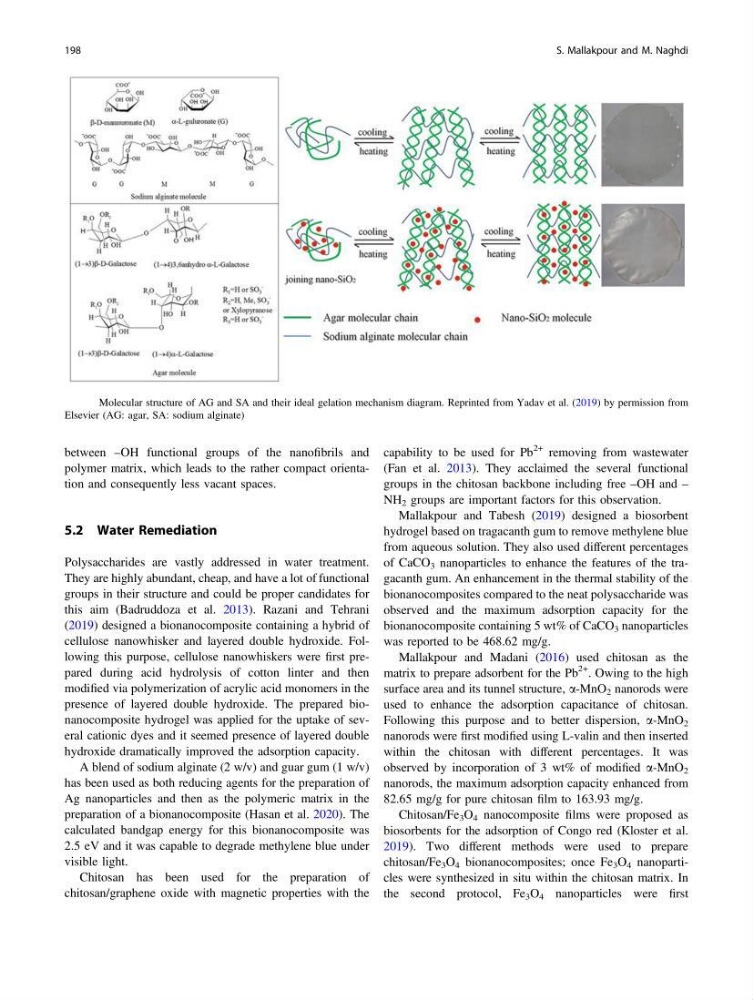
Fig. 4 Molecular structure of AG and SA and their ideal gelation mechanism diagram. Reprinted from Yadav et al. (2019) by permission from
Elsevier (AG: agar, SA: sodium alginate)
198
S. Mallakpour and M. Naghdi
polymer matrix, which leads to the rather compact orientation and consequently less vacant spaces.
5.2 Water Remediation
Polysaccharides are vastly addressed in water treatment.
They are highly abundant, cheap, and have a lot of functional
groups in their structure and could be proper candidates for
this aim (Badruddoza et al. 2013). Razani and Tehrani
(2019) designed a bionanocomposite containing a hybrid of
cellulose nanowhisker and layered double hydroxide. Following this purpose, cellulose nanowhiskers were first prepared during acid hydrolysis of cotton linter and then
modified via polymerization of acrylic acid monomers in the
presence of layered double hydroxide. The prepared bionanocomposite hydrogel was applied for the uptake of several cationic dyes and it seemed presence of layered double
hydroxide dramatically improved the adsorption capacity.
A blend of sodium alginate (2 w/v) and guar gum (1 w/v)
has been used as both reducing agents for the preparation of
Ag nanoparticles and then as the polymeric matrix in the
preparation of a bionanocomposite (Hasan et al. 2020). The
calculated bandgap energy for this bionanocomposite was
2.5 eV and it was capable to degrade methylene blue under
visible light.
Chitosan has been used for the preparation of
chitosan/graphene oxide with magnetic properties with the
capability to be used for Pb
2+ removing from wastewater
(Fan et al. 2013). They acclaimed the several functional
groups in the chitosan backbone including free –OH and –
NH 2 groups are important factors for this observation.
Mallakpour and Tabesh (2019) designed a biosorbent
hydrogel based on tragacanth gum to remove methylene blue
from aqueous solution. They also used different percentages
of CaCO 3 nanoparticles to enhance the features of the tragacanth gum. An enhancement in the thermal stability of the
bionanocomposites compared to the neat polysaccharide was
observed and the maximum adsorption capacity for the
bionanocomposite containing 5 wt% of CaCO 3 nanoparticles
was reported to be 468.62 mg/g.
Mallakpour and Madani (2016) used chitosan as the
matrix to prepare adsorbent for the Pb
2+ . Owing to the high
surface area and its tunnel structure, a-MnO 2 nanorods were
used to enhance the adsorption capacitance of chitosan.
Following this purpose and to better dispersion, a-MnO 2
nanorods were first modified using L-valin and then inserted
within the chitosan with different percentages. It was
observed by incorporation of 3 wt% of modified a-MnO 2
nanorods, the maximum adsorption capacity enhanced from
82.65 mg/g for pure chitosan film to 163.93 mg/g.
Chitosan/Fe 3 O 4 nanocomposite films were proposed as
biosorbents for the adsorption of Congo red (Kloster et al.
2019). Two different methods were used to prepare
chitosan/Fe 3 O 4 bionanocomposites; once Fe 3 O 4 nanoparticles were synthesized in situ within the chitosan matrix. In
the second protocol, Fe 3 O 4 nanoparticles were first
Fig. 4 Molecular structure of AG and SA and their ideal gelation mechanism diagram. Reprinted from Yadav et al. (2019) by permission from
Elsevier (AG: agar, SA: sodium alginate)
198
S. Mallakpour and M. Naghdi