

used for bioenergy. For example, glycerol, a byproduct of
biodiesel production, can be converted into green methanol
as another value-added product (Haider et al. 2015). Coffee
is another widely used beverage around the world leading to
the generation of a great quantity of biowaste (Choi et al.
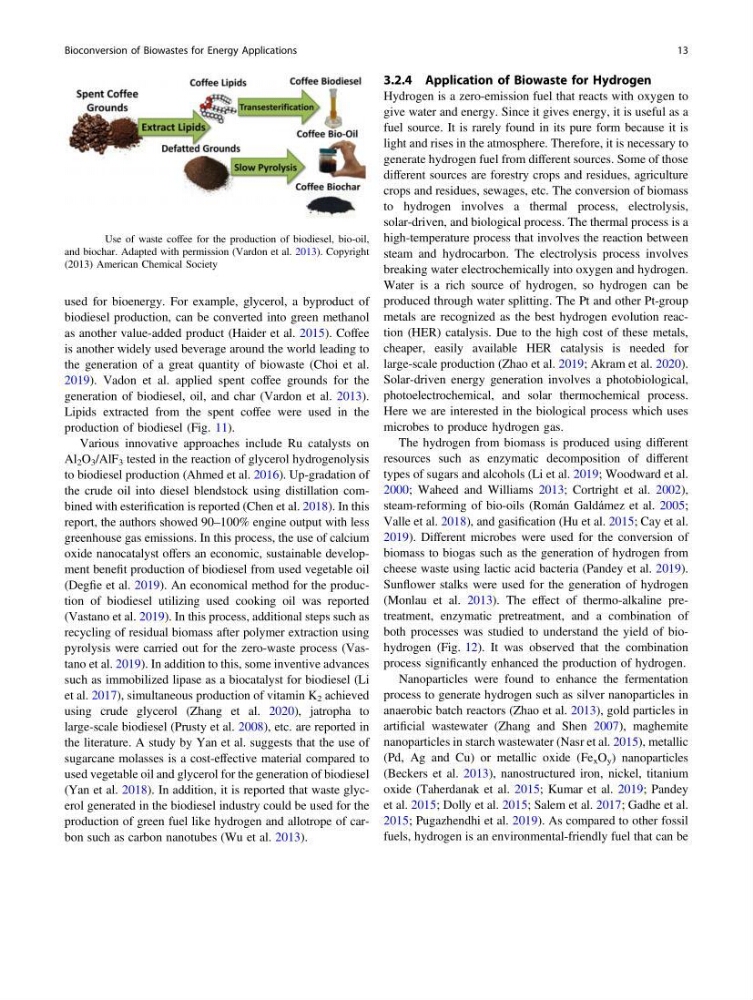
2019). Vadon et al. applied spent coffee grounds for the
generation of biodiesel, oil, and char (Vardon et al. 2013).
Lipids extracted from the spent coffee were used in the
production of biodiesel (Fig. 11).
Various innovative approaches include Ru catalysts on
Al 2 O 3 /AlF 3 tested in the reaction of glycerol hydrogenolysis
to biodiesel production (Ahmed et al. 2016). Up-gradation of
the crude oil into diesel blendstock using distillation combined with esterification is reported (Chen et al. 2018). In this
report, the authors showed 90–100% engine output with less
greenhouse gas emissions. In this process, the use of calcium
oxide nanocatalyst offers an economic, sustainable development benefit production of biodiesel from used vegetable oil
(Degfie et al. 2019). An economical method for the production of biodiesel utilizing used cooking oil was reported
(Vastano et al. 2019). In this process, additional steps such as
recycling of residual biomass after polymer extraction using
pyrolysis were carried out for the zero-waste process (Vastano et al. 2019). In addition to this, some inventive advances
such as immobilized lipase as a biocatalyst for biodiesel (Li
et al. 2017), simultaneous production of vitamin K 2 achieved
using crude glycerol (Zhang et al. 2020), jatropha to
large-scale biodiesel (Prusty et al. 2008), etc. are reported in
the literature. A study by Yan et al. suggests that the use of
sugarcane molasses is a cost-effective material compared to
used vegetable oil and glycerol for the generation of biodiesel
(Yan et al. 2018). In addition, it is reported that waste glycerol generated in the biodiesel industry could be used for the
production of green fuel like hydrogen and allotrope of carbon such as carbon nanotubes (Wu et al. 2013).
3.2.4 Application of Biowaste for Hydrogen
Hydrogen is a zero-emission fuel that reacts with oxygen to
give water and energy. Since it gives energy, it is useful as a
fuel source. It is rarely found in its pure form because it is
light and rises in the atmosphere. Therefore, it is necessary to
generate hydrogen fuel from different sources. Some of those
different sources are forestry crops and residues, agriculture
crops and residues, sewages, etc. The conversion of biomass
to hydrogen involves a thermal process, electrolysis,
solar-driven, and biological process. The thermal process is a
high-temperature process that involves the reaction between
steam and hydrocarbon. The electrolysis process involves
breaking water electrochemically into oxygen and hydrogen.
Water is a rich source of hydrogen, so hydrogen can be
produced through water splitting. The Pt and other Pt-group
metals are recognized as the best hydrogen evolution reaction (HER) catalysis. Due to the high cost of these metals,
cheaper, easily available HER catalysis is needed for
large-scale production (Zhao et al. 2019; Akram et al. 2020).
Solar-driven energy generation involves a photobiological,
photoelectrochemical, and solar thermochemical process.
Here we are interested in the biological process which uses
microbes to produce hydrogen gas.
The hydrogen from biomass is produced using different
resources such as enzymatic decomposition of different
types of sugars and alcohols (Li et al. 2019; Woodward et al.
2000; Waheed and Williams 2013; Cortright et al. 2002),
steam-reforming of bio-oils (Román Galdámez et al. 2005;
Valle et al. 2018), and gasification (Hu et al. 2015; Cay et al.
2019). Different microbes were used for the conversion of
biomass to biogas such as the generation of hydrogen from
cheese waste using lactic acid bacteria (Pandey et al. 2019).
Sunflower stalks were used for the generation of hydrogen
(Monlau et al. 2013). The effect of thermo-alkaline pretreatment, enzymatic pretreatment, and a combination of
both processes was studied to understand the yield of biohydrogen (Fig. 12). It was observed that the combination
process significantly enhanced the production of hydrogen.
Nanoparticles were found to enhance the fermentation
process to generate hydrogen such as silver nanoparticles in
anaerobic batch reactors (Zhao et al. 2013), gold particles in
artificial wastewater (Zhang and Shen 2007), maghemite
nanoparticles in starch wastewater (Nasr et al. 2015), metallic
(Pd, Ag and Cu) or metallic oxide (Fe x O y ) nanoparticles
(Beckers et al. 2013), nanostructured iron, nickel, titanium
oxide (Taherdanak et al. 2015; Kumar et al. 2019; Pandey
et al. 2015; Dolly et al. 2015; Salem et al. 2017; Gadhe et al.
2015; Pugazhendhi et al. 2019). As compared to other fossil
fuels, hydrogen is an environmental-friendly fuel that can be
Fig. 11 Use of waste coffee for the production of biodiesel, bio-oil,
and biochar. Adapted with permission (Vardon et al. 2013). Copyright
(2013) American Chemical Society
Bioconversion of Biowastes for Energy Applications
13
biodiesel production, can be converted into green methanol
as another value-added product (Haider et al. 2015). Coffee
is another widely used beverage around the world leading to
the generation of a great quantity of biowaste (Choi et al.
2019). Vadon et al. applied spent coffee grounds for the
generation of biodiesel, oil, and char (Vardon et al. 2013).
Lipids extracted from the spent coffee were used in the
production of biodiesel (Fig. 11).
Various innovative approaches include Ru catalysts on
Al 2 O 3 /AlF 3 tested in the reaction of glycerol hydrogenolysis
to biodiesel production (Ahmed et al. 2016). Up-gradation of
the crude oil into diesel blendstock using distillation combined with esterification is reported (Chen et al. 2018). In this
report, the authors showed 90–100% engine output with less
greenhouse gas emissions. In this process, the use of calcium
oxide nanocatalyst offers an economic, sustainable development benefit production of biodiesel from used vegetable oil
(Degfie et al. 2019). An economical method for the production of biodiesel utilizing used cooking oil was reported
(Vastano et al. 2019). In this process, additional steps such as
recycling of residual biomass after polymer extraction using
pyrolysis were carried out for the zero-waste process (Vastano et al. 2019). In addition to this, some inventive advances
such as immobilized lipase as a biocatalyst for biodiesel (Li
et al. 2017), simultaneous production of vitamin K 2 achieved
using crude glycerol (Zhang et al. 2020), jatropha to
large-scale biodiesel (Prusty et al. 2008), etc. are reported in
the literature. A study by Yan et al. suggests that the use of
sugarcane molasses is a cost-effective material compared to
used vegetable oil and glycerol for the generation of biodiesel
(Yan et al. 2018). In addition, it is reported that waste glycerol generated in the biodiesel industry could be used for the
production of green fuel like hydrogen and allotrope of carbon such as carbon nanotubes (Wu et al. 2013).
3.2.4 Application of Biowaste for Hydrogen
Hydrogen is a zero-emission fuel that reacts with oxygen to
give water and energy. Since it gives energy, it is useful as a
fuel source. It is rarely found in its pure form because it is
light and rises in the atmosphere. Therefore, it is necessary to
generate hydrogen fuel from different sources. Some of those
different sources are forestry crops and residues, agriculture
crops and residues, sewages, etc. The conversion of biomass
to hydrogen involves a thermal process, electrolysis,
solar-driven, and biological process. The thermal process is a
high-temperature process that involves the reaction between
steam and hydrocarbon. The electrolysis process involves
breaking water electrochemically into oxygen and hydrogen.
Water is a rich source of hydrogen, so hydrogen can be
produced through water splitting. The Pt and other Pt-group
metals are recognized as the best hydrogen evolution reaction (HER) catalysis. Due to the high cost of these metals,
cheaper, easily available HER catalysis is needed for
large-scale production (Zhao et al. 2019; Akram et al. 2020).
Solar-driven energy generation involves a photobiological,
photoelectrochemical, and solar thermochemical process.
Here we are interested in the biological process which uses
microbes to produce hydrogen gas.
The hydrogen from biomass is produced using different
resources such as enzymatic decomposition of different
types of sugars and alcohols (Li et al. 2019; Woodward et al.
2000; Waheed and Williams 2013; Cortright et al. 2002),
steam-reforming of bio-oils (Román Galdámez et al. 2005;
Valle et al. 2018), and gasification (Hu et al. 2015; Cay et al.
2019). Different microbes were used for the conversion of
biomass to biogas such as the generation of hydrogen from
cheese waste using lactic acid bacteria (Pandey et al. 2019).
Sunflower stalks were used for the generation of hydrogen
(Monlau et al. 2013). The effect of thermo-alkaline pretreatment, enzymatic pretreatment, and a combination of
both processes was studied to understand the yield of biohydrogen (Fig. 12). It was observed that the combination
process significantly enhanced the production of hydrogen.
Nanoparticles were found to enhance the fermentation
process to generate hydrogen such as silver nanoparticles in
anaerobic batch reactors (Zhao et al. 2013), gold particles in
artificial wastewater (Zhang and Shen 2007), maghemite
nanoparticles in starch wastewater (Nasr et al. 2015), metallic
(Pd, Ag and Cu) or metallic oxide (Fe x O y ) nanoparticles
(Beckers et al. 2013), nanostructured iron, nickel, titanium
oxide (Taherdanak et al. 2015; Kumar et al. 2019; Pandey
et al. 2015; Dolly et al. 2015; Salem et al. 2017; Gadhe et al.
2015; Pugazhendhi et al. 2019). As compared to other fossil
fuels, hydrogen is an environmental-friendly fuel that can be
Fig. 11 Use of waste coffee for the production of biodiesel, bio-oil,
and biochar. Adapted with permission (Vardon et al. 2013). Copyright
(2013) American Chemical Society
Bioconversion of Biowastes for Energy Applications
13