

produced very efficiently using renewable and sustainable
sources. Other advantages include zero-emissions, reduces
greenhouse gas emissions, etc.
4 Conclusion
The present global energy crisis requires strenuous efforts
from the researchers to explore all probable energy solutions.
There are increasing awareness and concern over the
greenhouse effect caused by increased use of traditional
energy sources. The universal heads are pushing to preserve
energy use and to develop non-fossil energies (bioenergies).
Ecofriendly biofuel and energy is the best option to replace
fossil fuels/energies. The consumption of biowaste feedstock
seems to be a perfect solution to the sustainable production
of bioenergy in the forthcoming generation. Herein, we
systematically discussed the foremost approaches that have
been employed for the bioconversion of various biowaste
management applications aiming to produce value-added
chemicals, byproducts, and biofuels (e.g., bioethanol, biodiesel, hydrogen, and methane). The well-developed
microbial, enzymatic, fermentative, and composting bioconversion systems could offer effective ways to produce
well-defined chemicals and energy products with the least
amount of pollutants and byproducts. To ensure its economic efficiency, the bioconversion process should be
carefully optimized based on various factors, including a
selection of feedstock, pretreatment approaches, separation
process, water reprocessing, energy integration, and byproduct production. Despite the major advancements from the
last decade, the bioconversion process is still facing significant challenges for broad-scale real industrial applications.
The upcoming research should be focused on the development of inexpensive biocatalysts to produce large-scale
industrial, high-yield value-added products and biofuels.
References
Abghari, A., & Chen, S. (2017). Engineering yarrowia lipolytica for
enhanced production of lipid and citric acid. Fermentation, 3.
https://doi.org/10.3390/fermentation3030034.
Abraham, J., Gea, T., & Sánchez, A. (2014). Substitution of chemical
dehairing by proteases from solid-state fermentation of hair wastes.
Journal of Cleaner Production, 74, 191–198. https://doi.org/10.
1016/j.jclepro.2014.03.035.
Adhikari, B. B., Chae, M., & Bressler, D. C. (2018). Utilization of
slaughterhouse waste in value-added applications: Recent advances
in the development of wood adhesives. Polymers (Basel), 10.
https://doi.org/10.3390/polym10020176.
Afolabi, O. O. D., Sohail, M., & Thomas, C. L. P. (2017). Characterization of solid fuel chars recovered from microwave hydrothermal carbonization of human biowaste. Energy, 134, 74–89. https://
doi.org/10.1016/j.energy.2017.06.010.
Ahmed, T. S., Abdelaziz, O. Y., & Roberts, G. W. (2016). Preparation
of Al 2 O 3 /AlF 3 -supported ruthenium catalysts for the hydrogenolysis
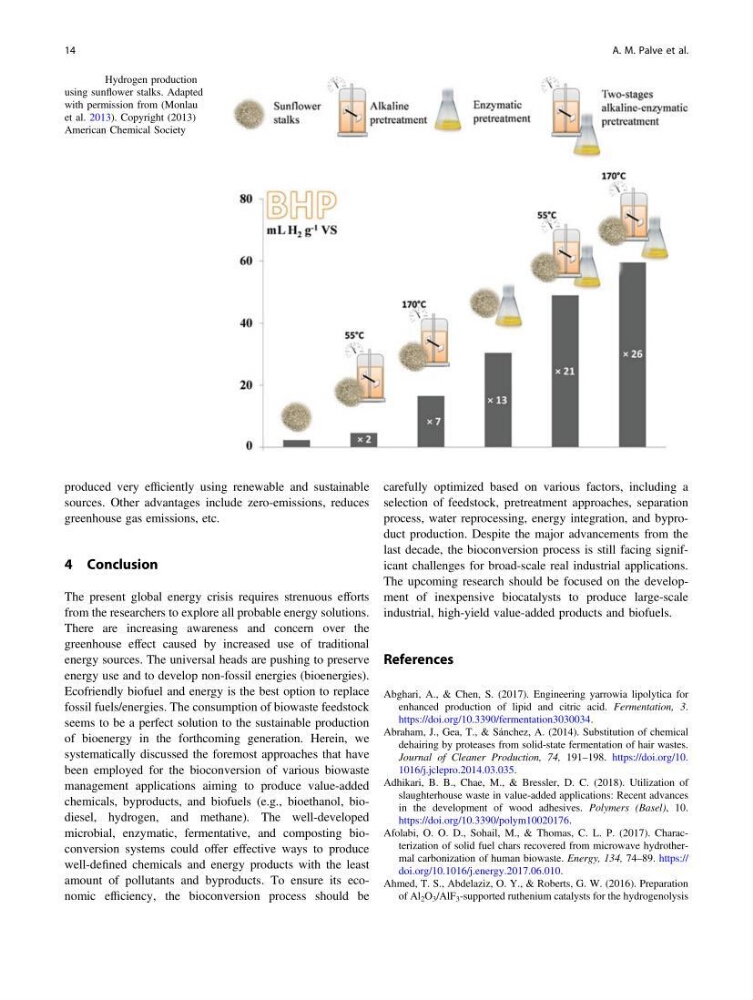
Fig. 12 Hydrogen production
using sunflower stalks. Adapted
with permission from (Monlau
et al. 2013). Copyright (2013)
American Chemical Society
14
A. M. Palve et al.
sources. Other advantages include zero-emissions, reduces
greenhouse gas emissions, etc.
4 Conclusion
The present global energy crisis requires strenuous efforts
from the researchers to explore all probable energy solutions.
There are increasing awareness and concern over the
greenhouse effect caused by increased use of traditional
energy sources. The universal heads are pushing to preserve
energy use and to develop non-fossil energies (bioenergies).
Ecofriendly biofuel and energy is the best option to replace
fossil fuels/energies. The consumption of biowaste feedstock
seems to be a perfect solution to the sustainable production
of bioenergy in the forthcoming generation. Herein, we
systematically discussed the foremost approaches that have
been employed for the bioconversion of various biowaste
management applications aiming to produce value-added
chemicals, byproducts, and biofuels (e.g., bioethanol, biodiesel, hydrogen, and methane). The well-developed
microbial, enzymatic, fermentative, and composting bioconversion systems could offer effective ways to produce
well-defined chemicals and energy products with the least
amount of pollutants and byproducts. To ensure its economic efficiency, the bioconversion process should be
carefully optimized based on various factors, including a
selection of feedstock, pretreatment approaches, separation
process, water reprocessing, energy integration, and byproduct production. Despite the major advancements from the
last decade, the bioconversion process is still facing significant challenges for broad-scale real industrial applications.
The upcoming research should be focused on the development of inexpensive biocatalysts to produce large-scale
industrial, high-yield value-added products and biofuels.
References
Abghari, A., & Chen, S. (2017). Engineering yarrowia lipolytica for
enhanced production of lipid and citric acid. Fermentation, 3.
https://doi.org/10.3390/fermentation3030034.
Abraham, J., Gea, T., & Sánchez, A. (2014). Substitution of chemical
dehairing by proteases from solid-state fermentation of hair wastes.
Journal of Cleaner Production, 74, 191–198. https://doi.org/10.
1016/j.jclepro.2014.03.035.
Adhikari, B. B., Chae, M., & Bressler, D. C. (2018). Utilization of
slaughterhouse waste in value-added applications: Recent advances
in the development of wood adhesives. Polymers (Basel), 10.
https://doi.org/10.3390/polym10020176.
Afolabi, O. O. D., Sohail, M., & Thomas, C. L. P. (2017). Characterization of solid fuel chars recovered from microwave hydrothermal carbonization of human biowaste. Energy, 134, 74–89. https://
doi.org/10.1016/j.energy.2017.06.010.
Ahmed, T. S., Abdelaziz, O. Y., & Roberts, G. W. (2016). Preparation
of Al 2 O 3 /AlF 3 -supported ruthenium catalysts for the hydrogenolysis
Fig. 12 Hydrogen production
using sunflower stalks. Adapted
with permission from (Monlau
et al. 2013). Copyright (2013)
American Chemical Society
14
A. M. Palve et al.