

as a two-phase process (Cavinato et al. 2011), increasing the
syntrophic interaction of different microorganisms for
improved methanogenic reactions (Anukam et al. 2019), free
nitrous acid, and Fenton technology (Karimi et al. 2020),
microwave-assisted acid pretreatment (Liu and Cheng 2009),
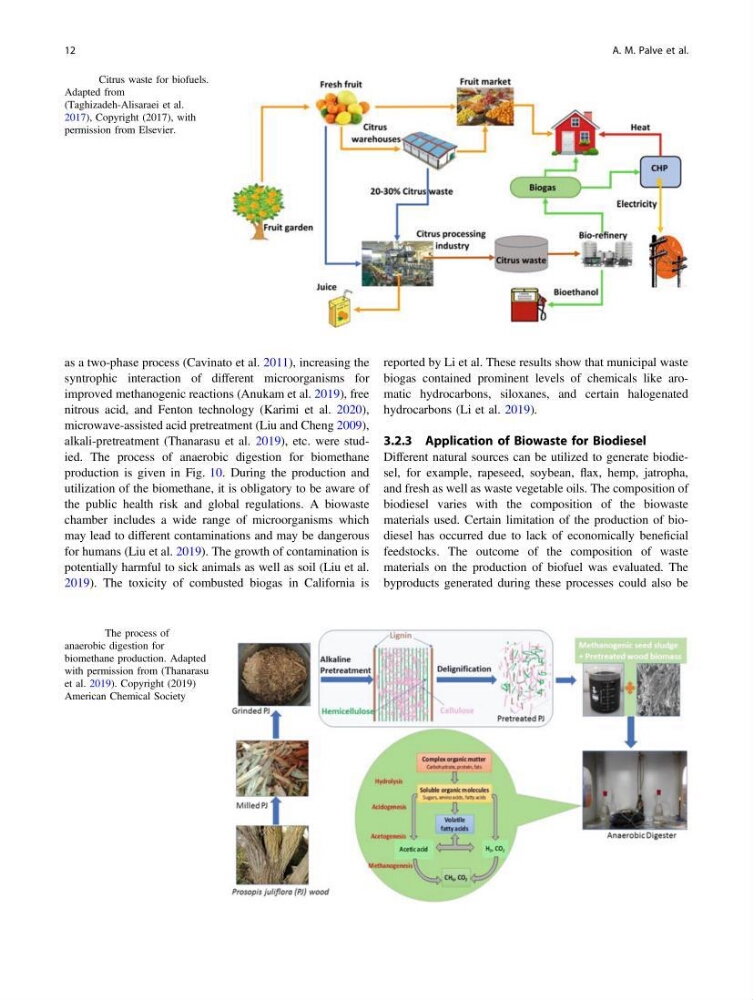
alkali-pretreatment (Thanarasu et al. 2019), etc. were studied. The process of anaerobic digestion for biomethane
production is given in Fig. 10. During the production and
utilization of the biomethane, it is obligatory to be aware of
the public health risk and global regulations. A biowaste
chamber includes a wide range of microorganisms which
may lead to different contaminations and may be dangerous
for humans (Liu et al. 2019). The growth of contamination is
potentially harmful to sick animals as well as soil (Liu et al.
2019). The toxicity of combusted biogas in California is
reported by Li et al. These results show that municipal waste
biogas contained prominent levels of chemicals like aromatic hydrocarbons, siloxanes, and certain halogenated
hydrocarbons (Li et al. 2019).
3.2.3 Application of Biowaste for Biodiesel
Different natural sources can be utilized to generate biodiesel, for example, rapeseed, soybean, flax, hemp, jatropha,
and fresh as well as waste vegetable oils. The composition of
biodiesel varies with the composition of the biowaste
materials used. Certain limitation of the production of biodiesel has occurred due to lack of economically beneficial
feedstocks. The outcome of the composition of waste
materials on the production of biofuel was evaluated. The
byproducts generated during these processes could also be
Fig. 9 Citrus waste for biofuels.
Adapted from
(Taghizadeh-Alisaraei et al.
2017), Copyright (2017), with
permission from Elsevier.
Fig. 10 The process of
anaerobic digestion for
biomethane production. Adapted
with permission from (Thanarasu
et al. 2019). Copyright (2019)
American Chemical Society
12
A. M. Palve et al.
syntrophic interaction of different microorganisms for
improved methanogenic reactions (Anukam et al. 2019), free
nitrous acid, and Fenton technology (Karimi et al. 2020),
microwave-assisted acid pretreatment (Liu and Cheng 2009),
alkali-pretreatment (Thanarasu et al. 2019), etc. were studied. The process of anaerobic digestion for biomethane
production is given in Fig. 10. During the production and
utilization of the biomethane, it is obligatory to be aware of
the public health risk and global regulations. A biowaste
chamber includes a wide range of microorganisms which
may lead to different contaminations and may be dangerous
for humans (Liu et al. 2019). The growth of contamination is
potentially harmful to sick animals as well as soil (Liu et al.
2019). The toxicity of combusted biogas in California is
reported by Li et al. These results show that municipal waste
biogas contained prominent levels of chemicals like aromatic hydrocarbons, siloxanes, and certain halogenated
hydrocarbons (Li et al. 2019).
3.2.3 Application of Biowaste for Biodiesel
Different natural sources can be utilized to generate biodiesel, for example, rapeseed, soybean, flax, hemp, jatropha,
and fresh as well as waste vegetable oils. The composition of
biodiesel varies with the composition of the biowaste
materials used. Certain limitation of the production of biodiesel has occurred due to lack of economically beneficial
feedstocks. The outcome of the composition of waste
materials on the production of biofuel was evaluated. The
byproducts generated during these processes could also be
Fig. 9 Citrus waste for biofuels.
Adapted from
(Taghizadeh-Alisaraei et al.
2017), Copyright (2017), with
permission from Elsevier.
Fig. 10 The process of
anaerobic digestion for
biomethane production. Adapted
with permission from (Thanarasu
et al. 2019). Copyright (2019)
American Chemical Society
12
A. M. Palve et al.