

process is to efficiently utilize biowaste in a cascading
approach and produce several useful platform chemicals,
bioproducts, and biofuels. Industrially, the value-added
products or chemicals were mainly produced from the
first-generation feedstocks (i.e., crops), and also from
second-generation feedstocks (i.e., agricultural biowastes
and lignocellulosic materials) (Srirangan et al. 2012). The
first-generation feedstocks such as oilseed, corn, starch, and
sugar crop often have a high content of carbohydrates, oil,
and energy and are nowadays utilized for bioethanol (and
also other bioalcohols), biodiesel (and also other bio-esters),
and biogas production (Srirangan et al. 2012; Hein and
Leemans 2012). Furthermore, agriculture waste acts as a
promising, versatile material to synthesize a wide range of
high-valued goods like bioplastic from plant shells
(Heredia-Guerrero et al. 2017; Krishnan et al. 2010; Chandel
et al. 2012). The application of lignocellulosic waste
involves the production of drinks, food, textiles, paper,
polymer products, biofertilizers, and chemical precursors of
pharmaceutics (Deng et al. 2015). The domestic sewage
could be useful to produce high-value end-products including nutraceuticals, dietary fiber, antioxidants, fructose-based
syrup, single-cell protein, xanthan gum, etc. (Liu et al.
2019). Also, animal and industrial waste possess versatile
applications for cosmetic production development, pharmaceutical industries, and valued products like pullulan
(polysaccharide polymer consisting of maltotriose), biogas,
etc. (Sugumaran et al. 2014).
3.2 Applications of Biowaste for Biofuels
In the present scenario, approximately 88% of the energy
produced is based on fossil fuels (Wang et al. 2019). It is
essential to meet global energy demand using renewable
sources like solar power, wind energy, tidal, hydro, and
biomass. The biowastes for energy conversion is the need of
the present era. As mentioned, biowaste includes different
sources including from crops. These biowastes can be used
for the effective conversion of biofuels such as ethanol,
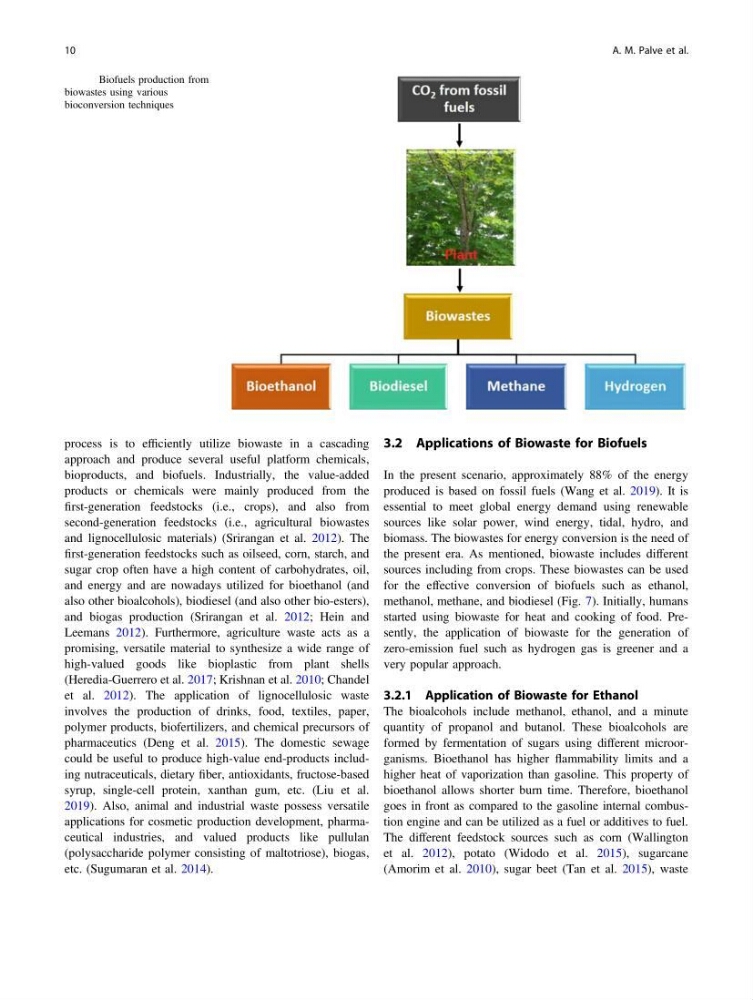
methanol, methane, and biodiesel (Fig. 7). Initially, humans
started using biowaste for heat and cooking of food. Presently, the application of biowaste for the generation of
zero-emission fuel such as hydrogen gas is greener and a
very popular approach.
3.2.1 Application of Biowaste for Ethanol
The bioalcohols include methanol, ethanol, and a minute
quantity of propanol and butanol. These bioalcohols are
formed by fermentation of sugars using different microorganisms. Bioethanol has higher flammability limits and a
higher heat of vaporization than gasoline. This property of
bioethanol allows shorter burn time. Therefore, bioethanol
goes in front as compared to the gasoline internal combustion engine and can be utilized as a fuel or additives to fuel.
The different feedstock sources such as corn (Wallington
et al. 2012), potato (Widodo et al. 2015), sugarcane
(Amorim et al. 2010), sugar beet (Tan et al. 2015), waste
Fig. 7 Biofuels production from
biowastes using various
bioconversion techniques
10
A. M. Palve et al.
approach and produce several useful platform chemicals,
bioproducts, and biofuels. Industrially, the value-added
products or chemicals were mainly produced from the
first-generation feedstocks (i.e., crops), and also from
second-generation feedstocks (i.e., agricultural biowastes
and lignocellulosic materials) (Srirangan et al. 2012). The
first-generation feedstocks such as oilseed, corn, starch, and
sugar crop often have a high content of carbohydrates, oil,
and energy and are nowadays utilized for bioethanol (and
also other bioalcohols), biodiesel (and also other bio-esters),
and biogas production (Srirangan et al. 2012; Hein and
Leemans 2012). Furthermore, agriculture waste acts as a
promising, versatile material to synthesize a wide range of
high-valued goods like bioplastic from plant shells
(Heredia-Guerrero et al. 2017; Krishnan et al. 2010; Chandel
et al. 2012). The application of lignocellulosic waste
involves the production of drinks, food, textiles, paper,
polymer products, biofertilizers, and chemical precursors of
pharmaceutics (Deng et al. 2015). The domestic sewage
could be useful to produce high-value end-products including nutraceuticals, dietary fiber, antioxidants, fructose-based
syrup, single-cell protein, xanthan gum, etc. (Liu et al.
2019). Also, animal and industrial waste possess versatile
applications for cosmetic production development, pharmaceutical industries, and valued products like pullulan
(polysaccharide polymer consisting of maltotriose), biogas,
etc. (Sugumaran et al. 2014).
3.2 Applications of Biowaste for Biofuels
In the present scenario, approximately 88% of the energy
produced is based on fossil fuels (Wang et al. 2019). It is
essential to meet global energy demand using renewable
sources like solar power, wind energy, tidal, hydro, and
biomass. The biowastes for energy conversion is the need of
the present era. As mentioned, biowaste includes different
sources including from crops. These biowastes can be used
for the effective conversion of biofuels such as ethanol,
methanol, methane, and biodiesel (Fig. 7). Initially, humans
started using biowaste for heat and cooking of food. Presently, the application of biowaste for the generation of
zero-emission fuel such as hydrogen gas is greener and a
very popular approach.
3.2.1 Application of Biowaste for Ethanol
The bioalcohols include methanol, ethanol, and a minute
quantity of propanol and butanol. These bioalcohols are
formed by fermentation of sugars using different microorganisms. Bioethanol has higher flammability limits and a
higher heat of vaporization than gasoline. This property of
bioethanol allows shorter burn time. Therefore, bioethanol
goes in front as compared to the gasoline internal combustion engine and can be utilized as a fuel or additives to fuel.
The different feedstock sources such as corn (Wallington
et al. 2012), potato (Widodo et al. 2015), sugarcane
(Amorim et al. 2010), sugar beet (Tan et al. 2015), waste
Fig. 7 Biofuels production from
biowastes using various
bioconversion techniques
10
A. M. Palve et al.