

importance of thermophilic cellulose hydrolyzing enzymes
in manufacturing is the making of bioethanol as well as
various valued end-products from agricultural wastes
(Hardiman et al. 2010). Usually, cellulose is a complex of
three main enzymes, which are endoglucanase, exoglucanase, and b-glucosidase. Owing to synergism, these
enzymes efficiently hydrolyze the cellulose to glucose, cellobiose, and other oligosaccharides. The endoglucanase
enzyme works on non-crystalline fibers of cellulose and
converts them into small fibers comprising sugars. Finally,
the exoglucanase enzyme produces cellobiose. Cellobiose
hydrolyzes using the b-glucosidase enzyme and releases
glucose. In addition to the aforementioned enzymes, other
enzymes, namely hemicellulases, mannanase, inulinase,
xylanase, lactase, invertase, pectinase, lipases, phytase, etc.,
have been used in industrial applications (Ravindran et al.
2018).
2.3.3 Fermentation Bioconversion Process
The fermentative production of biofuels, biopolymers, and
value-added products through bioconversion of biowaste
and byproducts is attractive for commercialization (Koutinas
et al. 2014). Both biowaste and various byproduct sources
from industrial segments including pulp, paper, and food
industry could be used as sustainable possessions for biodiesel and bioethanol production using the fermentation
bioconversion process. Bioethanol is a biofuel and platform
chemical and an alternative to conventional energy sources.
It is generated through the fermentation of various carbon
resources, for example, lignocellulosic materials, starch
content crops, and sucrose-based feedstocks. The process of
the production of biofuel (bioethanol) thrived well in reports
(Koutinas et al. 2014; Hamelinck et al. 2005). The cellulosic
fragment of the lignocellulosic material is transformed into
polysaccharides. The polysaccharides are converted to
bioethanol upon the hydrolytic and the fermentation processes. Mostly, lignocellulose is hydrolyzed from an acid
treatment, and the obtained sugars are then used to a bioethanol fermentation process using microbes like yeast. Since
such hydrolysate sugars comprise not only glucose but also
several monosaccharides including arabinose, mannose,
xylose, galactose, etc., microbes need to proficiently ferment
these carbohydrates for the fruitful industrial production of
bioethanol (Katahira et al. 2006). The chemical process
involved in the fermentation bioconversion is to convert
glucose sugar (C 6 H 12 O 6 ) into bioethanol (C 2 H 5 OH) and
carbon dioxide gas (CO 2 ) as given in Fig. 6.
2.3.4 Composting Bioconversion Process
Composting is a bioconversion of biowastes into materials
that improve the earth’s productivity, land strength, the
capability to absorb water, and crop nutrients through the
microbial process (Harindintwali et al. 2020). This process is
mainly controlled through the microbiological, physiological, and physicochemical aspects. The composting process
involves the degradation of organic waste, including sewage
slop, food leftovers, and animal waste, to a manure-rich
material that feeds plants and strengthens soil. Both fungi and
actinomycetes are effective microorganisms in the composting bioconversion method. Bacteria such as burkholderia,
pseudomonas, zymomonas, and xanthomonas, etc. are the
most important decomposer microbes in the composting
process (Sánchez et al. 2017). During the 1920 s, in Europe,
the composting bioconversion process is being used to convert municipal waste and agricultural biowaste into an
organic farming tool (Heckman 2006). Recently, the composting process attains additional interest and is accepted as a
significant green process for salvaging biowastes. Five significant parameters greatly influence the composting process:
(i) oxygen (aeration), (ii) nutrition (C/N ratio and the pH),
(iii) moisture content (iv) temperature, and (v) microbial
inoculation, which are deeply stimulated by the lignocellulosic biowaste composting (Vargas-García et al. 2007).
3 Application of Bioconversion Process
for Energy
3.1 General Applications of Biowaste
Bioconversion processes are emerging industrial techniques
with an innovative approach to realizing sustainability in the
current generation. The main objective of the bioconversion
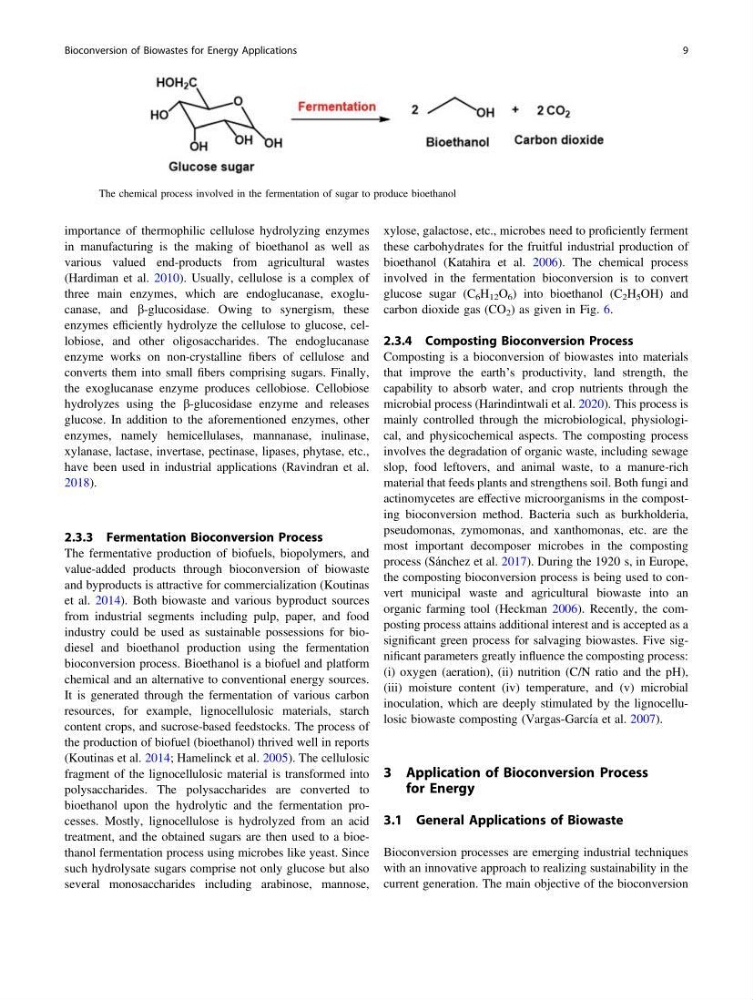
Fig. 6 The chemical process involved in the fermentation of sugar to produce bioethanol
Bioconversion of Biowastes for Energy Applications
9
in manufacturing is the making of bioethanol as well as
various valued end-products from agricultural wastes
(Hardiman et al. 2010). Usually, cellulose is a complex of
three main enzymes, which are endoglucanase, exoglucanase, and b-glucosidase. Owing to synergism, these
enzymes efficiently hydrolyze the cellulose to glucose, cellobiose, and other oligosaccharides. The endoglucanase
enzyme works on non-crystalline fibers of cellulose and
converts them into small fibers comprising sugars. Finally,
the exoglucanase enzyme produces cellobiose. Cellobiose
hydrolyzes using the b-glucosidase enzyme and releases
glucose. In addition to the aforementioned enzymes, other
enzymes, namely hemicellulases, mannanase, inulinase,
xylanase, lactase, invertase, pectinase, lipases, phytase, etc.,
have been used in industrial applications (Ravindran et al.
2018).
2.3.3 Fermentation Bioconversion Process
The fermentative production of biofuels, biopolymers, and
value-added products through bioconversion of biowaste
and byproducts is attractive for commercialization (Koutinas
et al. 2014). Both biowaste and various byproduct sources
from industrial segments including pulp, paper, and food
industry could be used as sustainable possessions for biodiesel and bioethanol production using the fermentation
bioconversion process. Bioethanol is a biofuel and platform
chemical and an alternative to conventional energy sources.
It is generated through the fermentation of various carbon
resources, for example, lignocellulosic materials, starch
content crops, and sucrose-based feedstocks. The process of
the production of biofuel (bioethanol) thrived well in reports
(Koutinas et al. 2014; Hamelinck et al. 2005). The cellulosic
fragment of the lignocellulosic material is transformed into
polysaccharides. The polysaccharides are converted to
bioethanol upon the hydrolytic and the fermentation processes. Mostly, lignocellulose is hydrolyzed from an acid
treatment, and the obtained sugars are then used to a bioethanol fermentation process using microbes like yeast. Since
such hydrolysate sugars comprise not only glucose but also
several monosaccharides including arabinose, mannose,
xylose, galactose, etc., microbes need to proficiently ferment
these carbohydrates for the fruitful industrial production of
bioethanol (Katahira et al. 2006). The chemical process
involved in the fermentation bioconversion is to convert
glucose sugar (C 6 H 12 O 6 ) into bioethanol (C 2 H 5 OH) and
carbon dioxide gas (CO 2 ) as given in Fig. 6.
2.3.4 Composting Bioconversion Process
Composting is a bioconversion of biowastes into materials
that improve the earth’s productivity, land strength, the
capability to absorb water, and crop nutrients through the
microbial process (Harindintwali et al. 2020). This process is
mainly controlled through the microbiological, physiological, and physicochemical aspects. The composting process
involves the degradation of organic waste, including sewage
slop, food leftovers, and animal waste, to a manure-rich
material that feeds plants and strengthens soil. Both fungi and
actinomycetes are effective microorganisms in the composting bioconversion method. Bacteria such as burkholderia,
pseudomonas, zymomonas, and xanthomonas, etc. are the
most important decomposer microbes in the composting
process (Sánchez et al. 2017). During the 1920 s, in Europe,
the composting bioconversion process is being used to convert municipal waste and agricultural biowaste into an
organic farming tool (Heckman 2006). Recently, the composting process attains additional interest and is accepted as a
significant green process for salvaging biowastes. Five significant parameters greatly influence the composting process:
(i) oxygen (aeration), (ii) nutrition (C/N ratio and the pH),
(iii) moisture content (iv) temperature, and (v) microbial
inoculation, which are deeply stimulated by the lignocellulosic biowaste composting (Vargas-García et al. 2007).
3 Application of Bioconversion Process
for Energy
3.1 General Applications of Biowaste
Bioconversion processes are emerging industrial techniques
with an innovative approach to realizing sustainability in the
current generation. The main objective of the bioconversion
Fig. 6 The chemical process involved in the fermentation of sugar to produce bioethanol
Bioconversion of Biowastes for Energy Applications
9