

sustained a maximum temperature of 70 °C for three days in
co-composting setups where mesophilic and thermophilic
bacteria revealed a consistent activity, while fungal activity
was suppressed entirely during this high-temperature phase
(Thambirajah et al. 1995).
Salètes et al. (2004) studied the addition of ripe compost
and urea to adjust the initial C/N ratio of EFB. The authors
stated that after a period of 70 days of composting, almost
50% of the phosphorus (P), 70% of the potassium (K), 45%
of the magnesium (Mg) and 10–20% of the calcium
(Ca) initially applied were lost. In order to utilize the
leaching nutrients and minimize the loss, the authors proposed for a better dispersal of effluent applications and to
integrate a leachate collection system while maintaining
suitable humidity for microbial decomposition during composting (Salètes et al. 2004).
Baharuddin et al. (2010) investigated the co-composting
of POME anaerobic sludge with mesocarp fibre (MF). It was
postulated that MF addition improved the maturation period
to 40 days with the final C/N ratio of 12.4. The process
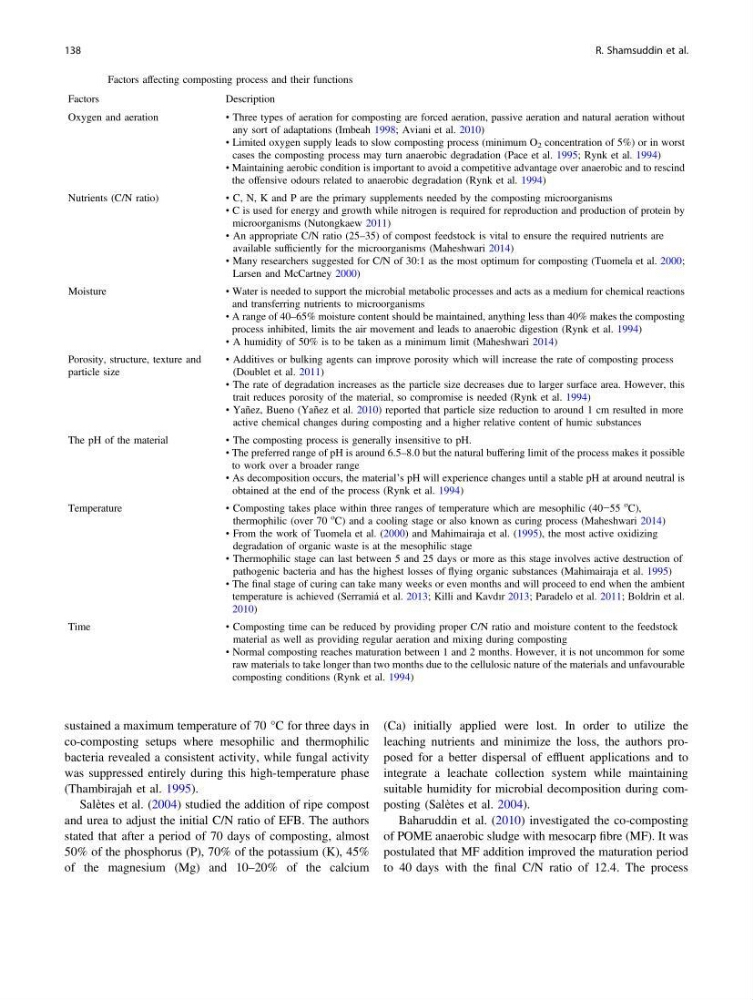
Table 5 Factors affecting composting process and their functions
Factors
Description
Oxygen and aeration
• Three types of aeration for composting are forced aeration, passive aeration and natural aeration without
any sort of adaptations (Imbeah 1998; Aviani et al. 2010)
• Limited oxygen supply leads to slow composting process (minimum O 2 concentration of 5%) or in worst
cases the composting process may turn anaerobic degradation (Pace et al. 1995; Rynk et al. 1994)
• Maintaining aerobic condition is important to avoid a competitive advantage over anaerobic and to rescind
the offensive odours related to anaerobic degradation (Rynk et al. 1994)
Nutrients (C/N ratio)
• C, N, K and P are the primary supplements needed by the composting microorganisms
• C is used for energy and growth while nitrogen is required for reproduction and production of protein by
microorganisms (Nutongkaew 2011)
• An appropriate C/N ratio (25–35) of compost feedstock is vital to ensure the required nutrients are
available sufficiently for the microorganisms (Maheshwari 2014)
• Many researchers suggested for C/N of 30:1 as the most optimum for composting (Tuomela et al. 2000;
Larsen and McCartney 2000)
Moisture
• Water is needed to support the microbial metabolic processes and acts as a medium for chemical reactions
and transferring nutrients to microorganisms
• A range of 40–65% moisture content should be maintained, anything less than 40% makes the composting
process inhibited, limits the air movement and leads to anaerobic digestion (Rynk et al. 1994)
• A humidity of 50% is to be taken as a minimum limit (Maheshwari 2014)
Porosity, structure, texture and
particle size
• Additives or bulking agents can improve porosity which will increase the rate of composting process
(Doublet et al. 2011)
• The rate of degradation increases as the particle size decreases due to larger surface area. However, this
trait reduces porosity of the material, so compromise is needed (Rynk et al. 1994)
• Yañez, Bueno (Yañez et al. 2010) reported that particle size reduction to around 1 cm resulted in more
active chemical changes during composting and a higher relative content of humic substances
The pH of the material
• The composting process is generally insensitive to pH.
• The preferred range of pH is around 6.5–8.0 but the natural buffering limit of the process makes it possible
to work over a broader range
• As decomposition occurs, the material’s pH will experience changes until a stable pH at around neutral is
obtained at the end of the process (Rynk et al. 1994)
Temperature
• Composting takes place within three ranges of temperature which are mesophilic (40−55
o
C),
thermophilic (over 70
o
C) and a cooling stage or also known as curing process (Maheshwari 2014)
• From the work of Tuomela et al. (2000) and Mahimairaja et al. (1995), the most active oxidizing
degradation of organic waste is at the mesophilic stage
• Thermophilic stage can last between 5 and 25 days or more as this stage involves active destruction of
pathogenic bacteria and has the highest losses of flying organic substances (Mahimairaja et al. 1995)
• The final stage of curing can take many weeks or even months and will proceed to end when the ambient
temperature is achieved (Serramiá et al. 2013; Killi and Kavdır 2013; Paradelo et al. 2011; Boldrin et al.
2010)
Time
• Composting time can be reduced by providing proper C/N ratio and moisture content to the feedstock
material as well as providing regular aeration and mixing during composting
• Normal composting reaches maturation between 1 and 2 months. However, it is not uncommon for some
raw materials to take longer than two months due to the cellulosic nature of the materials and unfavourable
composting conditions (Rynk et al. 1994)
138
R. Shamsuddin et al.
co-composting setups where mesophilic and thermophilic
bacteria revealed a consistent activity, while fungal activity
was suppressed entirely during this high-temperature phase
(Thambirajah et al. 1995).
Salètes et al. (2004) studied the addition of ripe compost
and urea to adjust the initial C/N ratio of EFB. The authors
stated that after a period of 70 days of composting, almost
50% of the phosphorus (P), 70% of the potassium (K), 45%
of the magnesium (Mg) and 10–20% of the calcium
(Ca) initially applied were lost. In order to utilize the
leaching nutrients and minimize the loss, the authors proposed for a better dispersal of effluent applications and to
integrate a leachate collection system while maintaining
suitable humidity for microbial decomposition during composting (Salètes et al. 2004).
Baharuddin et al. (2010) investigated the co-composting
of POME anaerobic sludge with mesocarp fibre (MF). It was
postulated that MF addition improved the maturation period
to 40 days with the final C/N ratio of 12.4. The process
Table 5 Factors affecting composting process and their functions
Factors
Description
Oxygen and aeration
• Three types of aeration for composting are forced aeration, passive aeration and natural aeration without
any sort of adaptations (Imbeah 1998; Aviani et al. 2010)
• Limited oxygen supply leads to slow composting process (minimum O 2 concentration of 5%) or in worst
cases the composting process may turn anaerobic degradation (Pace et al. 1995; Rynk et al. 1994)
• Maintaining aerobic condition is important to avoid a competitive advantage over anaerobic and to rescind
the offensive odours related to anaerobic degradation (Rynk et al. 1994)
Nutrients (C/N ratio)
• C, N, K and P are the primary supplements needed by the composting microorganisms
• C is used for energy and growth while nitrogen is required for reproduction and production of protein by
microorganisms (Nutongkaew 2011)
• An appropriate C/N ratio (25–35) of compost feedstock is vital to ensure the required nutrients are
available sufficiently for the microorganisms (Maheshwari 2014)
• Many researchers suggested for C/N of 30:1 as the most optimum for composting (Tuomela et al. 2000;
Larsen and McCartney 2000)
Moisture
• Water is needed to support the microbial metabolic processes and acts as a medium for chemical reactions
and transferring nutrients to microorganisms
• A range of 40–65% moisture content should be maintained, anything less than 40% makes the composting
process inhibited, limits the air movement and leads to anaerobic digestion (Rynk et al. 1994)
• A humidity of 50% is to be taken as a minimum limit (Maheshwari 2014)
Porosity, structure, texture and
particle size
• Additives or bulking agents can improve porosity which will increase the rate of composting process
(Doublet et al. 2011)
• The rate of degradation increases as the particle size decreases due to larger surface area. However, this
trait reduces porosity of the material, so compromise is needed (Rynk et al. 1994)
• Yañez, Bueno (Yañez et al. 2010) reported that particle size reduction to around 1 cm resulted in more
active chemical changes during composting and a higher relative content of humic substances
The pH of the material
• The composting process is generally insensitive to pH.
• The preferred range of pH is around 6.5–8.0 but the natural buffering limit of the process makes it possible
to work over a broader range
• As decomposition occurs, the material’s pH will experience changes until a stable pH at around neutral is
obtained at the end of the process (Rynk et al. 1994)
Temperature
• Composting takes place within three ranges of temperature which are mesophilic (40−55
o
C),
thermophilic (over 70
o
C) and a cooling stage or also known as curing process (Maheshwari 2014)
• From the work of Tuomela et al. (2000) and Mahimairaja et al. (1995), the most active oxidizing
degradation of organic waste is at the mesophilic stage
• Thermophilic stage can last between 5 and 25 days or more as this stage involves active destruction of
pathogenic bacteria and has the highest losses of flying organic substances (Mahimairaja et al. 1995)
• The final stage of curing can take many weeks or even months and will proceed to end when the ambient
temperature is achieved (Serramiá et al. 2013; Killi and Kavdır 2013; Paradelo et al. 2011; Boldrin et al.
2010)
Time
• Composting time can be reduced by providing proper C/N ratio and moisture content to the feedstock
material as well as providing regular aeration and mixing during composting
• Normal composting reaches maturation between 1 and 2 months. However, it is not uncommon for some
raw materials to take longer than two months due to the cellulosic nature of the materials and unfavourable
composting conditions (Rynk et al. 1994)
138
R. Shamsuddin et al.