

1.3 Oil Palm Industry in Malaysia
The first commercial palm oil estate was developed in Tennamaram Estate, Selangor in 1917, after a decrease in coffee
and rubber commodity prices (Hai 2002). Then in the 1960s,
oil palms were commercially developed on a large scale in
response to the Government’s diversification policy to reduce
economic reliance on natural rubber, which in that period had
seen reduced demand and price due to the production of
synthetic rubber. Smallholders started to cultivate oil palm
throughout the country and in 1989, oil palm became the
nation’s main economic crop (New Straits Times 2017).
The planted area of oil palm tree had increased exponentially throughout the years from only 55,000 ha in 1960
to 5.90 million hectares in 2019. This is expected to reach
6.5 million hectares by 2023 (Yusof 2019). For the past
10 years, the total palm oil plantation area in Malaysia
increased by 21.6%, especially in Sarawak state, with an
increment of 72.8% from 0.92 to 1.59 million hectares of the
planted area (Fig. 6) (Commodities et al. 2019). Sarawak is
currently the largest oil palm planting state in Malaysia, with
26.9% of the total oil palm planted area. Sabah and Peninsular Malaysia have a planting area of 1.54 million hectares
(26.2%) and 2.77 million hectares (46.9%), respectively
(MPOB 2019). Of all the oil palm planted area in Malaysia,
71.7% are under private ownership (mainly by plantation
companies), 16.7% belonged to individual smallholders,
while the remaining 11.6% were under Government land
schemes, such as Federal Land Development Authority
(FELDA), Federal Land Consolidation and Rehabilitation
Authority (FELCRA) and others (MPOB 2019).
The FFB yield increased in tandem with the expansion of
cultivated land. The overall yield of FFB in Malaysia
increased by 0.2% from 17.16 tonnes per hectare in 2018 to
17.19 tonnes per hectare in 2019. A higher FFB quantity
results in a higher oil extraction rate (OER). The OER performance improved by 1.3% to 20.21 per cent compared to
the previous year. Due to a higher FFB yield and OER, the
production of CPO increased by 1.8%, from 19.52 million
tonnes to 19.86 million tonnes (MPOB 2020).
The agricultural sector contributed RM99.5 billion (7.3%)
to the Gross Domestic Product (GDP) in 2018, in which oil
palm, Malaysia’s fifth major export commodity contributed
37.9% to the national agriculture income. The nation’s total
export of palm oil and palm oil derivatives of 27.9 million
tonnes generated RM64.8 billion in export revenue. Palm oil
was responsible for 66.25% of the palm products exported in
2019 (DOSM 2019). Figure 7 shows the breakdown of the
export products (Commodities et al. 2019).
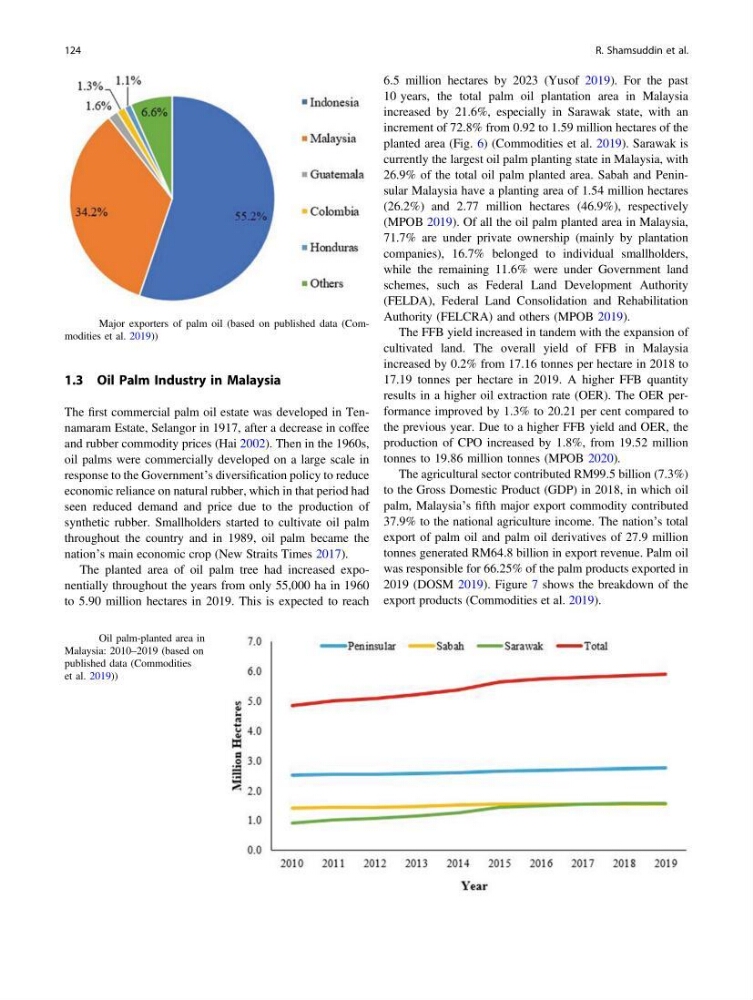
Fig. 5 Major exporters of palm oil (based on published data (Commodities et al. 2019))
Fig. 6 Oil palm-planted area in
Malaysia: 2010–2019 (based on
published data (Commodities
et al. 2019))
124
R. Shamsuddin et al.
The first commercial palm oil estate was developed in Tennamaram Estate, Selangor in 1917, after a decrease in coffee
and rubber commodity prices (Hai 2002). Then in the 1960s,
oil palms were commercially developed on a large scale in
response to the Government’s diversification policy to reduce
economic reliance on natural rubber, which in that period had
seen reduced demand and price due to the production of
synthetic rubber. Smallholders started to cultivate oil palm
throughout the country and in 1989, oil palm became the
nation’s main economic crop (New Straits Times 2017).
The planted area of oil palm tree had increased exponentially throughout the years from only 55,000 ha in 1960
to 5.90 million hectares in 2019. This is expected to reach
6.5 million hectares by 2023 (Yusof 2019). For the past
10 years, the total palm oil plantation area in Malaysia
increased by 21.6%, especially in Sarawak state, with an
increment of 72.8% from 0.92 to 1.59 million hectares of the
planted area (Fig. 6) (Commodities et al. 2019). Sarawak is
currently the largest oil palm planting state in Malaysia, with
26.9% of the total oil palm planted area. Sabah and Peninsular Malaysia have a planting area of 1.54 million hectares
(26.2%) and 2.77 million hectares (46.9%), respectively
(MPOB 2019). Of all the oil palm planted area in Malaysia,
71.7% are under private ownership (mainly by plantation
companies), 16.7% belonged to individual smallholders,
while the remaining 11.6% were under Government land
schemes, such as Federal Land Development Authority
(FELDA), Federal Land Consolidation and Rehabilitation
Authority (FELCRA) and others (MPOB 2019).
The FFB yield increased in tandem with the expansion of
cultivated land. The overall yield of FFB in Malaysia
increased by 0.2% from 17.16 tonnes per hectare in 2018 to
17.19 tonnes per hectare in 2019. A higher FFB quantity
results in a higher oil extraction rate (OER). The OER performance improved by 1.3% to 20.21 per cent compared to
the previous year. Due to a higher FFB yield and OER, the
production of CPO increased by 1.8%, from 19.52 million
tonnes to 19.86 million tonnes (MPOB 2020).
The agricultural sector contributed RM99.5 billion (7.3%)
to the Gross Domestic Product (GDP) in 2018, in which oil
palm, Malaysia’s fifth major export commodity contributed
37.9% to the national agriculture income. The nation’s total
export of palm oil and palm oil derivatives of 27.9 million
tonnes generated RM64.8 billion in export revenue. Palm oil
was responsible for 66.25% of the palm products exported in
2019 (DOSM 2019). Figure 7 shows the breakdown of the
export products (Commodities et al. 2019).
Fig. 5 Major exporters of palm oil (based on published data (Commodities et al. 2019))
Fig. 6 Oil palm-planted area in
Malaysia: 2010–2019 (based on
published data (Commodities
et al. 2019))
124
R. Shamsuddin et al.