

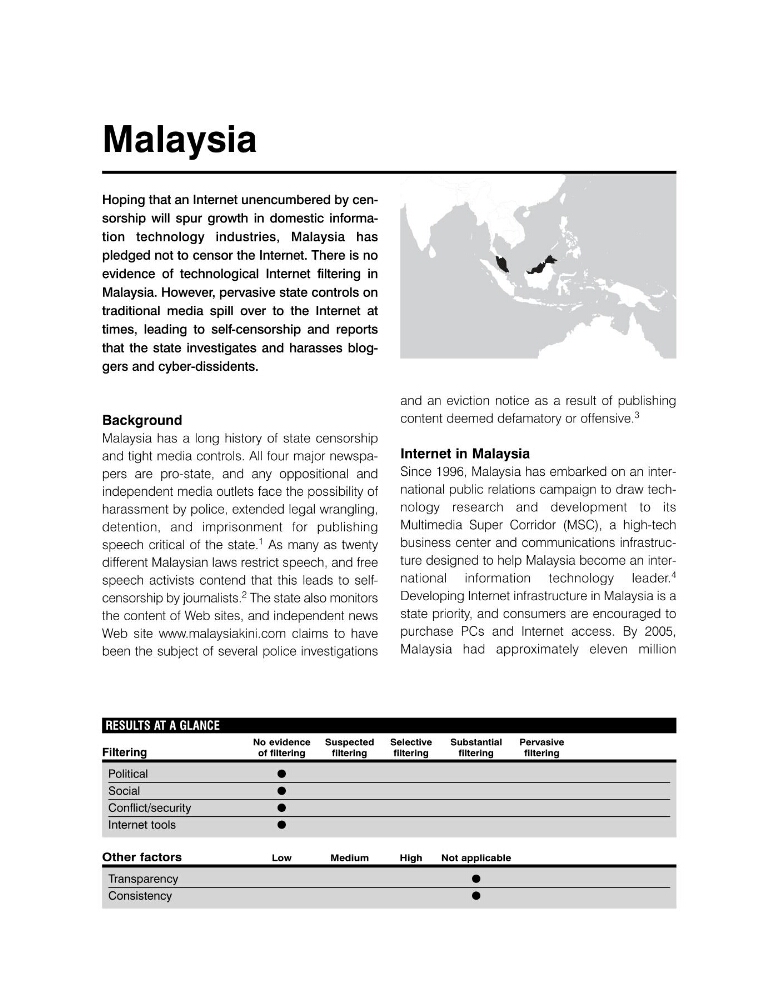
Hoping that an Internet unencumbered by censorship will spur growth in domestic information technology industries, Malaysia has
pledged not to censor the Internet. There is no
evidence of technological Internet filtering in
Malaysia. However, pervasive state controls on
traditional media spill over to the Internet at
times, leading to self-censorship and reports
that the state investigates and harasses bloggers and cyber-dissidents.
Background
Malaysia has a long history of state censorship
and tight media controls. All four major newspapers are pro-state, and any oppositional and
independent media outlets face the possibility of
harassment by police, extended legal wrangling,
detention, and imprisonment for publishing
speech critical of the state. 1 As many as twenty
different Malaysian laws restrict speech, and free
speech activists contend that this leads to selfcensorship by journalists. 2 The state also monitors
the content of Web sites, and independent news
Web site www.malaysiakini.com claims to have
been the subject of several police investigations
and an eviction notice as a result of publishing
content deemed defamatory or offensive. 3
Internet in Malaysia
Since 1996, Malaysia has embarked on an international public relations campaign to draw technology research and development to its
Multimedia Super Corridor (MSC), a high-tech
business center and communications infrastructure designed to help Malaysia become an international information technology leader. 4
Developing Internet infrastructure in Malaysia is a
state priority, and consumers are encouraged to
purchase PCs and Internet access. By 2005,
Malaysia had approximately eleven million
RESULTS AT A GLANCE
No evidence
Suspected
Selective
Substantial
Pervasive
Filtering
of filtering
filtering
filtering
filtering
filtering
Political
●
Social
●
Conflict/security
●
Internet tools
●
Other factors
Low
Medium
High
Not applicable
Transparency
●
Consistency
●
Malaysia
pledged not to censor the Internet. There is no
evidence of technological Internet filtering in
Malaysia. However, pervasive state controls on
traditional media spill over to the Internet at
times, leading to self-censorship and reports
that the state investigates and harasses bloggers and cyber-dissidents.
Background
Malaysia has a long history of state censorship
and tight media controls. All four major newspapers are pro-state, and any oppositional and
independent media outlets face the possibility of
harassment by police, extended legal wrangling,
detention, and imprisonment for publishing
speech critical of the state. 1 As many as twenty
different Malaysian laws restrict speech, and free
speech activists contend that this leads to selfcensorship by journalists. 2 The state also monitors
the content of Web sites, and independent news
Web site www.malaysiakini.com claims to have
been the subject of several police investigations
and an eviction notice as a result of publishing
content deemed defamatory or offensive. 3
Internet in Malaysia
Since 1996, Malaysia has embarked on an international public relations campaign to draw technology research and development to its
Multimedia Super Corridor (MSC), a high-tech
business center and communications infrastructure designed to help Malaysia become an international information technology leader. 4
Developing Internet infrastructure in Malaysia is a
state priority, and consumers are encouraged to
purchase PCs and Internet access. By 2005,
Malaysia had approximately eleven million
RESULTS AT A GLANCE
No evidence
Suspected
Selective
Substantial
Pervasive
Filtering
of filtering
filtering
filtering
filtering
filtering
Political
●
Social
●
Conflict/security
●
Internet tools
●
Other factors
Low
Medium
High
Not applicable
Transparency
●
Consistency
●
Malaysia