

152
7 Use of Diethylenetriamine Grafted onto Glyoxal Cross-Linked …
5.0
5.2
5.4
5.6
5.8
6.0
1.8
2.0
2.2
2.4
2.6
2.8
3.0
3.2
3.4
Pb
2+
Cu
2+
Cd
2+
Ni
2+
Cr
6+
Zn
2+
log K
ads
pH
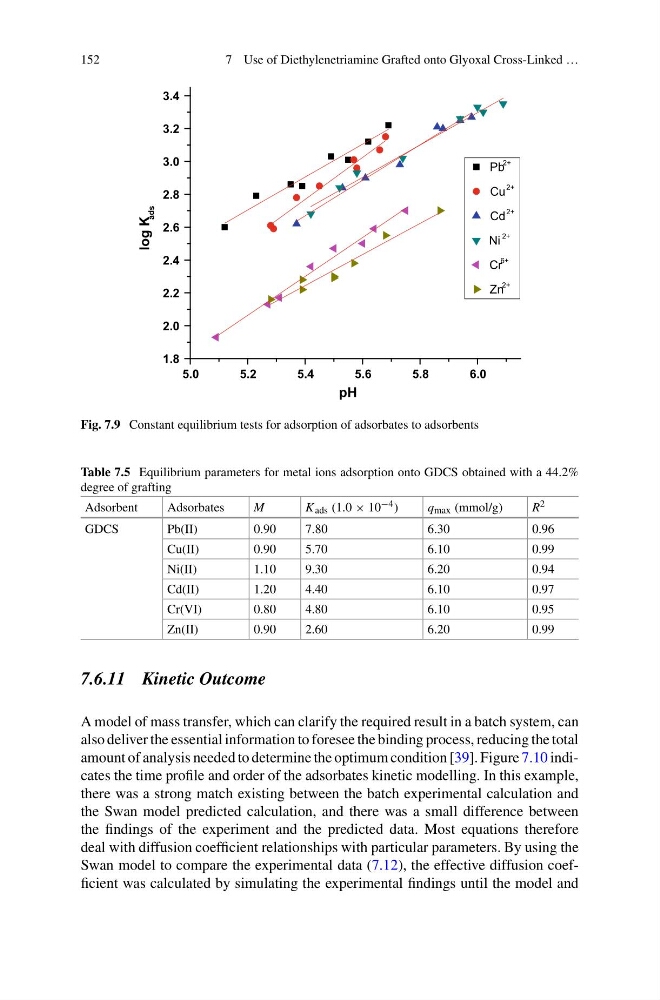
Fig. 7.9 Constant equilibrium tests for adsorption of adsorbates to adsorbents
Table 7.5 Equilibrium parameters for metal ions adsorption onto GDCS obtained with a 44.2%
degree of grafting
Adsorbent
Adsorbates
M
K ads (1.0 × 10 −4 )
q max (mmol/g)
R 2
GDCS
Pb(II)
0.90
7.80
6.30
0.96
Cu(II)
0.90
5.70
6.10
0.99
Ni(II)
1.10
9.30
6.20
0.94
Cd(II)
1.20
4.40
6.10
0.97
Cr(VI)
0.80
4.80
6.10
0.95
Zn(II)
0.90
2.60
6.20
0.99
7.6.11 Kinetic Outcome
A model of mass transfer, which can clarify the required result in a batch system, can
also deliver the essential information to foresee the binding process, reducing the total
amount of analysis needed to determine the optimum condition [39]. Figure 7.10 indicates the time profile and order of the adsorbates kinetic modelling. In this example,
there was a strong match existing between the batch experimental calculation and
the Swan model predicted calculation, and there was a small difference between
the findings of the experiment and the predicted data. Most equations therefore
deal with diffusion coefficient relationships with particular parameters. By using the
Swan model to compare the experimental data (7.12), the effective diffusion coefficient was calculated by simulating the experimental findings until the model and
7 Use of Diethylenetriamine Grafted onto Glyoxal Cross-Linked …
5.0
5.2
5.4
5.6
5.8
6.0
1.8
2.0
2.2
2.4
2.6
2.8
3.0
3.2
3.4
Pb
2+
Cu
2+
Cd
2+
Ni
2+
Cr
6+
Zn
2+
log K
ads
pH
Fig. 7.9 Constant equilibrium tests for adsorption of adsorbates to adsorbents
Table 7.5 Equilibrium parameters for metal ions adsorption onto GDCS obtained with a 44.2%
degree of grafting
Adsorbent
Adsorbates
M
K ads (1.0 × 10 −4 )
q max (mmol/g)
R 2
GDCS
Pb(II)
0.90
7.80
6.30
0.96
Cu(II)
0.90
5.70
6.10
0.99
Ni(II)
1.10
9.30
6.20
0.94
Cd(II)
1.20
4.40
6.10
0.97
Cr(VI)
0.80
4.80
6.10
0.95
Zn(II)
0.90
2.60
6.20
0.99
7.6.11 Kinetic Outcome
A model of mass transfer, which can clarify the required result in a batch system, can
also deliver the essential information to foresee the binding process, reducing the total
amount of analysis needed to determine the optimum condition [39]. Figure 7.10 indicates the time profile and order of the adsorbates kinetic modelling. In this example,
there was a strong match existing between the batch experimental calculation and
the Swan model predicted calculation, and there was a small difference between
the findings of the experiment and the predicted data. Most equations therefore
deal with diffusion coefficient relationships with particular parameters. By using the
Swan model to compare the experimental data (7.12), the effective diffusion coefficient was calculated by simulating the experimental findings until the model and