

144
7 Use of Diethylenetriamine Grafted onto Glyoxal Cross-Linked …
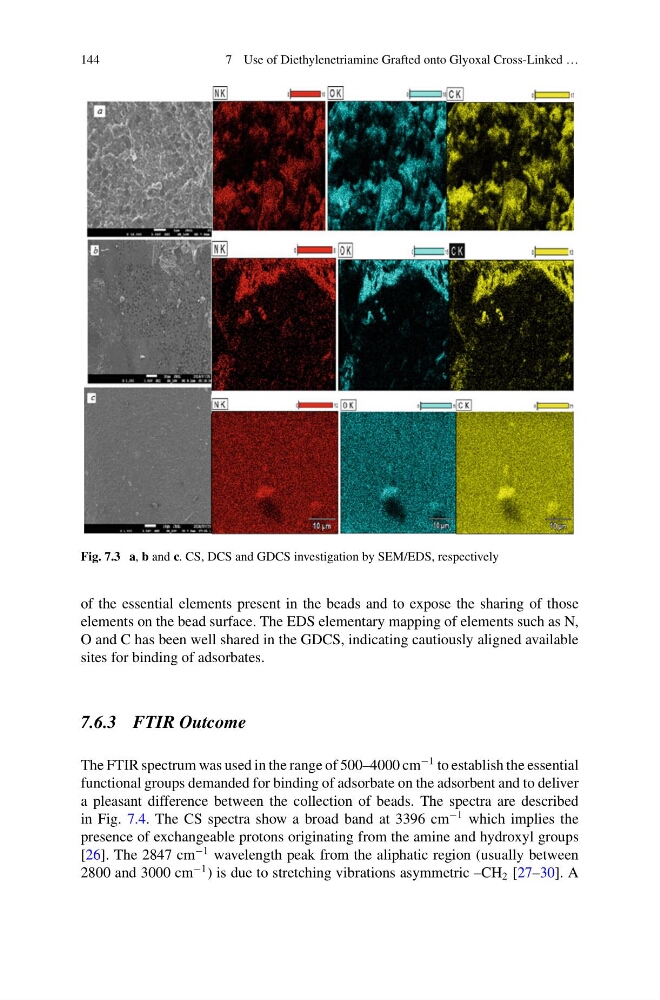
Fig. 7.3 a, b and c. CS, DCS and GDCS investigation by SEM/EDS, respectively
of the essential elements present in the beads and to expose the sharing of those
elements on the bead surface. The EDS elementary mapping of elements such as N,
O and C has been well shared in the GDCS, indicating cautiously aligned available
sites for binding of adsorbates.
7.6.3 FTIR Outcome
The FTIR spectrum was used in the range of 500–4000 cm
−1 to establish the essential
functional groups demanded for binding of adsorbate on the adsorbent and to deliver
a pleasant difference between the collection of beads. The spectra are described
in Fig. 7.4. The CS spectra show a broad band at 3396 cm
−1 which implies the
presence of exchangeable protons originating from the amine and hydroxyl groups
[26]. The 2847 cm
−1 wavelength peak from the aliphatic region (usually between
2800 and 3000 cm
−1 ) is due to stretching vibrations asymmetric –CH 2 [27–30]. A
7 Use of Diethylenetriamine Grafted onto Glyoxal Cross-Linked …
Fig. 7.3 a, b and c. CS, DCS and GDCS investigation by SEM/EDS, respectively
of the essential elements present in the beads and to expose the sharing of those
elements on the bead surface. The EDS elementary mapping of elements such as N,
O and C has been well shared in the GDCS, indicating cautiously aligned available
sites for binding of adsorbates.
7.6.3 FTIR Outcome
The FTIR spectrum was used in the range of 500–4000 cm
−1 to establish the essential
functional groups demanded for binding of adsorbate on the adsorbent and to deliver
a pleasant difference between the collection of beads. The spectra are described
in Fig. 7.4. The CS spectra show a broad band at 3396 cm
−1 which implies the
presence of exchangeable protons originating from the amine and hydroxyl groups
[26]. The 2847 cm
−1 wavelength peak from the aliphatic region (usually between
2800 and 3000 cm
−1 ) is due to stretching vibrations asymmetric –CH 2 [27–30]. A