

9.8 Pharmaceuticals and Personal Care Products
Generally, the pharmaceuticals, drugs and personal care products (PPCPs) are
organic molecules, often exhibiting one or more stereogenic centres. The presence
of these molecules in the environment is not desirable, because they are generally
bioactive and thus potentially interact with active centres of enzymes. This may be
dangerous as these centres in some cases are blocked for natural bioactive substances
by competing with anthropogenic contaminants. As a consequence, these compounds are today considered as “contaminants of emerging concern (CECs)”.
Approximately, more than half of the drugs presently in use are chiral molecules.
However, nearly 90% of them are still marketed as racemates (Challener 2001;
Francotte and Lindner 2006; Lin et al. 2011; Petrović et al. 2013). The main chiral
drugs are β-blockers, non-steroid anti-inflammatory drugs (NSAIDs), amino acids,
proteins, anti-allergic, alkaloids, anti-histamines, quinolones, hormones, antibiotics,
antiviral, anti-malarial, anti-helminthic, antileprosis, anti-coagulant, hypnotics, sedative and others (Wainer 1993; Reddy and Miḥvar 2004).
The main sources of pollution are assumed to be both point and diffusive
non-point sources. The point sources of pollution include pharmaceutical and
chemical industries, municipal sources (garbage dumps) hospitals, pharmacies and
clinics. The non-point sources comprise discharge form private households and from
communities, especially via urine and faecal excretions and sewage treatment.
Furthermore, agricultural run-off from husbandry (veterinary treatment) as well as
antibiotics used in various livestock (cattle, poultry and aquaculture) are identified as
relevant sources (Kümmerer 2008; American Chemical Society. National Meeting
(238th, 2009: Washington DC), Halden et al. 2010; Keen and Montforts 2012;
Petrović et al. 2013; Hester and Harrison 2016).
Attempts have been made to trace the route of PPCP pollution and intake into our
body, which is shown in Fig. 9.2. The pharmaceuticals, drugs and personal care
products have reached and contaminated water through effluents of above sources.
Since the 1980s, the occurrence of pharmaceuticals in surface waters and the
effluents of sewage treatment plants has been reported. It is important to mention
here that the drugs, pharmaceuticals and personal care products have been detected
in surface and ground waters in some countries. Hence, some reviews have appeared
in the literature discussing various sources of pollution.
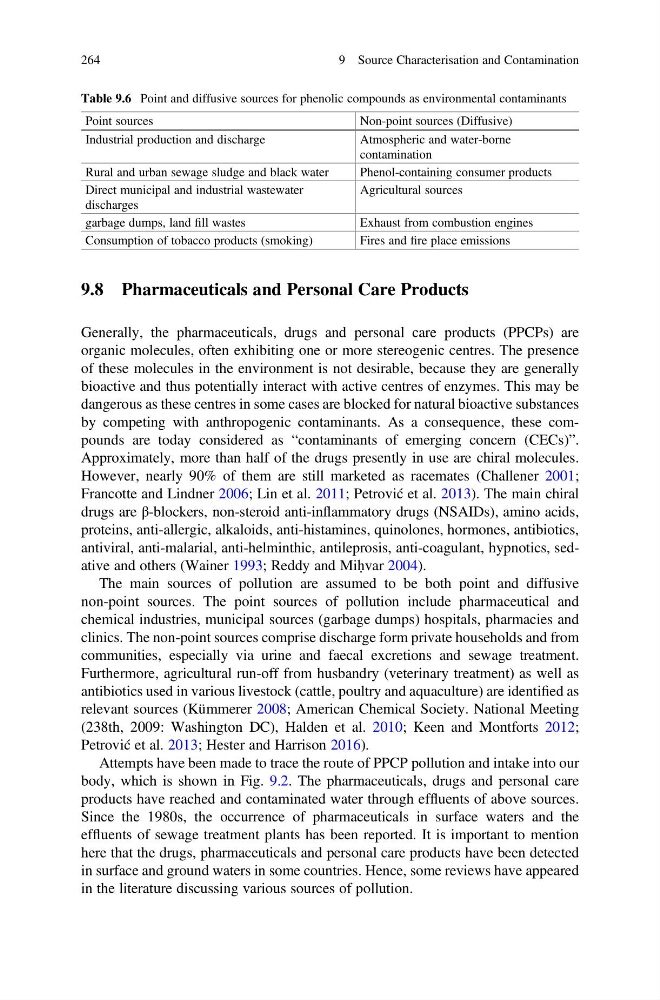
Table 9.6 Point and diffusive sources for phenolic compounds as environmental contaminants
Point sources
Non-point sources (Diffusive)
Industrial production and discharge
Atmospheric and water-borne
contamination
Rural and urban sewage sludge and black water
Phenol-containing consumer products
Direct municipal and industrial wastewater
discharges
Agricultural sources
garbage dumps, land fill wastes
Exhaust from combustion engines
Consumption of tobacco products (smoking)
Fires and fire place emissions
264
9 Source Characterisation and Contamination
Generally, the pharmaceuticals, drugs and personal care products (PPCPs) are
organic molecules, often exhibiting one or more stereogenic centres. The presence
of these molecules in the environment is not desirable, because they are generally
bioactive and thus potentially interact with active centres of enzymes. This may be
dangerous as these centres in some cases are blocked for natural bioactive substances
by competing with anthropogenic contaminants. As a consequence, these compounds are today considered as “contaminants of emerging concern (CECs)”.
Approximately, more than half of the drugs presently in use are chiral molecules.
However, nearly 90% of them are still marketed as racemates (Challener 2001;
Francotte and Lindner 2006; Lin et al. 2011; Petrović et al. 2013). The main chiral
drugs are β-blockers, non-steroid anti-inflammatory drugs (NSAIDs), amino acids,
proteins, anti-allergic, alkaloids, anti-histamines, quinolones, hormones, antibiotics,
antiviral, anti-malarial, anti-helminthic, antileprosis, anti-coagulant, hypnotics, sedative and others (Wainer 1993; Reddy and Miḥvar 2004).
The main sources of pollution are assumed to be both point and diffusive
non-point sources. The point sources of pollution include pharmaceutical and
chemical industries, municipal sources (garbage dumps) hospitals, pharmacies and
clinics. The non-point sources comprise discharge form private households and from
communities, especially via urine and faecal excretions and sewage treatment.
Furthermore, agricultural run-off from husbandry (veterinary treatment) as well as
antibiotics used in various livestock (cattle, poultry and aquaculture) are identified as
relevant sources (Kümmerer 2008; American Chemical Society. National Meeting
(238th, 2009: Washington DC), Halden et al. 2010; Keen and Montforts 2012;
Petrović et al. 2013; Hester and Harrison 2016).
Attempts have been made to trace the route of PPCP pollution and intake into our
body, which is shown in Fig. 9.2. The pharmaceuticals, drugs and personal care
products have reached and contaminated water through effluents of above sources.
Since the 1980s, the occurrence of pharmaceuticals in surface waters and the
effluents of sewage treatment plants has been reported. It is important to mention
here that the drugs, pharmaceuticals and personal care products have been detected
in surface and ground waters in some countries. Hence, some reviews have appeared
in the literature discussing various sources of pollution.
Table 9.6 Point and diffusive sources for phenolic compounds as environmental contaminants
Point sources
Non-point sources (Diffusive)
Industrial production and discharge
Atmospheric and water-borne
contamination
Rural and urban sewage sludge and black water
Phenol-containing consumer products
Direct municipal and industrial wastewater
discharges
Agricultural sources
garbage dumps, land fill wastes
Exhaust from combustion engines
Consumption of tobacco products (smoking)
Fires and fire place emissions
264
9 Source Characterisation and Contamination