

499
effects of obesity on adipose dysfunction, liver cell autonomous effects, and deregulation of satiety axis in hypothalamus. EDCs challenge homeostasis and lead to
several pathological processes including metabolic disorders, oxidative stress, and
inflammation. These processes result in imbalance, leading to the development of
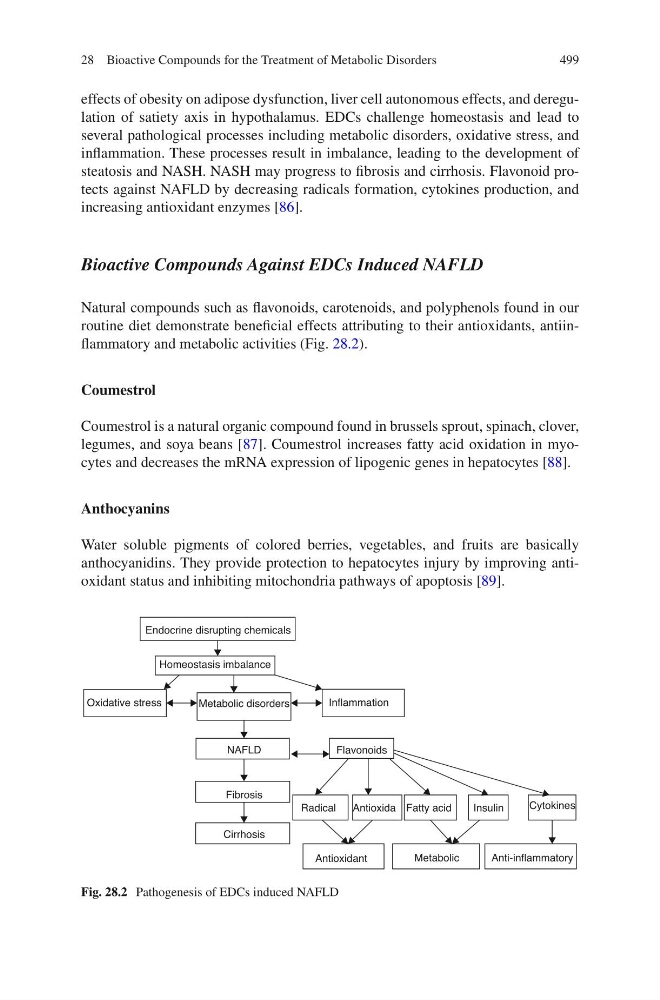
steatosis and NASH. NASH may progress to fibrosis and cirrhosis. Flavonoid protects against NAFLD by decreasing radicals formation, cytokines production, and
increasing antioxidant enzymes [86].
Bioactive Compounds Against EDCs Induced NAFLD
Natural compounds such as flavonoids, carotenoids, and polyphenols found in our
routine diet demonstrate beneficial effects attributing to their antioxidants, antiinflammatory and metabolic activities (Fig. 28.2).
Coumestrol
Coumestrol is a natural organic compound found in brussels sprout, spinach, clover,
legumes, and soya beans [87]. Coumestrol increases fatty acid oxidation in myocytes and decreases the mRNA expression of lipogenic genes in hepatocytes [88].
Anthocyanins
Water soluble pigments of colored berries, vegetables, and fruits are basically
anthocyanidins. They provide protection to hepatocytes injury by improving antioxidant status and inhibiting mitochondria pathways of apoptosis [89].
Endocrine disrupting chemicals
Homeostasis imbalance
Oxidative stress
Metabolic disorders
Inflammation
NAFLD
Fibrosis
Cirrhosis
Radical
Flavonoids
Antioxida
Antioxidant
Fatty acid
Insulin
Cytokines
Anti-inflammatory
Metabolic
Fig. 28.2 Pathogenesis of EDCs induced NAFLD
28 Bioactive Compounds for the Treatment of Metabolic Disorders
effects of obesity on adipose dysfunction, liver cell autonomous effects, and deregulation of satiety axis in hypothalamus. EDCs challenge homeostasis and lead to
several pathological processes including metabolic disorders, oxidative stress, and
inflammation. These processes result in imbalance, leading to the development of
steatosis and NASH. NASH may progress to fibrosis and cirrhosis. Flavonoid protects against NAFLD by decreasing radicals formation, cytokines production, and
increasing antioxidant enzymes [86].
Bioactive Compounds Against EDCs Induced NAFLD
Natural compounds such as flavonoids, carotenoids, and polyphenols found in our
routine diet demonstrate beneficial effects attributing to their antioxidants, antiinflammatory and metabolic activities (Fig. 28.2).
Coumestrol
Coumestrol is a natural organic compound found in brussels sprout, spinach, clover,
legumes, and soya beans [87]. Coumestrol increases fatty acid oxidation in myocytes and decreases the mRNA expression of lipogenic genes in hepatocytes [88].
Anthocyanins
Water soluble pigments of colored berries, vegetables, and fruits are basically
anthocyanidins. They provide protection to hepatocytes injury by improving antioxidant status and inhibiting mitochondria pathways of apoptosis [89].
Endocrine disrupting chemicals
Homeostasis imbalance
Oxidative stress
Metabolic disorders
Inflammation
NAFLD
Fibrosis
Cirrhosis
Radical
Flavonoids
Antioxida
Antioxidant
Fatty acid
Insulin
Cytokines
Anti-inflammatory
Metabolic
Fig. 28.2 Pathogenesis of EDCs induced NAFLD
28 Bioactive Compounds for the Treatment of Metabolic Disorders