

496
Fiber
Both insoluble (hemicellulose, cellulose, and lignin) and soluble (inulin, psyllium,
beta-glucans, pectins) fibers reduce cholesterol and sugar levels in blood [67].
Prebiotic fibers enhance fat and glucose metabolism after breakdown into shortchain fatty acids [68].
Monounsaturated Fats and Polyunsaturated Fats (Omega-3 and Omega-6)
Plant sterols, monounsaturated and polyunsaturated fats, and essential fatty acids
are effective in increasing high density lipoproteins and decreasing total cholesterols instead of saturated fats and trans-fatty acids [69].
Vitamin C and Vitamin E
The consumption of Vitamin C and Vitamin E decreases lipid peroxidation and
proinflammatory cytokines and thus reduces the risks of vascular disease. Inadequate
Vitamin C contributes to an elevation of circulating lipopolysaccharides due to
overgrowth of intestinal bacteria [70].
Bioactive Peptides
Bioactive peptides scavenge free radicals and reduce cholesterol and regulate blood
pressure. During ripening process of cheese, concentration of strong antihypertensive agent such as lactotripeptides increases. These bioactive peptides also result in
appetite suppression in case of obesity [71].
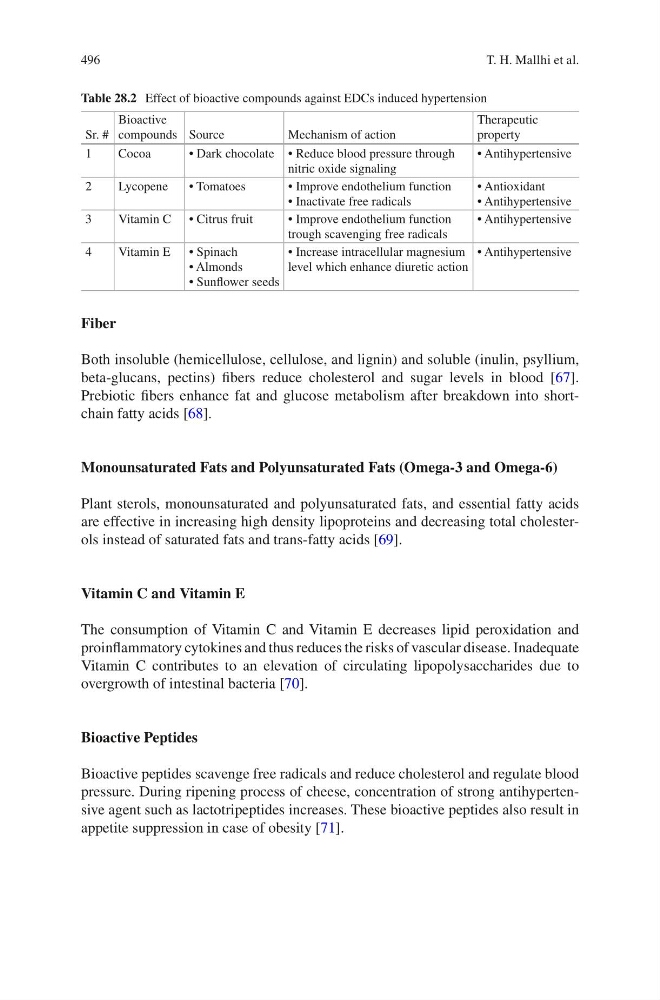
Table 28.2 Effect of bioactive compounds against EDCs induced hypertension
Sr. #
Bioactive
compounds Source
Mechanism of action
Therapeutic
property
1
Cocoa
• Dark chocolate • Reduce blood pressure through
nitric oxide signaling
• Antihypertensive
2
Lycopene
• Tomatoes
• Improve endothelium function
• Inactivate free radicals
• Antioxidant
• Antihypertensive
3
Vitamin C • Citrus fruit
• Improve endothelium function
trough scavenging free radicals
• Antihypertensive
4
Vitamin E • Spinach
• Almonds
• Sunflower seeds
• Increase intracellular magnesium
level which enhance diuretic action
• Antihypertensive
T. H. Mallhi et al.
Fiber
Both insoluble (hemicellulose, cellulose, and lignin) and soluble (inulin, psyllium,
beta-glucans, pectins) fibers reduce cholesterol and sugar levels in blood [67].
Prebiotic fibers enhance fat and glucose metabolism after breakdown into shortchain fatty acids [68].
Monounsaturated Fats and Polyunsaturated Fats (Omega-3 and Omega-6)
Plant sterols, monounsaturated and polyunsaturated fats, and essential fatty acids
are effective in increasing high density lipoproteins and decreasing total cholesterols instead of saturated fats and trans-fatty acids [69].
Vitamin C and Vitamin E
The consumption of Vitamin C and Vitamin E decreases lipid peroxidation and
proinflammatory cytokines and thus reduces the risks of vascular disease. Inadequate
Vitamin C contributes to an elevation of circulating lipopolysaccharides due to
overgrowth of intestinal bacteria [70].
Bioactive Peptides
Bioactive peptides scavenge free radicals and reduce cholesterol and regulate blood
pressure. During ripening process of cheese, concentration of strong antihypertensive agent such as lactotripeptides increases. These bioactive peptides also result in
appetite suppression in case of obesity [71].
Table 28.2 Effect of bioactive compounds against EDCs induced hypertension
Sr. #
Bioactive
compounds Source
Mechanism of action
Therapeutic
property
1
Cocoa
• Dark chocolate • Reduce blood pressure through
nitric oxide signaling
• Antihypertensive
2
Lycopene
• Tomatoes
• Improve endothelium function
• Inactivate free radicals
• Antioxidant
• Antihypertensive
3
Vitamin C • Citrus fruit
• Improve endothelium function
trough scavenging free radicals
• Antihypertensive
4
Vitamin E • Spinach
• Almonds
• Sunflower seeds
• Increase intracellular magnesium
level which enhance diuretic action
• Antihypertensive
T. H. Mallhi et al.