

449
Circadian Rhythm
The human body has its own clock. The body achieves normal physiological functions on its maximum capacity according to this clock. Our behaviors throughout
the day are also affected by rhythms of this biological clock. The gut behavior is
involved in various metabolic and physiological functions of the body. And the gut
functions directly depend on the circadian rhythms. Any interference of this rhythm
can commence sequences of variations in metabolism proceeding to adiposity,
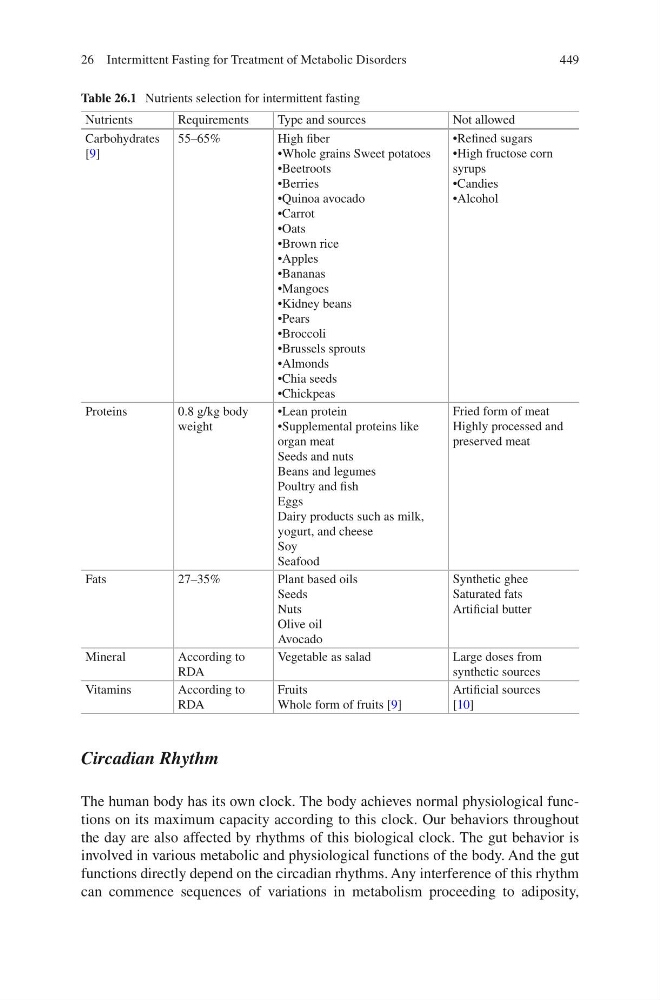
Table 26.1 Nutrients selection for intermittent fasting
Nutrients
Requirements
Type and sources
Not allowed
Carbohydrates
[9]
55–65%
High fiber
•Whole grains Sweet potatoes
•Beetroots
•Berries
•Quinoa avocado
•Carrot
•Oats
•Brown rice
•Apples
•Bananas
•Mangoes
•Kidney beans
•Pears
•Broccoli
•Brussels sprouts
•Almonds
•Chia seeds
•Chickpeas
•Refined sugars
•High fructose corn
syrups
•Candies
•Alcohol
Proteins
0.8 g/kg body
weight
•Lean protein
•Supplemental proteins like
organ meat
Seeds and nuts
Beans and legumes
Poultry and fish
Eggs
Dairy products such as milk,
yogurt, and cheese
Soy
Seafood
Fried form of meat
Highly processed and
preserved meat
Fats
27–35%
Plant based oils
Seeds
Nuts
Olive oil
Avocado
Synthetic ghee
Saturated fats
Artificial butter
Mineral
According to
RDA
Vegetable as salad
Large doses from
synthetic sources
Vitamins
According to
RDA
Fruits
Whole form of fruits [9]
Artificial sources
[10]
26 Intermittent Fasting for Treatment of Metabolic Disorders
Circadian Rhythm
The human body has its own clock. The body achieves normal physiological functions on its maximum capacity according to this clock. Our behaviors throughout
the day are also affected by rhythms of this biological clock. The gut behavior is
involved in various metabolic and physiological functions of the body. And the gut
functions directly depend on the circadian rhythms. Any interference of this rhythm
can commence sequences of variations in metabolism proceeding to adiposity,
Table 26.1 Nutrients selection for intermittent fasting
Nutrients
Requirements
Type and sources
Not allowed
Carbohydrates
[9]
55–65%
High fiber
•Whole grains Sweet potatoes
•Beetroots
•Berries
•Quinoa avocado
•Carrot
•Oats
•Brown rice
•Apples
•Bananas
•Mangoes
•Kidney beans
•Pears
•Broccoli
•Brussels sprouts
•Almonds
•Chia seeds
•Chickpeas
•Refined sugars
•High fructose corn
syrups
•Candies
•Alcohol
Proteins
0.8 g/kg body
weight
•Lean protein
•Supplemental proteins like
organ meat
Seeds and nuts
Beans and legumes
Poultry and fish
Eggs
Dairy products such as milk,
yogurt, and cheese
Soy
Seafood
Fried form of meat
Highly processed and
preserved meat
Fats
27–35%
Plant based oils
Seeds
Nuts
Olive oil
Avocado
Synthetic ghee
Saturated fats
Artificial butter
Mineral
According to
RDA
Vegetable as salad
Large doses from
synthetic sources
Vitamins
According to
RDA
Fruits
Whole form of fruits [9]
Artificial sources
[10]
26 Intermittent Fasting for Treatment of Metabolic Disorders