

274
EDCs [30]. Literature reported that concentration of PCBs is much in the samples
from open ocean, terrestrial, and coastal environments than open seas in Japan [31].
Japan is badly affected by dioxin (C 4 H 4 O 2 ; well-known POPs), methylmercury
[CH 3 Hg]
+
, PCB, cadmium (Cd), etc. Govt. of Japan constitute Three major ministries of Japan 1. Ministry of Environments 2. Ministry of Health Labor and Welfare
3. Ministry of Economy, Trade and Industry established endocrine disruptive effect
(EDE) subcommittee to deal with pesticide residues in food, water, and air [32].
Lakes, rivers, agricultural chemicals, and sewage effluents are the main source of
these EDCs in North America and Europe [33]. However, in developing countries
like Asia or Africa industrial effluents and unconstrained domestic use of pesticides
endow tremendously to elevated levels in aquatic habitats [6]. Many synthetic pesticides, listed as EDCs in developing or developed countries are adopted or misused
in South Africa due to rapid industrialization [34]. Therefore, people and wildlife in
South Africa are facing severe consequences of health [35]. Waters of Antarctic and
Arctic oceans have huge distributions of PCBs and organochlorine pesticides [36].
US TTIP negotiators insisted on many pesticides containing EDCs which were
banned in 2013. According to the criteria of European Commission many EDCs
including toiletries, insecticides, pesticides linked to disorders of children, cancers,
and birth defects are banned in 2014. After publishing the consequences of EDCs on
male reproductive system by Copenhagen based Nordic Council reports, USA designated 59 M to 1.18 billion Euros for health system [37].
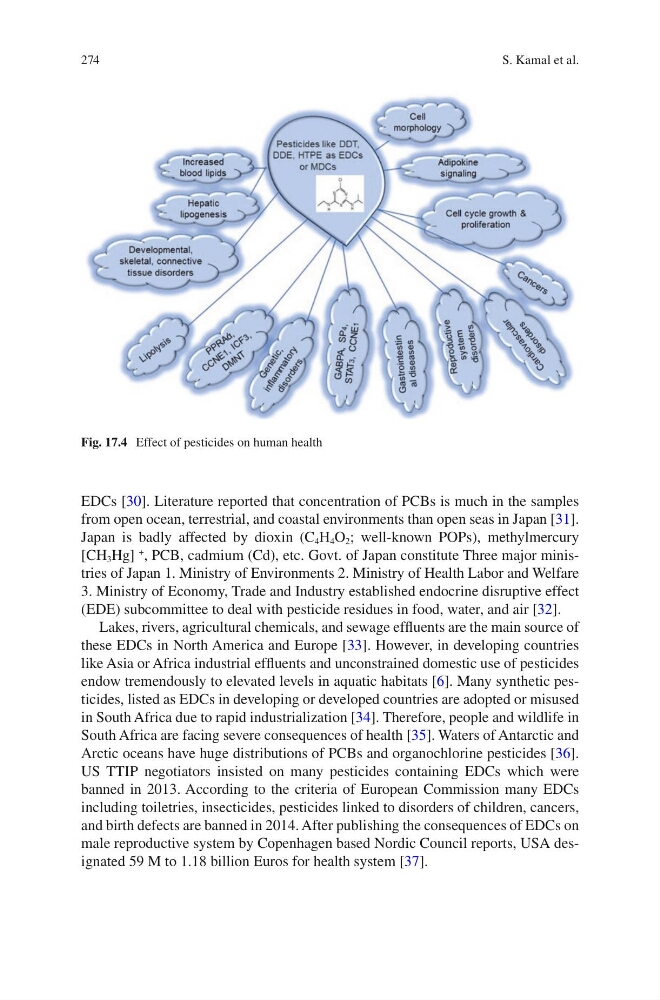
Fig. 17.4 Effect of pesticides on human health
S. Kamal et al.
EDCs [30]. Literature reported that concentration of PCBs is much in the samples
from open ocean, terrestrial, and coastal environments than open seas in Japan [31].
Japan is badly affected by dioxin (C 4 H 4 O 2 ; well-known POPs), methylmercury
[CH 3 Hg]
+
, PCB, cadmium (Cd), etc. Govt. of Japan constitute Three major ministries of Japan 1. Ministry of Environments 2. Ministry of Health Labor and Welfare
3. Ministry of Economy, Trade and Industry established endocrine disruptive effect
(EDE) subcommittee to deal with pesticide residues in food, water, and air [32].
Lakes, rivers, agricultural chemicals, and sewage effluents are the main source of
these EDCs in North America and Europe [33]. However, in developing countries
like Asia or Africa industrial effluents and unconstrained domestic use of pesticides
endow tremendously to elevated levels in aquatic habitats [6]. Many synthetic pesticides, listed as EDCs in developing or developed countries are adopted or misused
in South Africa due to rapid industrialization [34]. Therefore, people and wildlife in
South Africa are facing severe consequences of health [35]. Waters of Antarctic and
Arctic oceans have huge distributions of PCBs and organochlorine pesticides [36].
US TTIP negotiators insisted on many pesticides containing EDCs which were
banned in 2013. According to the criteria of European Commission many EDCs
including toiletries, insecticides, pesticides linked to disorders of children, cancers,
and birth defects are banned in 2014. After publishing the consequences of EDCs on
male reproductive system by Copenhagen based Nordic Council reports, USA designated 59 M to 1.18 billion Euros for health system [37].
Fig. 17.4 Effect of pesticides on human health
S. Kamal et al.