

273
rodenticides, 30 types of fungicides, 39 weedicides, and more than 108 different
types of insecticides have been used between 1980s and 1990 [23]. Some of these
pesticides are reported to have endocrine-disrupting properties [24]. GDP for agriculture in India is 130 billion USD which share 19% of GDP in total economy [25].
Among different type of pesticides, organochlorine (about 40%) is predominately
used in India [26].
The applications of pesticides for residential indoor as well as outdoor in developed countries like USA are also widely spread as survey of four metropolitan areas
indicated 94% use of insecticides in approximately 513 homes. Whereas telephonic
survey indicated that pesticide use in the 238 homes of Missouri is approximately
98% per annum [27]. USA is among one of the biggest consumers of polybrominated diphenyl ethers (PBDE) who use 45% of total world consumption. Different
forms of polybrominated diphenyl ethers (PBDEs) like penta-, octa-, and deca-,
penta brominated diphenyl ethers are usually applied on soft products, i.e., chairs,
sofas, etc., hence can easily be released and more susceptible to humans as endocrine-disrupting chemical. Therefore, general public of USA and Canada are facing
greater threats due to more bioavailable nature of penta-BDE than deca-BDE. To
date, highest concentration of penta-BDE has been reported from the blood and
milk samples of US population [28]. Approximately 6.6 and 12.0 kg ha
−1
is a total
use of pesticide in Korea and Japan [29]. Immunological effects by comparing N 2 O
production and cytotoxic analysis of lipopolysaccharide stimulated macrophage
cell line indicated that 21 different types of EDCs are present in Korean ecosystems.
Relevant ministries of Korea after mid- or long- term research plans (1999) established safety managements of these EDCs (between 2007 and 2011) in all their
respective ministries and special public website covering all information regarding
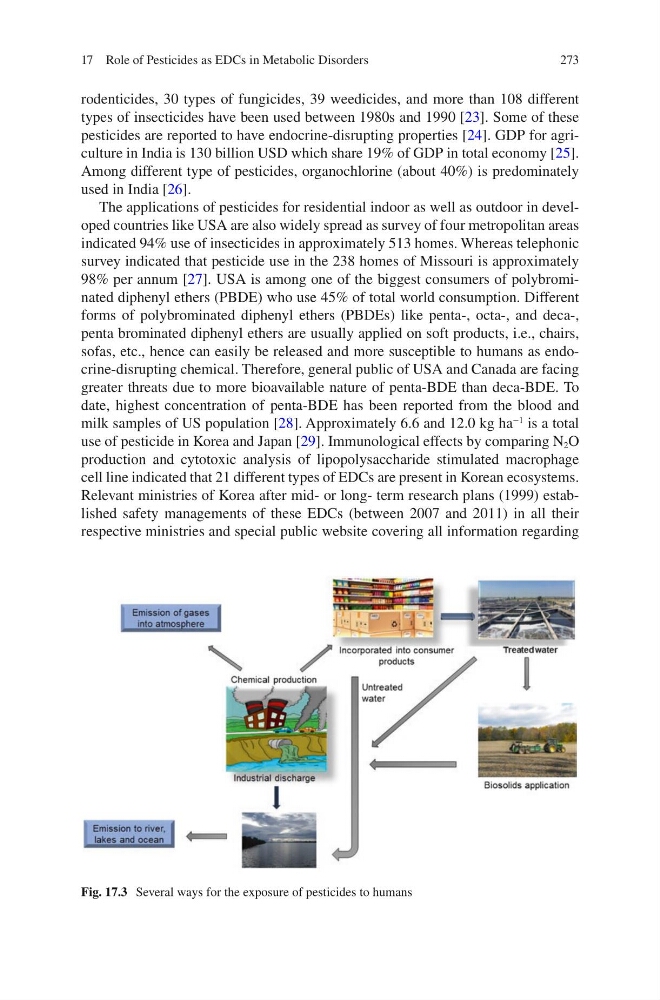
Fig. 17.3 Several ways for the exposure of pesticides to humans
17 Role of Pesticides as EDCs in Metabolic Disorders
rodenticides, 30 types of fungicides, 39 weedicides, and more than 108 different
types of insecticides have been used between 1980s and 1990 [23]. Some of these
pesticides are reported to have endocrine-disrupting properties [24]. GDP for agriculture in India is 130 billion USD which share 19% of GDP in total economy [25].
Among different type of pesticides, organochlorine (about 40%) is predominately
used in India [26].
The applications of pesticides for residential indoor as well as outdoor in developed countries like USA are also widely spread as survey of four metropolitan areas
indicated 94% use of insecticides in approximately 513 homes. Whereas telephonic
survey indicated that pesticide use in the 238 homes of Missouri is approximately
98% per annum [27]. USA is among one of the biggest consumers of polybrominated diphenyl ethers (PBDE) who use 45% of total world consumption. Different
forms of polybrominated diphenyl ethers (PBDEs) like penta-, octa-, and deca-,
penta brominated diphenyl ethers are usually applied on soft products, i.e., chairs,
sofas, etc., hence can easily be released and more susceptible to humans as endocrine-disrupting chemical. Therefore, general public of USA and Canada are facing
greater threats due to more bioavailable nature of penta-BDE than deca-BDE. To
date, highest concentration of penta-BDE has been reported from the blood and
milk samples of US population [28]. Approximately 6.6 and 12.0 kg ha
−1
is a total
use of pesticide in Korea and Japan [29]. Immunological effects by comparing N 2 O
production and cytotoxic analysis of lipopolysaccharide stimulated macrophage
cell line indicated that 21 different types of EDCs are present in Korean ecosystems.
Relevant ministries of Korea after mid- or long- term research plans (1999) established safety managements of these EDCs (between 2007 and 2011) in all their
respective ministries and special public website covering all information regarding
Fig. 17.3 Several ways for the exposure of pesticides to humans
17 Role of Pesticides as EDCs in Metabolic Disorders