

Integrated Watershed Management Vis-a-Vis Water–Energy–Food Nexus
89
(d)
(c)
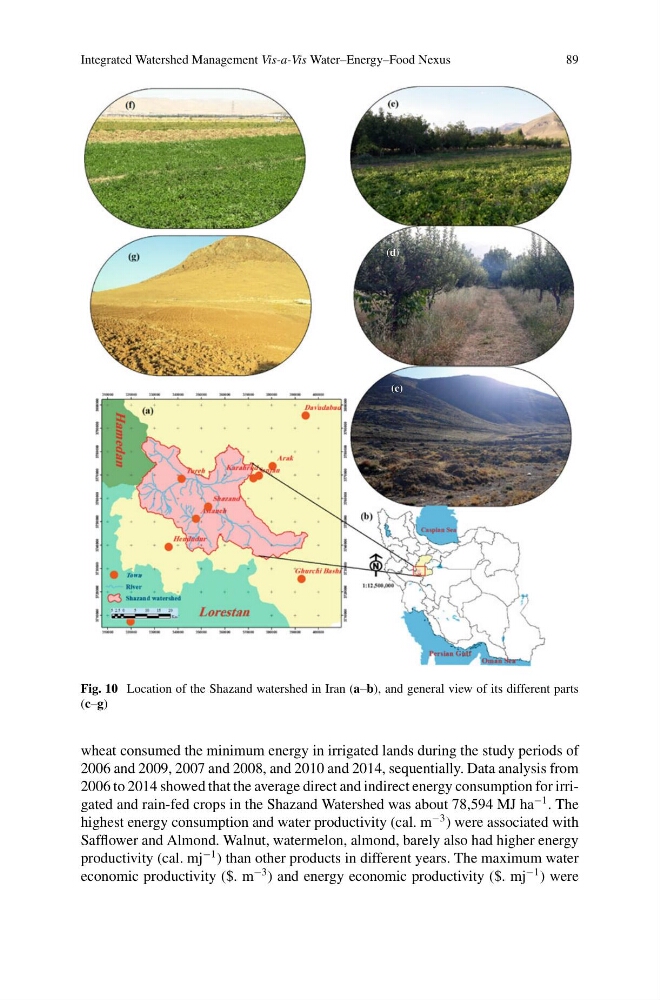
Fig. 10 Location of the Shazand watershed in Iran (a–b), and general view of its different parts
(c–g)
wheat consumed the minimum energy in irrigated lands during the study periods of
2006 and 2009, 2007 and 2008, and 2010 and 2014, sequentially. Data analysis from
2006 to 2014 showed that the average direct and indirect energy consumption for irrigated and rain-fed crops in the Shazand Watershed was about 78,594 MJ ha
−1 . The
highest energy consumption and water productivity (cal. m
−3 ) were associated with
Safflower and Almond. Walnut, watermelon, almond, barely also had higher energy
productivity (cal. mj
−1 ) than other products in different years. The maximum water
economic productivity ($. m
−3 ) and energy economic productivity ($. mj
−1 ) were
89
(d)
(c)
Fig. 10 Location of the Shazand watershed in Iran (a–b), and general view of its different parts
(c–g)
wheat consumed the minimum energy in irrigated lands during the study periods of
2006 and 2009, 2007 and 2008, and 2010 and 2014, sequentially. Data analysis from
2006 to 2014 showed that the average direct and indirect energy consumption for irrigated and rain-fed crops in the Shazand Watershed was about 78,594 MJ ha
−1 . The
highest energy consumption and water productivity (cal. m
−3 ) were associated with
Safflower and Almond. Walnut, watermelon, almond, barely also had higher energy
productivity (cal. mj
−1 ) than other products in different years. The maximum water
economic productivity ($. m
−3 ) and energy economic productivity ($. mj
−1 ) were