

76
S. H. Sadeghi and E. Sharifi Moghadam
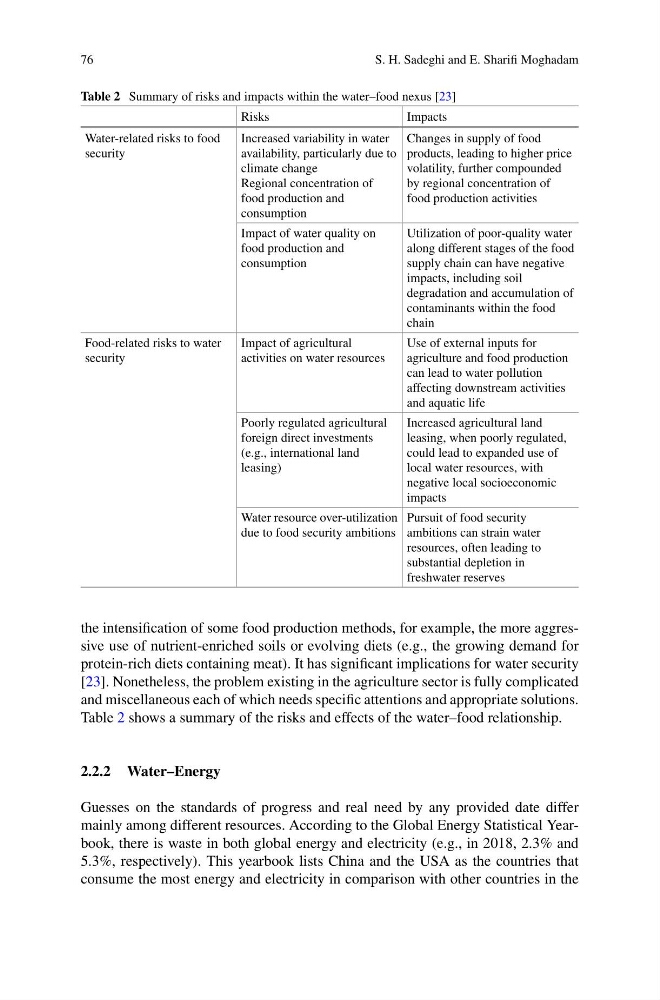
Table 2 Summary of risks and impacts within the water–food nexus [23]
Risks
Impacts
Water-related risks to food
security
Increased variability in water
availability, particularly due to
climate change
Regional concentration of
food production and
consumption
Changes in supply of food
products, leading to higher price
volatility, further compounded
by regional concentration of
food production activities
Impact of water quality on
food production and
consumption
Utilization of poor-quality water
along different stages of the food
supply chain can have negative
impacts, including soil
degradation and accumulation of
contaminants within the food
chain
Food-related risks to water
security
Impact of agricultural
activities on water resources
Use of external inputs for
agriculture and food production
can lead to water pollution
affecting downstream activities
and aquatic life
Poorly regulated agricultural
foreign direct investments
(e.g., international land
leasing)
Increased agricultural land
leasing, when poorly regulated,
could lead to expanded use of
local water resources, with
negative local socioeconomic
impacts
Water resource over-utilization
due to food security ambitions
Pursuit of food security
ambitions can strain water
resources, often leading to
substantial depletion in
freshwater reserves
the intensification of some food production methods, for example, the more aggressive use of nutrient-enriched soils or evolving diets (e.g., the growing demand for
protein-rich diets containing meat). It has significant implications for water security
[23]. Nonetheless, the problem existing in the agriculture sector is fully complicated
and miscellaneous each of which needs specific attentions and appropriate solutions.
Table 2 shows a summary of the risks and effects of the water–food relationship.
2.2.2 Water–Energy
Guesses on the standards of progress and real need by any provided date differ
mainly among different resources. According to the Global Energy Statistical Yearbook, there is waste in both global energy and electricity (e.g., in 2018, 2.3% and
5.3%, respectively). This yearbook lists China and the USA as the countries that
consume the most energy and electricity in comparison with other countries in the
S. H. Sadeghi and E. Sharifi Moghadam
Table 2 Summary of risks and impacts within the water–food nexus [23]
Risks
Impacts
Water-related risks to food
security
Increased variability in water
availability, particularly due to
climate change
Regional concentration of
food production and
consumption
Changes in supply of food
products, leading to higher price
volatility, further compounded
by regional concentration of
food production activities
Impact of water quality on
food production and
consumption
Utilization of poor-quality water
along different stages of the food
supply chain can have negative
impacts, including soil
degradation and accumulation of
contaminants within the food
chain
Food-related risks to water
security
Impact of agricultural
activities on water resources
Use of external inputs for
agriculture and food production
can lead to water pollution
affecting downstream activities
and aquatic life
Poorly regulated agricultural
foreign direct investments
(e.g., international land
leasing)
Increased agricultural land
leasing, when poorly regulated,
could lead to expanded use of
local water resources, with
negative local socioeconomic
impacts
Water resource over-utilization
due to food security ambitions
Pursuit of food security
ambitions can strain water
resources, often leading to
substantial depletion in
freshwater reserves
the intensification of some food production methods, for example, the more aggressive use of nutrient-enriched soils or evolving diets (e.g., the growing demand for
protein-rich diets containing meat). It has significant implications for water security
[23]. Nonetheless, the problem existing in the agriculture sector is fully complicated
and miscellaneous each of which needs specific attentions and appropriate solutions.
Table 2 shows a summary of the risks and effects of the water–food relationship.
2.2.2 Water–Energy
Guesses on the standards of progress and real need by any provided date differ
mainly among different resources. According to the Global Energy Statistical Yearbook, there is waste in both global energy and electricity (e.g., in 2018, 2.3% and
5.3%, respectively). This yearbook lists China and the USA as the countries that
consume the most energy and electricity in comparison with other countries in the