

168
H. Schlör et al.
6.0
2.0
2.6
3.0
3.6
4.5
5.7
7.2
10.3
1.0
8.5
3.9
5.0
6.0
7.5
10.6
0.0
2.0
4.0
6.0
8.0
10.0
12.0
Average
household
unter 900 900-1300 1300-1500 1500-2000 2000-2600 2600-3600 3600-5000 5000-18000
Earth
Number of Earths required to cover household consumption
All households
Single woman
Single man
Single parents
Couples without childdren
Couples with children
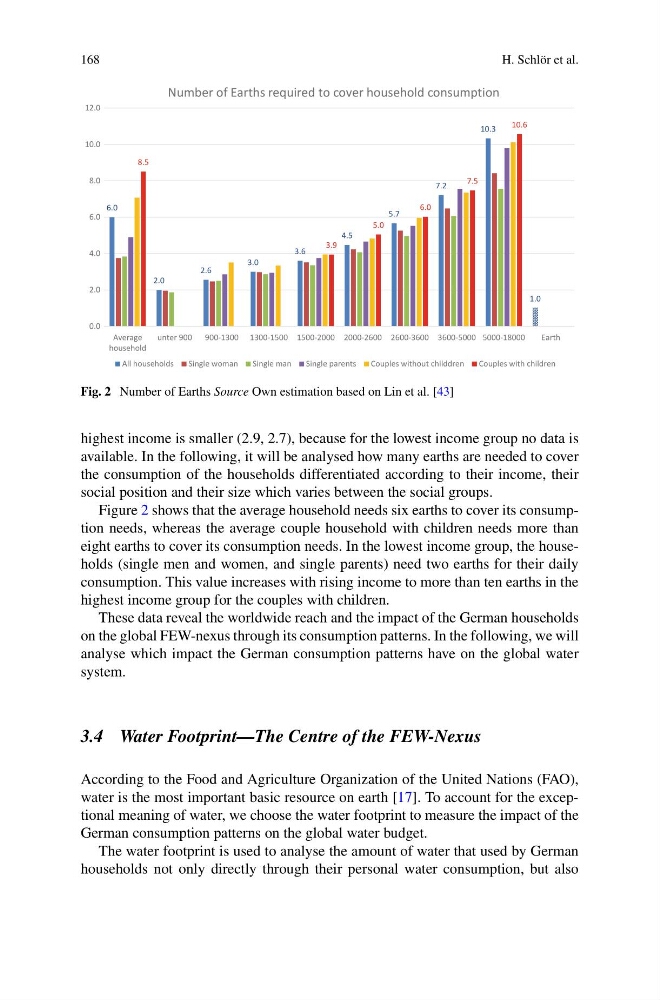
Fig. 2 Number of Earths Source Own estimation based on Lin et al. [43]
highest income is smaller (2.9, 2.7), because for the lowest income group no data is
available. In the following, it will be analysed how many earths are needed to cover
the consumption of the households differentiated according to their income, their
social position and their size which varies between the social groups.
Figure 2 shows that the average household needs six earths to cover its consumption needs, whereas the average couple household with children needs more than
eight earths to cover its consumption needs. In the lowest income group, the households (single men and women, and single parents) need two earths for their daily
consumption. This value increases with rising income to more than ten earths in the
highest income group for the couples with children.
These data reveal the worldwide reach and the impact of the German households
on the global FEW-nexus through its consumption patterns. In the following, we will
analyse which impact the German consumption patterns have on the global water
system.
3.4 Water Footprint—The Centre of the FEW-Nexus
According to the Food and Agriculture Organization of the United Nations (FAO),
water is the most important basic resource on earth [17]. To account for the exceptional meaning of water, we choose the water footprint to measure the impact of the
German consumption patterns on the global water budget.
The water footprint is used to analyse the amount of water that used by German
households not only directly through their personal water consumption, but also
H. Schlör et al.
6.0
2.0
2.6
3.0
3.6
4.5
5.7
7.2
10.3
1.0
8.5
3.9
5.0
6.0
7.5
10.6
0.0
2.0
4.0
6.0
8.0
10.0
12.0
Average
household
unter 900 900-1300 1300-1500 1500-2000 2000-2600 2600-3600 3600-5000 5000-18000
Earth
Number of Earths required to cover household consumption
All households
Single woman
Single man
Single parents
Couples without childdren
Couples with children
Fig. 2 Number of Earths Source Own estimation based on Lin et al. [43]
highest income is smaller (2.9, 2.7), because for the lowest income group no data is
available. In the following, it will be analysed how many earths are needed to cover
the consumption of the households differentiated according to their income, their
social position and their size which varies between the social groups.
Figure 2 shows that the average household needs six earths to cover its consumption needs, whereas the average couple household with children needs more than
eight earths to cover its consumption needs. In the lowest income group, the households (single men and women, and single parents) need two earths for their daily
consumption. This value increases with rising income to more than ten earths in the
highest income group for the couples with children.
These data reveal the worldwide reach and the impact of the German households
on the global FEW-nexus through its consumption patterns. In the following, we will
analyse which impact the German consumption patterns have on the global water
system.
3.4 Water Footprint—The Centre of the FEW-Nexus
According to the Food and Agriculture Organization of the United Nations (FAO),
water is the most important basic resource on earth [17]. To account for the exceptional meaning of water, we choose the water footprint to measure the impact of the
German consumption patterns on the global water budget.
The water footprint is used to analyse the amount of water that used by German
households not only directly through their personal water consumption, but also