

130
fill the portions of space, and that surfaces grow with accretions. In the example of lichens growing
on the tree trunk, the surface forms interpenetrate links to maximise interconnections (Fig. 9.15).
Defining ‘deep interlock and ambiguity’, Alexander states that living structures contain some form of
interlock where centres are ‘hooked’ into their surroundings (Alexander, 2001–2005a, pp. 195, 270).
9.6.9 Contrast
In the organisation of natural systems, contrast is the most obvious phenomena from the interaction
of opposites. This is evident in the contrast of male and female in almost every kind of organism; it
appears in the cycles of day and night (Fig. 9.16), land and water, dark and light, and the positive and
negative currents in electric charges (Alexander, 2001–2005a, p. 274). In geometry contrasts result in
distinct subunits, which help us to distinguish between adjoining units, and provide a figure-ground
symmetry of opposites (Salingaros & Mehaffy, 2006).
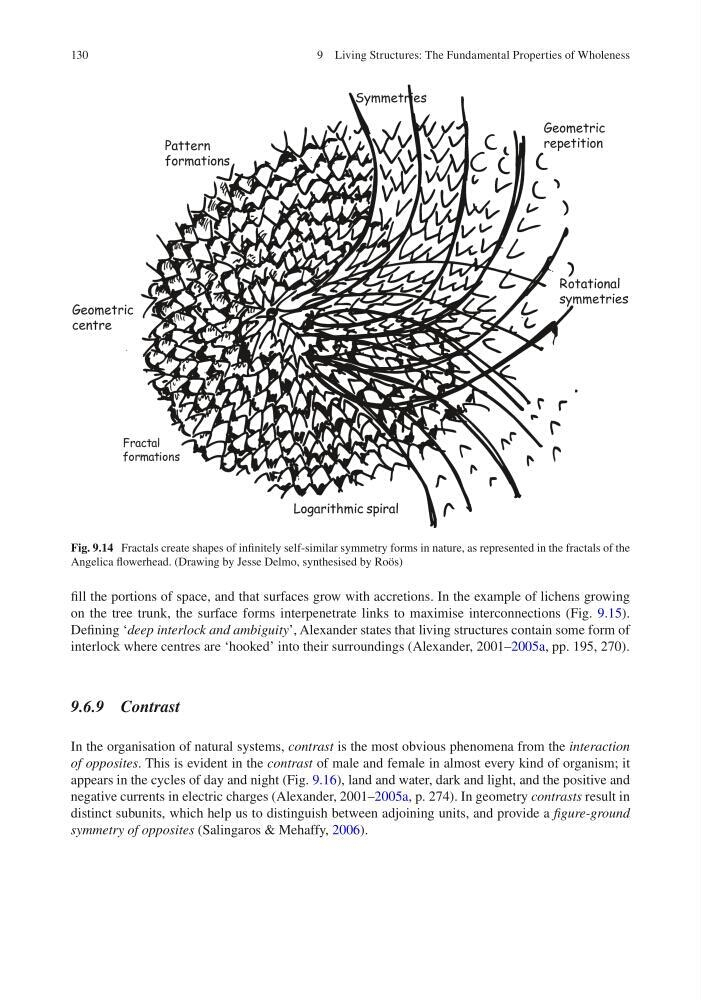
Fig. 9.14 Fractals create shapes of infinitely self-similar symmetry forms in nature, as represented in the fractals of the
Angelica flowerhead. (Drawing by Jesse Delmo, synthesised by Roös)
9 Living Structures: The Fundamental Properties of Wholeness
fill the portions of space, and that surfaces grow with accretions. In the example of lichens growing
on the tree trunk, the surface forms interpenetrate links to maximise interconnections (Fig. 9.15).
Defining ‘deep interlock and ambiguity’, Alexander states that living structures contain some form of
interlock where centres are ‘hooked’ into their surroundings (Alexander, 2001–2005a, pp. 195, 270).
9.6.9 Contrast
In the organisation of natural systems, contrast is the most obvious phenomena from the interaction
of opposites. This is evident in the contrast of male and female in almost every kind of organism; it
appears in the cycles of day and night (Fig. 9.16), land and water, dark and light, and the positive and
negative currents in electric charges (Alexander, 2001–2005a, p. 274). In geometry contrasts result in
distinct subunits, which help us to distinguish between adjoining units, and provide a figure-ground
symmetry of opposites (Salingaros & Mehaffy, 2006).
Fig. 9.14 Fractals create shapes of infinitely self-similar symmetry forms in nature, as represented in the fractals of the
Angelica flowerhead. (Drawing by Jesse Delmo, synthesised by Roös)
9 Living Structures: The Fundamental Properties of Wholeness